
How long does a sugar crash last? There is no medically established duration for a “sugar crash.” If the term is being used for ordinary tiredness or hunger after a high-sugar meal, timing and duration vary, and many people feel better within the same day. A sugar crash is the informal name for the “drop” some people feel after sweets—tired, foggy, irritable, or suddenly hungry again. This guide explains what the term usually means, how it differs from true low blood sugar, and general ways people try to feel steadier—without extreme rules.
Written by: HWVibes Editorial Team • Last updated: September 2026
Expert reviewed
Last reviewed: 24 September 2026
Dr. Hena A. Ansari (MBBS, MD) reviewed this page to make sure the explanations stay education-only,
the tone stays calm and reader-friendly, and the content avoids “magic fix” claims.
View full profile →
Reminder: This page is for general education and does not replace medical care.
Key takeaways (quick)
- A sugar crash is usually a short-term energy dip after sweets/refined carbs (not a diagnosis).
- Many people notice the “up then down” feeling most after sugary drinks or sweets eaten alone.
- Sleep, stress, and skipped meals often make crashes feel stronger.
- Most crashes improve within the same day—if symptoms are frequent or intense, get professional advice.
- Quick answer
- What is a sugar crash?
- Why sugar crashes happen
- How long does a sugar crash last?
- Sugar crash symptoms
- Common triggers (what makes it worse)
- When it might not be a sugar crash
- How to stop a sugar crash: what may help (5 general points)
- Gentle reset ideas (non-medical)
- Quick guide: “If you feel X, try Y”
- How to reduce crashes over time
- Myths: water, sweating, “detox”
- Questions people ask
- References
- Disclaimer
- Related guides
Quick answer
A sugar crash is usually a short-term dip in energy that can happen after sweet foods or refined carbs—especially if they digest quickly or are eaten alone. Many people feel better within the same day, but timing varies.
New here? Start with the pillar guide: How Long Does Sugar Stay in Your Body? (Pillar).
What is a sugar crash?
“Sugar crash” isn’t a medical diagnosis. It’s a common term people use for how they feel after sweets: the energy drop, brain fog, hunger, or mood dip that can show up later.
For a general overview of how sugar can affect the body, see: Cleveland Clinic.
Why sugar crashes happen
1) Fast-digesting sugar (especially drinks)
Sugary drinks (soda, sweet coffee drinks, some energy drinks, some juices) can be easy to drink quickly and may digest faster than solid food. That can make the “up then down” feeling more noticeable for many people.
Related: Sugary Drinks vs Solid Sweets.
2) “Sugar-only” snacks don’t feel filling for long
If a snack is mostly sugar (with little protein or fiber), some people feel hungry again soon after. For a helpful overview of carbs and why different carbs can feel different, see: Harvard T.H. Chan School of Public Health.
3) Sleep and stress can amplify crashes
Poor sleep is often linked with stronger cravings and lower energy the next day. Related: Sleep and Sugar Cravings.
4) Big portions or “sweet all day” patterns
Some people notice bigger swings when sweets show up repeatedly in one day—especially with missed meals and stress.
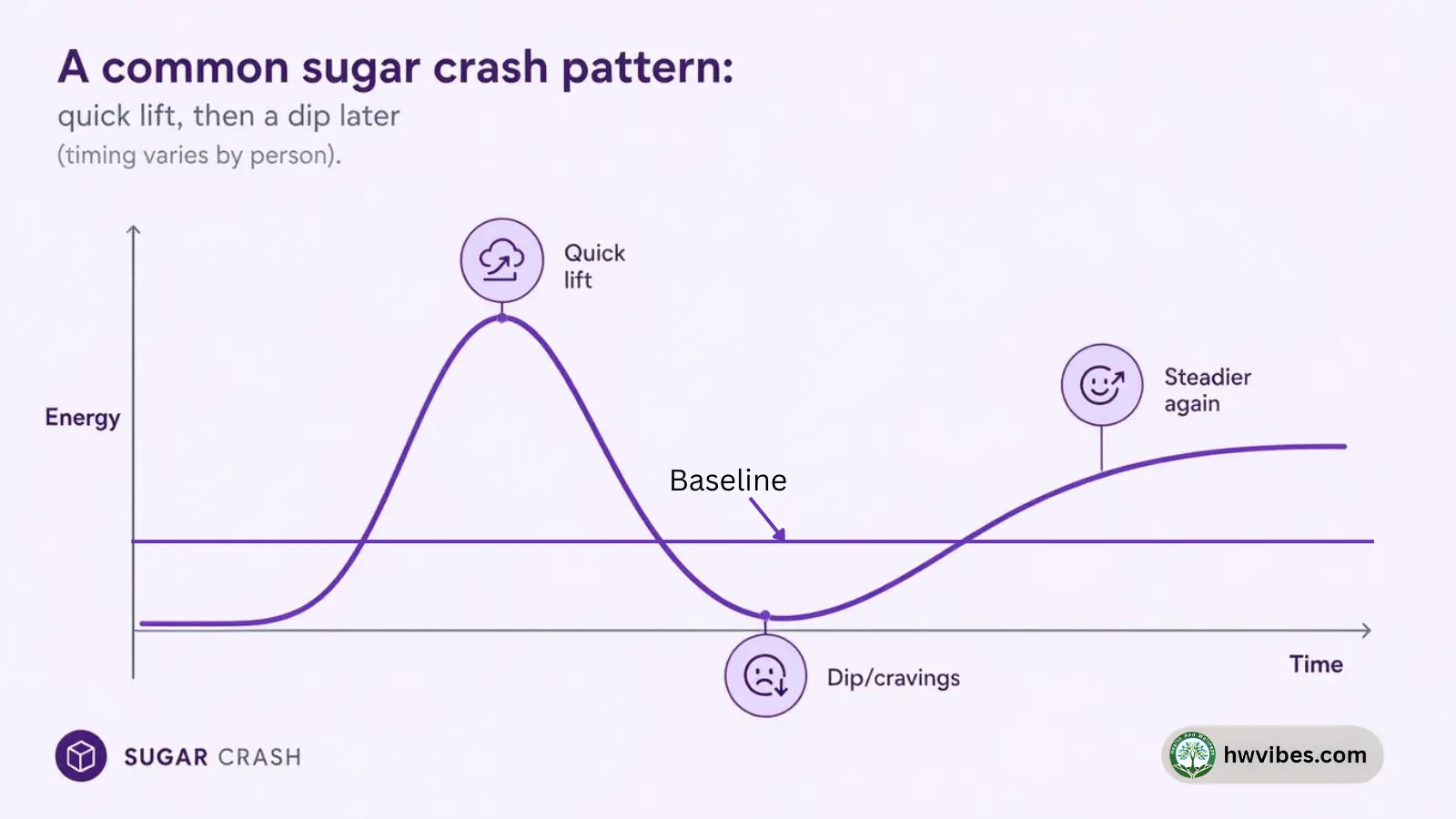
How long does a sugar crash last?
There’s no single clock that fits everyone. Many people say a crash feels strongest within a few hours after sweets and improves as the day goes on.
- What you had: drink vs solid food
- How much: portion size
- What else you ate: protein/fiber/fat can change how it feels
- Your day: stress, sleep, hydration, gaps between meals
If crashes are frequent or intense—especially if you’re pregnant, have diabetes, or take medications that affect blood sugar—get personalized medical advice.
What does a sugar crash feel like? (symptoms)
- Tiredness (sudden slump)
- Brain fog or trouble focusing
- Hungry again quickly
- Cravings for more sweets or refined carbs
- Irritability or mood dip
- Headache (sometimes)
- “Shaky” or wired feeling (some people describe this)
These can overlap with dehydration, stress, poor sleep, caffeine changes, or not eating enough earlier in the day.
Common triggers (what makes it worse)

| Amplifier | Why it may matter |
|---|---|
| Sugary drinks | Easier to consume quickly; often less filling |
| Long gaps between meals | Quick calories can feel urgent |
| Poor sleep | Cravings and low energy often increase |
| High stress | Comfort-food urges can intensify |
| Sweets eaten alone | Less protein/fiber → hunger may return sooner |
When it might not be a sugar crash
- Dehydration
- Sleep debt
- Skipped meals / not enough food earlier
- Stress overload
- Medical factors (if symptoms are frequent/severe/unusual)
How to stop a sugar crash: what may help (5 general points)
For an ordinary post-meal slump without documented hypoglycemia, some people find that a normal balanced meal pattern, hydration and light movement support steadier energy. These are general wellness measures, not treatment for hypoglycemia:
- A balanced snack or meal. Pairing a carbohydrate with protein or fibre, such as yoghurt with nuts or an apple with peanut butter, may feel more filling than more sweets. (Ideas: 20 balanced snacks for sugar cravings.)
- Water. It does not flush sugar out, but thirst can make tiredness and headaches feel worse.
- Light movement, if it is comfortable and safe for you. Research shows light activity after eating can reduce the post-meal glucose rise in many people; it is not a treatment for low blood sugar.
- Avoiding a second quick “fix”. Another very sweet drink can repeat the same up-and-down feeling for some people.
- A steady next meal. Protein, fibre and some healthy fat may make the next meal more filling.
Frequent, severe or unexplained episodes—especially with diabetes, pregnancy or medicines that affect blood sugar—need medical assessment rather than home measures.
Gentle reset ideas (non-medical)
This is not personal medical advice. Choose what fits your needs and restrictions.

1) Hydrate
Water doesn’t “erase” sugar, but it’s a helpful default—especially after a sweet drink. (See: CDC.)
2) Light movement (if safe)
Some people feel steadier after a short walk. (General info: American Heart Association.)
3) Avoid the “chase” cycle
Dip → sweet → dip again is a common loop. Next time, try pairing sweets with something steadier (protein/fiber). Related: Balanced Snacks for Sugar Cravings.
4) Prioritize sleep
Sleep often affects cravings more than people expect: Sleep and Sugar Cravings.
Quick guide: “If you feel X, try Y” (non-medical)
| If you feel… | A calm next step to consider |
|---|---|
| Foggy / unfocused | Water + a 5-minute break; aim for a steadier snack next time |
| Hungry again quickly | Next time: add protein/fiber (see balanced snacks guide) |
| Irritable / edgy | Check stress + sleep; try a short reset |
| Craving more sugar | Pause 5–10 minutes; ask “tired, stressed, or hungry?” |
How to reduce crashes over time (without perfection)
- Track your pattern: drinks vs snacks, afternoons vs evenings, stress days vs calm days
- Build steadier defaults: fewer long gaps between meals
- Start with drinks: often the easiest lever
- Keep it repeatable: small changes beat strict rules
Myths: water, sweating, and “detox”
Myth: “Water flushes sugar out instantly.”
Water doesn’t instantly remove sugar, but choosing water over sugary drinks can help over time (CDC link above).
Myth: “Sweating removes sugar.”
Sweating isn’t a meaningful “sugar flush.” Exercise supports overall health (Mayo Clinic exercise info).
Myth: “You need a harsh sugar detox.”
Many people use “detox” to describe habit/taste changes. Related: Sugar Detox Timeline (14 Days).
Questions people ask
What causes a sugar crash?
Fast-digesting sugar (especially drinks), sweets eaten alone, and factors like sleep/stress/meal timing are common patterns.
How long does a sugar crash last?
Many people say it improves within the same day; timing varies by person and situation.
Why do sugary drinks cause a stronger crash for some people?
They’re easy to drink quickly and often don’t feel as filling, which can make swings more noticeable.
Can a sugar crash cause shakiness or anxiety?
Some people describe this. Stress, caffeine, dehydration, and missed meals can overlap—seek medical advice if it’s intense or frequent.
When should I talk to a doctor?
If crashes are frequent, severe, unusual, or include fainting/confusion—especially with diabetes/pregnancy/medications.
How do you stop a sugar crash fast?
There is no proven way to “stop” a sugar crash quickly. For an ordinary post-meal slump, some people find a balanced snack, water and light movement help them feel steadier. Shakiness, sweating or confusion can be low blood glucose: people using insulin or other glucose-lowering medicines should check glucose when possible and follow their prescribed hypoglycemia plan, and exercise is not a substitute for treating a confirmed low.
What does a sugar crash feel like?
People describe sudden tiredness, brain fog, irritability, hunger or cravings, and sometimes mild shakiness or a headache after a sugary meal or drink. These symptoms are nonspecific, and shakiness, sweating or confusion can also occur with true low blood glucose, which cannot be diagnosed from symptoms alone.
How long after eating sugar do you crash?
There is no medically established timing. Some people notice a dip within a few hours of a sugary drink or snack, but timing varies. True reactive hypoglycemia usually occurs within about four hours of a meal and needs confirmation by testing rather than assumption from symptoms.
References
Disclaimer
This article is for general information only. It does not provide medical advice, diagnosis, or treatment. If you’re pregnant, managing diabetes, taking medication, have allergies, or symptoms feel severe or persistent, contact a qualified healthcare professional.
Full disclaimer: https://hwvibes.com/disclaimer/
Medical disclaimer: HWVibes provides general health information for educational purposes only. It is not a substitute for professional medical advice, diagnosis or treatment, and reading it does not create a doctor–patient relationship. Always ask your doctor or another qualified health provider about any medical question or before trying anything described here, and never ignore professional advice or delay seeking it because of something you read on this site. Read the full medical disclaimer.
Spotted something that looks wrong or out of date? Tell us and our editors will check it.