
Quick answer: For many people, the strongest “sugar effects” are felt within 0–3 hours (especially after sugary drinks or sweets eaten alone). What can feel like it “lasts longer” is the after-feel—cravings, snack urges, or a next-day slump—depending on sleep, stress, and meal timing. This guide explains what “how long sugar stays in your body” usually means in real life, with a simple timeline and calm next steps. If you only read one section, read “Key takeaways,” “Quick answer,” and the disclaimer.
Written by: HWVibes Editorial Team • Last updated: May 2026
Expert reviewed
Last reviewed: June 2026
Dr. Hena A. Ansari (MBBS, MD) reviewed this page to keep it education-only (not medical advice),
ensure clear, non-alarming wording, and avoid “quick-fix” health claims.
Review also checked the timeline language, common myths (water/sweating), and the privacy wording for the downloadable card tool.
View full profile →
Important: This page is general education only and is not medical advice.
Key takeaways (read this first)
- Most people aren’t asking if sugar is “stuck” in the body—they’re asking how long they’ll feel the effects (boost, dip, cravings).
- For many people, the strongest “sugar effects” are noticed within a few hours—especially after sugary drinks or sweets eaten alone.
- What can last longer is the after-feel: cravings, snack urges, and energy swings—especially if sleep is poor or meals were irregular.
- If you have diabetes, are pregnant, take medication that affects blood sugar, or symptoms feel severe/unusual, get personalized medical guidance.
- Quick answer (0–24 hour view)
- What “stay in your system” usually means
- What “sugar” means (added vs natural)
- Examples: added sugar vs natural sugar (fast table)
- 60-second label check (no overwhelm)
- What happens after you eat sugar?
- How long does sugar stay in your body? (timeline)
- How long does it take for sugar to “leave” your body?
- What affects how quickly sugar leaves your bloodstream?
- Sugar crash basics
- Sugar hangover vs sugar crash
- 7 easy fixes (general, non-medical)
- When to get help
- Sugar detox timeline (what people usually mean)
- Common myths (water & sweating)
- Private check-in + downloadable card
- Questions people ask
- References
- Disclaimer
- Related guides (topic cluster)
Quick answer (0–24 hour view)
When people ask how long does sugar stay in your body, they usually mean: How long will I feel the boost, the dip, or the cravings?
- 0–60 minutes: a quick boost is more likely with sugary drinks or candy.
- 1–3 hours: energy may level out—or dip if it was mostly sugar (a “crash”).
- Later that day / next day: cravings or feeling “off” can return, especially with poor sleep, high stress, or skipped meals.
If drinks “hit harder” for you, see: Sugary Drinks vs Solid Sweets.
For the most direct page on energy dips, see: Sugar Crash: Why It Happens (and How Long It Can Last).
What “stay in your system” usually means (body vs bloodstream vs cravings)
“Sugar staying in your system” can mean different things in everyday searches. Here’s the simplest way to think about it:
| What you might mean | What’s happening (plain language) | Often feels like |
|---|---|---|
| In your bloodstream | Your body is moving glucose (fuel) into cells for energy now or storage for later. | A “boost,” then leveling out |
| In your body | Some fuel gets used; some can be stored (for example, as glycogen). | Not always noticeable |
| In your day (effects) | Sleep, stress, and meal timing can amplify hunger, cravings, and energy swings. | Cravings, snack urges, “off” feeling |
This page is education-only. If you’re asking because of a test result or a medical condition, see When to get help.
What “sugar” means (added vs natural)
“Sugar” can come from desserts and sugary drinks, but also from whole foods. A quick, useful distinction:
- Natural sugars occur in foods like fruit and plain milk (fruit also contains fiber and water).
- Added sugars are added during processing or preparation (common in drinks, sauces, flavored dairy, cereals, bars, and snacks).
If you want a practical list of where added sugar hides, see: Hidden Added Sugar Foods (25 Common Items).
Examples: added sugar vs natural sugar (fast table)
This isn’t a “good vs bad” list. It’s a label-awareness table to help you spot patterns quickly.
| Food/drink | Often mostly… | What to check |
|---|---|---|
| Whole fruit (apple, orange) | Natural sugars | Usually no label needed; fruit includes fiber + water |
| Plain milk / plain yogurt | Natural sugars | Ingredients should be simple; check flavored versions separately |
| Flavored yogurt | Often added sugars | Ingredients + “added sugars” line (if listed) |
| 100% juice | Natural sugars (but can be high) | Portion/serving size; compare to “juice drinks” |
| “Juice drink” / fruit cocktail beverage | Often added sugars | Ingredients for sweeteners; added sugars if available |
| Soda / sweet coffee drink | Added sugars | Servings per bottle + added sugars |
| Pasta sauce / ketchup / BBQ sauce | Sometimes added sugars | Compare brands; ingredients list is key |
| Granola / protein bars | Often added sugars | Serving size + multiple sweeteners in ingredients |
If label reading overwhelms you, the dedicated guide is here: How to Read Sugar on Nutrition Labels.
60-second label check (no overwhelm)
If you’re in a store and want a simple method, use this order:
- Serving size (the #1 label “gotcha”)
- Added sugars (if listed)
- Ingredients list (look for multiple sweeteners)
- Compare similar products (two yogurts, two sauces, two cereals)
For a full walkthrough with examples: How to Read Sugar on Labels (60-second method). For label claim meanings: No Added Sugar vs Unsweetened vs Sugar-Free.
What happens after you eat sugar? (simple overview)
Your body breaks many carbohydrates down into a simple form of fuel (often called glucose). A clear overview of carbs and blood sugar is explained by the Harvard T.H. Chan School of Public Health.
- Digestion begins: carbs are broken down into usable fuel.
- Fuel enters the bloodstream: this is why people say “blood sugar rises.”
- Your body responds: fuel is moved into cells for energy now or stored for later.
How you feel can depend on food form (drinks often digest faster) and your day (sleep, stress, meal timing).
How long does sugar stay in your body? (a simple timeline)
Most people aren’t asking if sugar is “stuck.” They’re asking how long the effects last. A helpful overview of what sugar can do in the body is discussed by the NHS.
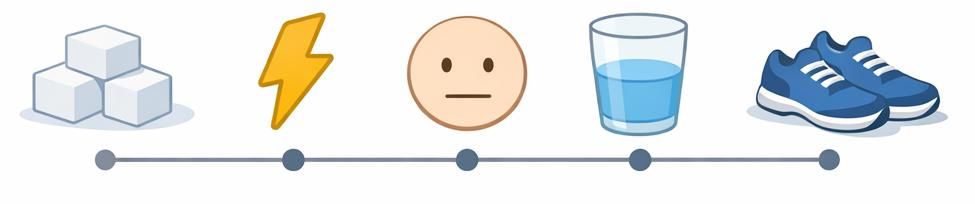
General awareness timeline (varies by person)
| Time after a sweet snack/drink | What people often notice |
|---|---|
| 0–60 minutes | A quick boost (more common with sugary drinks or candy) |
| 1–3 hours | Energy may level out—or dip, especially if it was mostly sugar |
| Later that day | Cravings may return (often when tired, stressed, or underfed) |
| First few days of cutting back | Some people notice cravings, mood dips, or low energy |
| 1–2 weeks of cutting back | Many people report steadier energy and fewer cravings |
Note: This is general lifestyle information, not a medical chart.
How long does it take for sugar to “leave” your body?
This is a common search phrase, but it can be a little misleading. Sugar doesn’t “leave” the body like a toxin you can flush out quickly. Instead, your body typically uses the glucose for energy and stores some for later.
- “Leave my bloodstream”: your body is moving fuel into cells over time.
- “Leave my body”: much of it is used or stored—so it’s not about a quick cleanse.
- “Stop feeling it”: this is often about steadier meals, sleep, stress, and avoiding sugar-only snacks.
If you were looking for a “fast fix,” see Common myths (water & sweating) first.
What affects how quickly sugar leaves your bloodstream? (and how long you feel it)
- Liquid sugar: sugary drinks often digest fast, which may feel like a sharper boost-and-dip (see: Sugary Drinks vs Solid Sweets).
- Low-fiber sweets: may leave you hungry again sooner.
- Pairing matters: many people feel steadier when sweets are paired with protein/fiber (see: Balanced Snacks for Sugar Cravings).
- Stress: can make cravings louder (see: Stress and Sugar Cravings).
- Poor sleep: is often linked with stronger cravings the next day (see: Sleep and Sugar Cravings and the Sleep Foundation).
- Skipped meals: long gaps can make quick calories feel urgent.
Sugar crash basics
A “sugar crash” is the tired, foggy, or hungry feeling some people notice after a very sweet snack—especially when it’s eaten on its own. For a full deep-dive, see: Sugar Crash: Why It Happens (and How Long It Can Last).
Common feelings people describe
- Sudden tiredness
- Trouble focusing
- Feeling hungry again soon
- Irritability
Sugar hangover vs sugar crash
- Sugar crash: often a shorter dip after a sweet snack or drink (hours later).
- Sugar hangover: often feeling off the next day after a sweet-heavy day.
Related: Sugar Hangover: Why You Feel Off After Too Many Sweets.
7 easy fixes (general, non-medical)
These are general wellness ideas, not personalized advice. Everyone’s needs differ (including allergies, pregnancy, medical conditions, and medications).
1) Choose water more often (especially after sweet drinks)
Water doesn’t “erase” sugar. But choosing water instead of sugary drinks can support healthier daily patterns over time (see the CDC).
2) Add “staying power” to snacks (protein + fiber)
Many people feel steadier pairing sweet foods with protein/fiber. See: Balanced Snacks for Sugar Cravings.
3) Gentle movement (only if safe for you)
Regular activity supports overall health (general info): American Heart Association.

4) Keep meal timing more regular (when possible)
Long gaps between meals can make quick calories feel urgent. A steadier routine often reduces late-day cravings for many people.
5) Protect sleep consistency
Poor sleep is often linked with stronger cravings the next day. Start here: Sleep and Sugar Cravings. Basics: Sleep Foundation.

6) Use a stress reset before you snack
Stress cravings are common. Short pauses and calming alternatives can help you choose more calmly. Related: Stress and Sugar Cravings.
7) Learn label shortcuts (without obsession)
Start here: How to Read Sugar on Nutrition Labels. Also useful: No Added Sugar vs Unsweetened vs Sugar-Free.
When to get help
It’s safest to speak with a qualified healthcare professional if:
- you have frequent or severe symptoms after sugar
- symptoms feel unusual for you, are worsening, or don’t improve
- you are pregnant or managing diabetes
- you take medication that affects blood sugar
- you’re asking this question because of a blood sugar or urine glucose test result (ask for personal interpretation)
Sugar detox timeline (what people usually mean)
Many people use “detox” to describe changing cravings and habits—not a literal cleanse. If you want a calm 14-day view, see: Sugar Detox Timeline (14 Days).
If you’re wondering about headaches, mood changes, or cravings when cutting back, see: Sugar Withdrawal Symptoms: What You May Feel When Cutting Back.
Common myths (water & sweating)
Can drinking water lower blood sugar faster?
Water supports normal body functions, but it doesn’t “cancel” sugar or instantly lower blood sugar like a quick fix. Choosing water instead of sugary drinks can support healthier daily patterns over time (see the CDC).
Does sweating remove sugar from the body?
Sweat is mostly water and salts. Sweating isn’t considered a meaningful way to remove sugar from the body. Exercise still supports overall health (see the Mayo Clinic).
Private check-in + downloadable “doctor summary” card
Not medical advice: This tool is for awareness only and does not diagnose anything.
Questions people ask
How long does sugar stay in your system?
In everyday searches, “stay in your system” usually means how long you notice the effects—not that sugar is “stuck.” For many people, the most noticeable shifts happen within 0–3 hours, especially after a sugary drink or sweets eaten on their own. Later that day, what can linger is the after-feel: cravings, feeling snacky, or a dip in focus—often influenced by sleep, stress, and whether you’ve eaten regular meals. If you’re trying to separate “bloodstream timing” from “cravings timing,” see what “stay in your system” usually means.
How long does it take for sugar to leave your body?
This phrase is common, but it can be misleading. Sugar isn’t typically something you “flush out” quickly. After you eat carbs/sweets, your body generally uses that fuel for energy and stores some for later (for example, as stored energy). So when people say “leave my body,” they’re often really asking: “How long until I stop feeling it?”—which can depend a lot on food form (drink vs solid), portion size, and whether the sweet was paired with protein/fiber. If you’ve heard quick-fix claims (water, sweating), see common myths.
Can drinking water lower blood sugar faster?
Water supports normal body functions and can be helpful if you feel thirsty or dehydrated, but it doesn’t “cancel” sugar or work like an instant reset. What tends to matter more in real life is the bigger pattern: for example, choosing water instead of sugary drinks can reduce how often you get big “sweet hits.” If you’re trying to understand what water can and can’t do here, see myths (water & sweating).
How long does a sugar crash last?
A “sugar crash” is the dip some people notice a few hours after a very sweet snack or drink—especially when it’s eaten alone. How long it lasts can vary: it may pass fairly quickly for some people, or feel more drawn out if you were already underfed, stressed, or short on sleep. If you want the most detailed (still lifestyle-focused) explanation of timing and why it happens, see Sugar Crash: Why It Happens (and How Long It Can Last).
How long does a sugar hangover last?
A “sugar hangover” usually describes feeling off later that day or the next day after a sweet-heavy day—more of an overall slump than a quick crash. People often describe brain fog, low energy, thirst, or just feeling “not quite right,” and the timing can depend on sleep, hydration, alcohol (if any), and how sugary the day was. For a clear explanation (without cleanse claims), see: Sugar Hangover: Why You Feel Off After Too Many Sweets.
How can I feel better after too much sugar today?
If you’re feeling shaky, tired, snacky, or “blah” after sweets, many people start with simple, low-risk basics: getting back to normal meals (instead of skipping), drinking water, resting, and gentle movement if it feels safe for them. The goal isn’t to “erase” sugar—it’s to help your day feel steadier. For an easy, calm reset approach, see: Sugar Hangover: A Simple Reset.
Why do sugary drinks feel stronger than dessert?
Drinks can feel stronger because they’re usually consumed quickly and often don’t feel as filling as solid food. That can make the “up then down” feeling more noticeable for some people—especially with large portions, caffeine (sweet coffee/energy drinks), or when the drink replaces a meal. If this is your main pattern, see: Sugary Drinks vs Solid Sweets.
What if I get cravings every day?
Daily cravings are common—and they’re not always just about willpower. For many people, cravings get louder with poor sleep, high stress, long gaps between meals, and routines where sweet snacks are the easiest “quick energy.” This page focuses on understanding the pattern, and your related guides can help you explore common drivers: Sleep and Sugar Cravings and Stress and Sugar Cravings. If you want practical snack ideas that feel steadier (without strict rules), see Balanced Snacks for Sugar Cravings.
Does an A1C test reflect one sugary day?
Generally, A1C is used to reflect longer-term blood sugar patterns (often discussed as roughly a few months), not one dessert or one day of sweets. If you’re asking because you saw a lab number and you’re worried, it’s best to get personal interpretation from a qualified clinician who knows your history. This page is for general education and can’t interpret test results.
If I’m pregnant or have diabetes, should I follow this page?
You can use this page as general education to understand common terms (like “stay in your system,” “crash,” or “hangover”). But pregnancy, diabetes, and medications that affect blood sugar can change what’s “normal” and what’s safe—so any personal changes are best discussed with your clinician. If symptoms feel severe, unusual, or worsening, seek medical guidance promptly.
References
Disclaimer
This page is for general education only. It is not medical advice and should not be used to diagnose, treat, cure, or prevent any condition. Do not rely on this page for personal health decisions. If you have a medical condition, are pregnant, take medication, have allergies, or symptoms that worry you, consult a qualified healthcare professional.
Read the full site disclaimer: https://hwvibes.com/disclaimer/