Caffeine Withdrawal Timeline: How Long It Lasts and What Research Shows

Caffeine withdrawal usually starts 12–24 hours after your last cup, peaks at 1–2 days and lasts 2–9 days. The day-by-day timeline, headache duration and a simple taper plan.

Every HWVibes guide, newest first: sugar and cravings, kidney health, nutrition, sleep and everyday wellness. General information only, not medical advice.
Caffeine withdrawal usually starts 12–24 hours after your last cup, peaks at 1–2 days and lasts 2–9 days. The day-by-day timeline, headache duration and a simple taper plan.

A heating pad can ease constipation cramps and bloating, and a small trial found warmth on the belly helped bowel movements. Where to put it, how long, and what else works.
Kombucha has not been established as a cause of kidney stones, though kidney-specific research is limited. It is brewed from tea, which contains oxalate — who may want to count it.
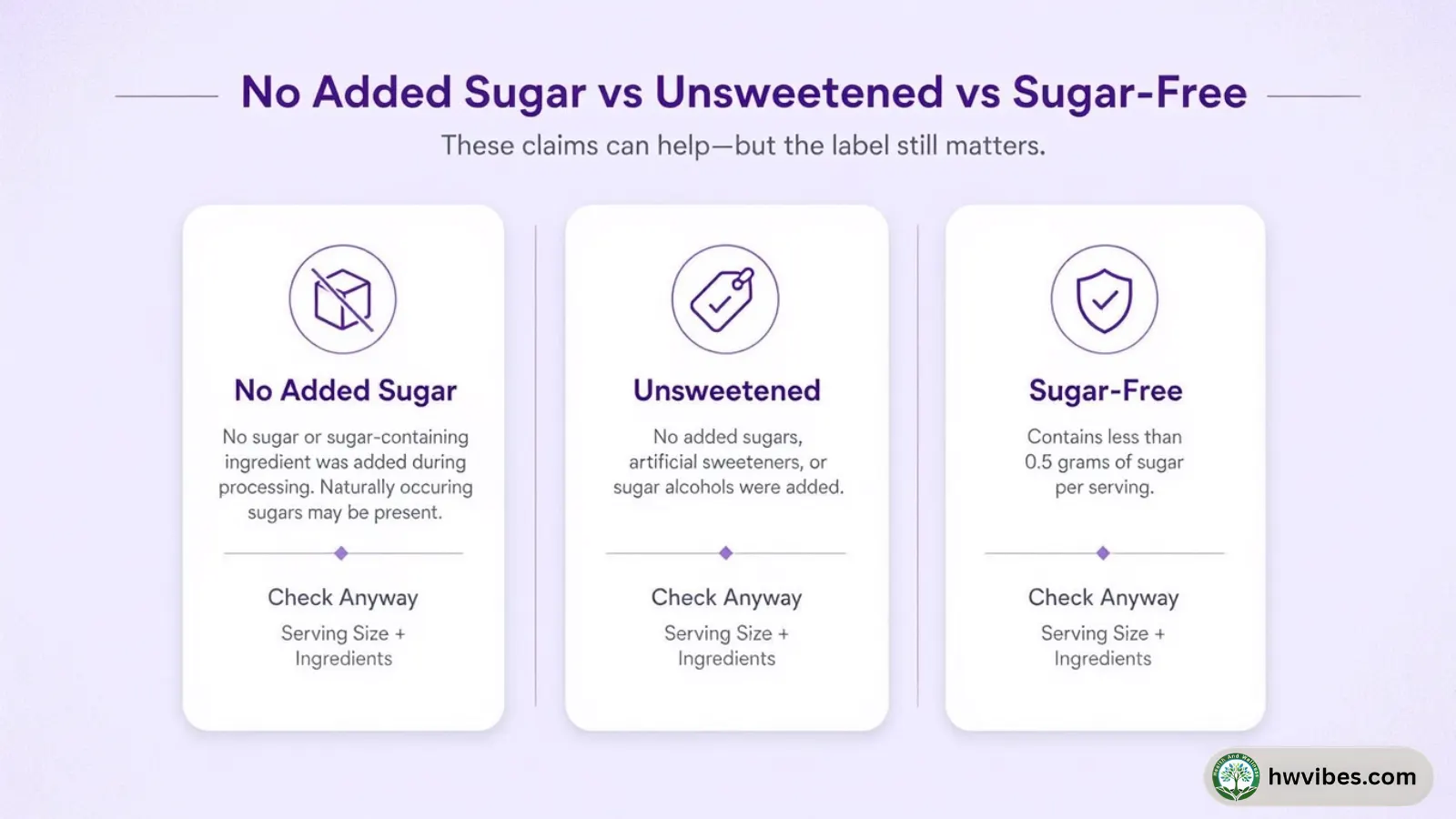
Three labels that sound identical and mean different things. What each one actually promises, what it does not, and how to compare two products quickly.
Twenty protein-and-fibre snack ideas that hold better than sugar alone, a simple formula for building your own, and what to reach for late at night.
Why you feel foggy, thirsty and flat the morning after too many sweets, how long it tends to last, and a gentle reset that involves no punishment.
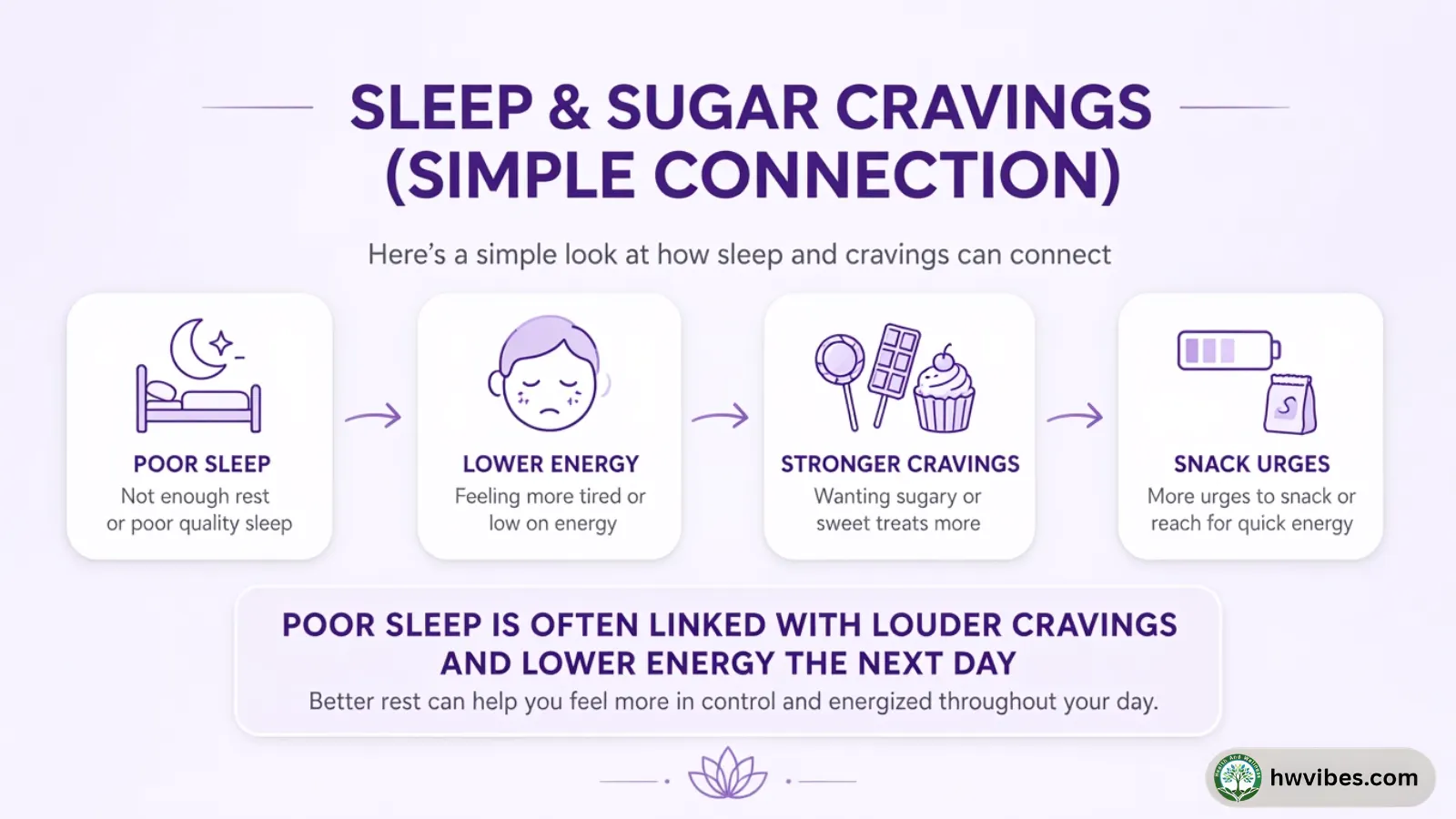
How short sleep may make sugar harder to resist for some people, why cravings often show up at night, and three small changes that may help.
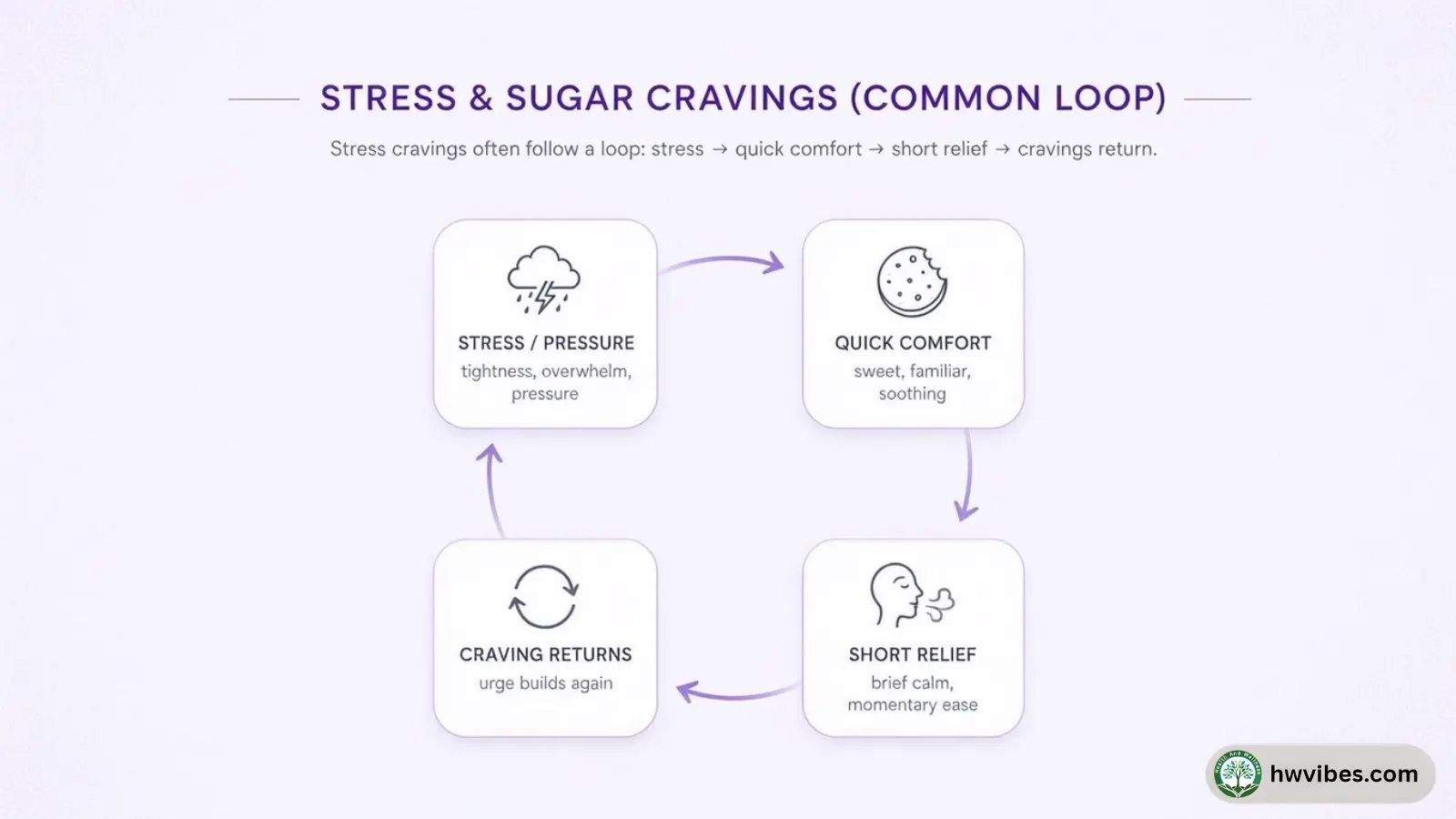
The link between stress and reaching for something sweet, why it is not a discipline failure, and ten alternatives that address the feeling rather than the sugar.
Why sugar in drinks can be absorbed faster than sugar in solid food, which drinks are sneakier than they look, and what 100% juice really means.
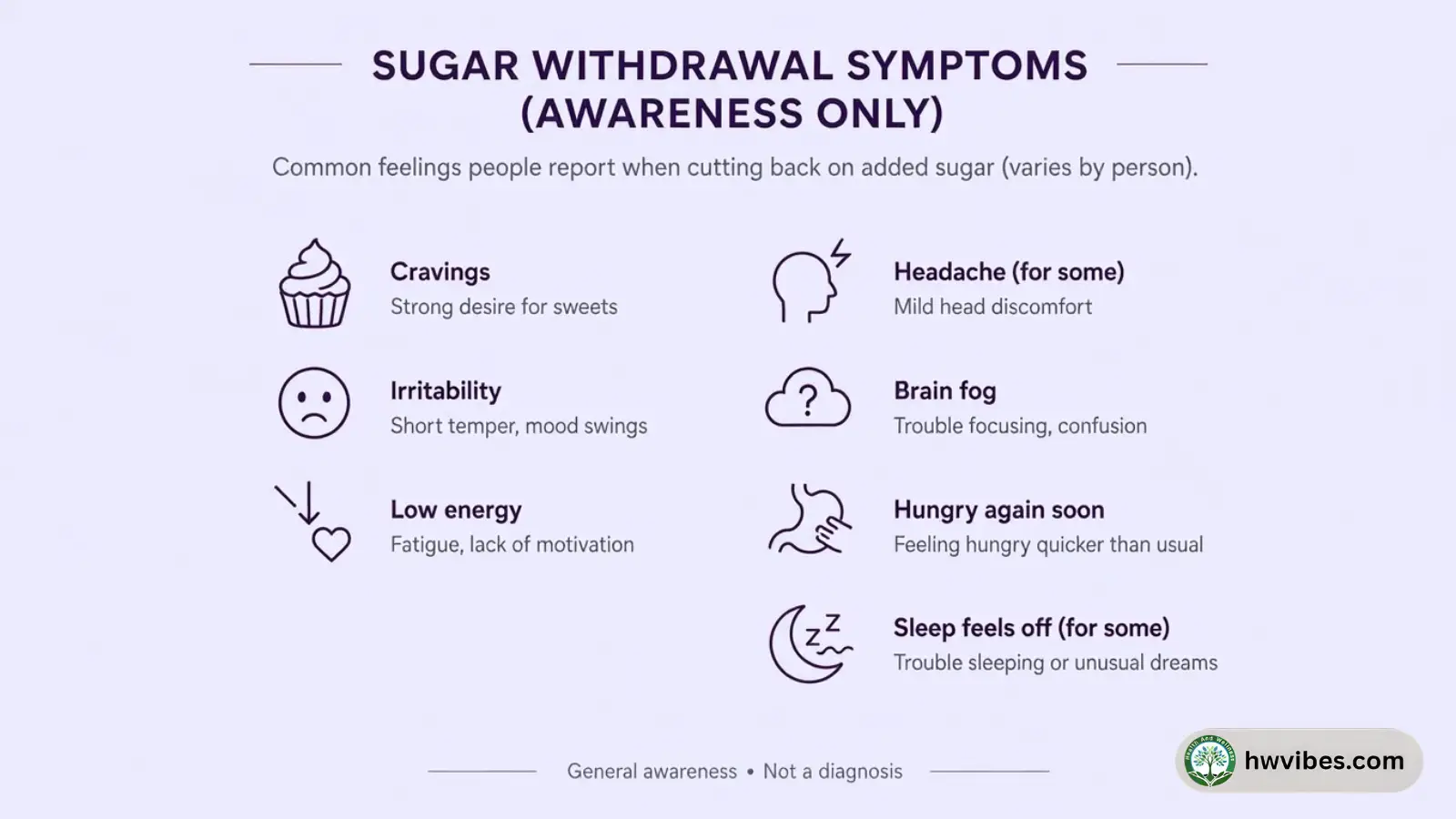
What people commonly feel in the first days of cutting back, why it happens, when it is probably something else, and the mistakes that make it harder.