
If you’ve tried to cut back on added sugar and felt cranky, tired, headachy, or extra snacky—this page is for you. People often call these sugar withdrawal symptoms, even though it’s usually more about habit change and routine adjustment than anything dramatic. If you only read one part, read the “Key takeaways,” “Quick answer,” and the disclaimer.
Written by: HWVibes Editorial Team • Last updated: September 2026
Expert reviewed
Last reviewed: 24 September 2026
Dr. Hena A. Ansari (MBBS, MD) reviewed this page to keep it education-only,
confirm the wording stays non-alarming, and ensure the term “withdrawal” is used carefully (as an informal description—not a diagnosis).
View full profile →
Reminder: This page is general education and does not replace medical care.
Key takeaways (quick)
- “Sugar withdrawal” is not a diagnosis—it’s a common phrase for feeling off when changing a daily sugar habit.
- Research has not established a standard onset, peak or duration; experiences vary widely from person to person.
- Sleep, stress, caffeine changes, and skipped meals can intensify withdrawal-like feelings.
- If symptoms are severe, unusual, or persistent—or you have diabetes/pregnancy/medications—get professional advice.
- Quick answer
- What “sugar withdrawal” usually means
- Sugar withdrawal symptoms
- Sugar withdrawal timeline: what research does and doesn’t show
- Why you may feel “off” when cutting back
- When it might not be “withdrawal” (safety)
- Gentle support ideas (non-medical)
- Common mistakes that make symptoms worse
- When to get help
- Questions people ask
- References
- Disclaimer
- Related guides (topic cluster)
Quick answer
Some people report cravings, headache, low energy, low mood or difficulty concentrating when they sharply reduce sugary foods or drinks. However, “sugar withdrawal” is not a formal medical diagnosis, and human research has not established a standard onset, peak or duration that applies to everyone (Westwater et al., 2016). Some reported symptoms may also reflect simultaneous changes in caffeine intake, total food intake, sleep or eating routine. In a small study of 25 teenagers who stopped sugary drinks for only three days, many reported cravings and some changes in well-being, but caffeine may have played a part (Falbe et al., 2019). A 2026 study of 203 adults trying to stop free sugars for two weeks found cravings, preoccupation and difficulty abstaining, and some reported low energy, body aches or low mood; the authors said longer monitoring is needed (Bijker et al., 2026).
For the 14-day overview, see: How to Do a Sugar Detox: A Gentle 14-Day Plan. If your main problem is energy dips after sweets, see: Sugar Crash: Why It Happens.
What “sugar withdrawal” usually means (and what it doesn’t)
“Withdrawal” can sound scary. In everyday wellness use, it usually means: your body and brain are used to a pattern (sweet taste + quick reward + routine), and you’re changing that pattern.
For a general explanation of how sugar can affect the body, see: NHS.
If you are pregnant, managing diabetes, or taking medication that affects blood sugar, it’s safest to get personalized guidance before making major changes.
Sugar withdrawal symptoms (also called sugar detox symptoms)
People describe this phase differently, but these are common experiences when cutting back on added sugar:
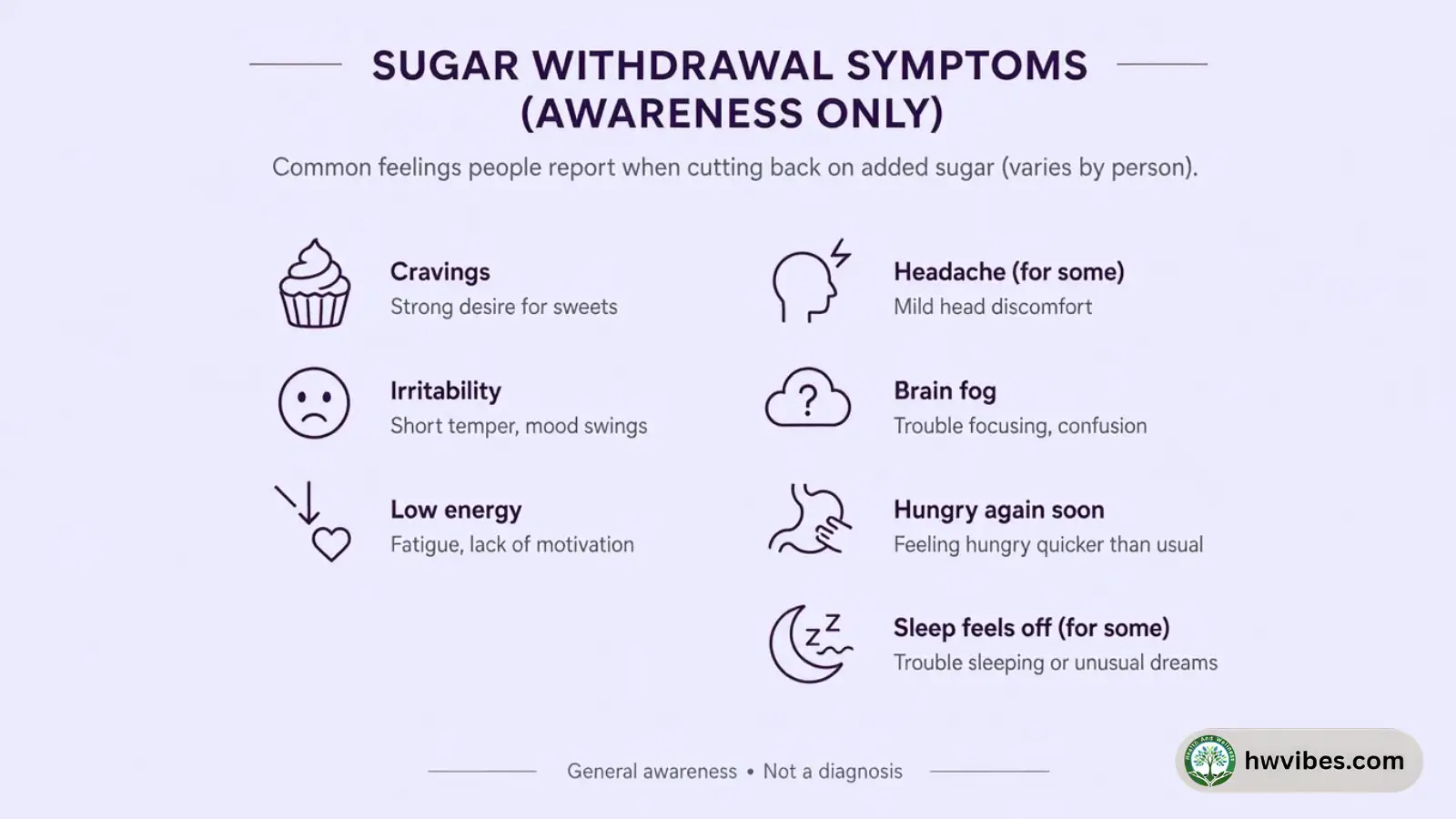
- Cravings for sweets or refined carbs
- Irritability or feeling more easily annoyed
- Low energy or “blah” mood
- Headaches (reported by some people)
- Brain fog or trouble focusing
- Hunger or feeling unsatisfied after meals
- Sleep changes (some people feel off for a few nights)
These symptoms can overlap with stress, poor sleep, dehydration, caffeine changes, or irregular meal timing. If symptoms feel severe, unusual, or persistent, seek professional guidance.
What does sugar withdrawal feel like?
People who report it often describe thinking about sweets more than usual, shorter patience and a heavier afternoon slump. These experiences vary, are not specific to sugar, and can also come from poor sleep, skipped meals or caffeine changes.
Sugar withdrawal headache
Headaches are among the symptoms people report, but they are nonspecific. They are often linked to other changes made at the same time, such as drinking less soda or coffee (caffeine withdrawal is a well-known cause of headaches), eating less overall, or drinking less fluid. A headache that is severe, sudden, or comes with fever, stiff neck, vision changes or confusion is not sugar withdrawal and needs medical care.
Common, less common, and “get it checked”
| Common | Less common | Not typical: get checked |
|---|---|---|
| Cravings for sweets or refined carbs | Achy, “flu-like” tiredness | Shakiness, sweating or confusion (possible low blood sugar, especially on diabetes medicines) |
| Irritability, low mood | Mild nausea or dizziness | Fainting, chest pain or a racing heart |
| Headache | Anxiety or trouble sleeping | Symptoms that get worse after 2–3 weeks instead of better |
| Tiredness, brain fog | Bowel changes (often from new foods or sweeteners) | Unplanned weight loss, constant thirst or peeing a lot |
Sugar withdrawal timeline: what research does and doesn’t show
Because there is no validated sugar-withdrawal syndrome, there is no evidence-based day-by-day timeline. The small studies available do not establish when symptoms start, peak or end, or that taste changes on specific days.
A practical two-week adjustment planner (not a medically established withdrawal timeline). It contains planning prompts only, not predictions of what you will feel.
| When | Planning prompt |
|---|---|
| Days 1–3 | Notice your usual sweet-drink and snack times; plan regular meals and a non-sweet after-dinner routine. |
| Days 4–7 | Keep the routine; have options such as fruit or plain yogurt ready for usual craving times. |
| Week 2 | Note what tends to trigger cravings (stress, tiredness, time of day) and adjust the plan. |
| After week 2 | Keep the changes that felt manageable; treat slips as normal and return to the plan at the next meal. |

Why you may feel “off” when cutting back
1) Habit loops are powerful
If your brain expects a sweet reward at certain times, changing that routine can feel uncomfortable—like something is missing.
2) You may be changing more than sugar
People often cut sugar and also change caffeine, sleep schedule, or meal timing at the same time. That combo can amplify “withdrawal-like” feelings.
3) Sleep and stress change cravings
Poor sleep is often linked with stronger cravings and lower energy the next day. If that’s your pattern, start here: Sleep and Sugar Cravings. For general sleep basics: Sleep Foundation.
4) Added sugar is everywhere
Cutting back can be difficult simply because added sugar appears in many packaged foods. If you want a practical list: Hidden Added Sugar Foods.
When it might not be “withdrawal” (safety note)
Feeling “off” after changing food habits can have more than one cause. Consider these possibilities too:
- Not eating enough overall (or going long gaps between meals)
- Dehydration
- Big caffeine changes (headaches are common during caffeine reduction)
- Medical causes (especially if symptoms are severe, sudden, or frequent)
Gentle support ideas (non-medical)
This is not personal medical advice. These are general, low-risk ideas many people use during the first two weeks. Choose what fits your preferences, allergies, and health needs.
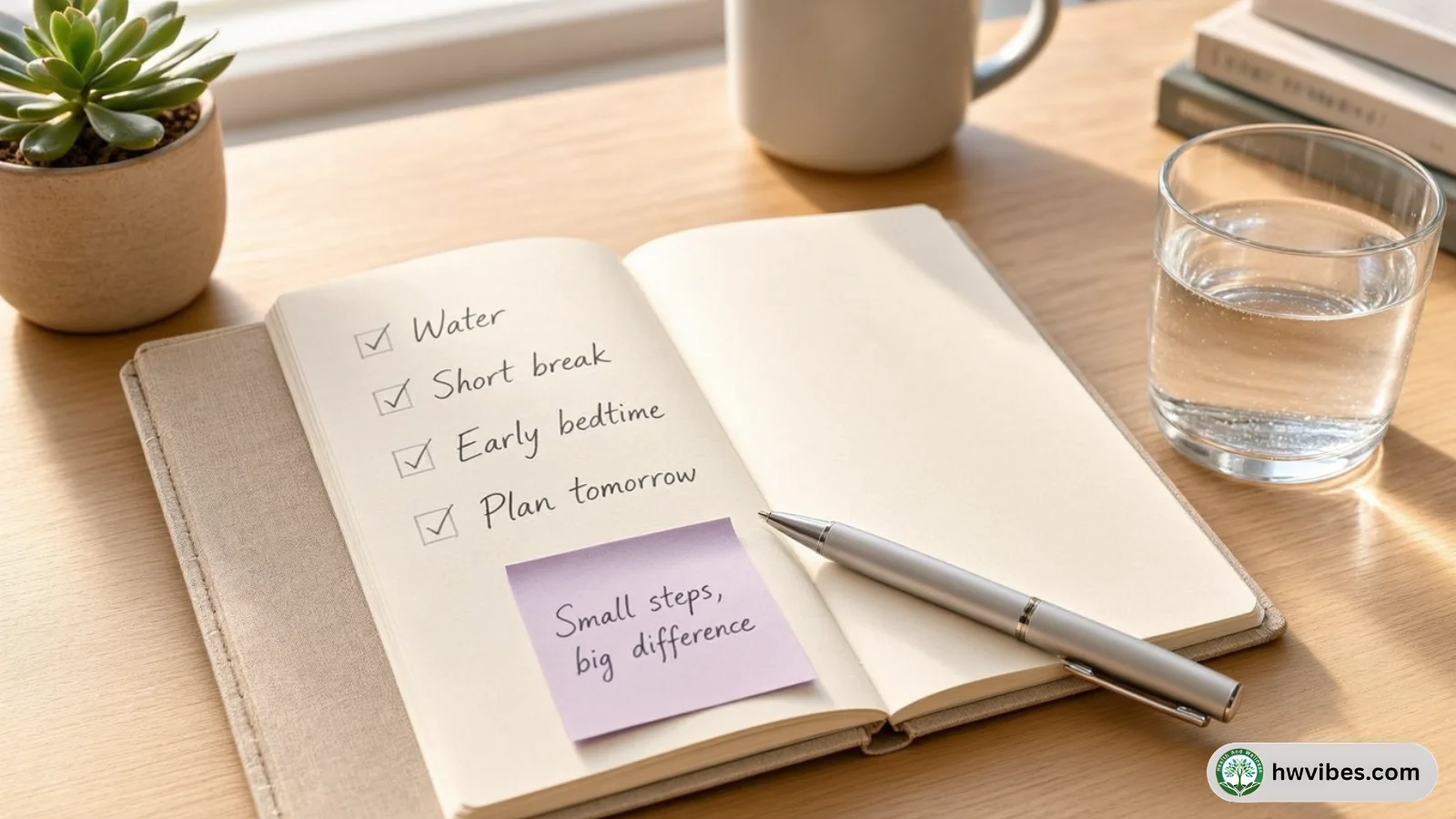
1) Keep routines steady
Many people feel better focusing on consistent meals, breaks, and sleep rather than trying to overhaul everything at once.
2) Choose water more often
Water doesn’t “erase” sugar, but it’s a helpful default—especially if sugary drinks were a daily habit. See: CDC: Rethink Your Drink.
3) Use “delay, don’t deny”
A simple approach is waiting 5–10 minutes and asking: “Is this hunger, stress, tiredness, or habit?”
4) Make your plan repeatable
Many people do better with “less often” or “smaller portions” than strict bans. Consistency usually matters more than intensity.
Common mistakes that make symptoms worse
Changing everything at once
Cutting sugar, cutting caffeine, starting intense workouts, and changing your whole routine at the same time can make the first week feel rough.
Going too long without eating
Long gaps can make cravings louder. If this is common for you, focusing on routine consistency may help more than stricter rules.
All-or-nothing thinking
If you “slip once” and restart with guilt, it can become a loop. Many people do better with calm “next choice” thinking.
Ignoring sleep
When you’re exhausted, cravings often feel louder. Sleep can matter as much as food choices for how you feel.
When to get help
If your symptoms feel severe, unusual, frequent, or don’t improve, it’s safest to speak with a qualified healthcare professional. This matters even more if you are pregnant, managing diabetes, have a medical condition, or take medication that affects blood sugar.
Questions people ask
How long do sugar withdrawal symptoms last?
Human research has not established a standard duration. Small studies have looked at only a few days or two weeks, and symptoms people report vary widely. Because there is no validated sugar-withdrawal syndrome, persistent or significant symptoms should not automatically be attributed to reducing sugar.
What are the most common sugar withdrawal symptoms?
People often report cravings, irritability, low energy, headaches, and brain fog—especially if sweets were a daily habit.
Why do I feel tired when I stop eating sugar?
Some people feel low energy during routine changes—especially if sleep is poor or meal timing changes too. If tiredness feels severe or persistent, seek professional advice.
Is sugar detox real?
People often use “detox” to describe habit and taste changes, not a literal cleanse. Your body already processes the foods you eat.
What if I can’t stop thinking about sweets?
That’s common—especially in the first week. Many people find it helps to focus on sleep, stress, and routines—plus small changes they can repeat.
Is sugar withdrawal real?
Sugar withdrawal is not a medical diagnosis, and research in humans is limited. But many people do report real, short-lived symptoms such as cravings, headaches and irritability when they cut back on added sugar, and a small study in teenagers who stopped sugary drinks found similar effects.
Can sugar withdrawal feel like the flu?
Some people describe feeling achy, tired and run-down, which they call the “sugar flu”. Because there is no validated sugar-withdrawal syndrome or standard duration, persistent or significant symptoms should not automatically be attributed to reducing sugar. Fever, cough or a sore throat point to an actual infection.
Can sugar withdrawal cause diarrhea?
Cutting back on sugar itself does not usually cause diarrhea. It is more often caused by new foods eaten at the same time, such as a sudden jump in fiber or sugar-free products containing sugar alcohols (like sorbitol or xylitol). If diarrhea lasts more than a couple of days, see a doctor.
How can I make sugar withdrawal easier?
General approaches people use include cutting back gradually, regular meals with protein and fiber, adequate fluids, keeping caffeine intake stable and protecting sleep. These are general wellness measures, not treatment, and people with diabetes or other conditions should discuss diet changes with their doctor.
References
Disclaimer
This page is for general education only. It does not provide medical advice, diagnosis, or treatment. Do not use it to make personal health decisions. If you have a medical condition, are pregnant, take medication, have allergies, or your symptoms feel severe or persistent, contact a qualified healthcare professional.
Read the full site disclaimer: https://hwvibes.com/disclaimer/
Medical disclaimer: HWVibes provides general health information for educational purposes only. It is not a substitute for professional medical advice, diagnosis or treatment, and reading it does not create a doctor–patient relationship. Always ask your doctor or another qualified health provider about any medical question or before trying anything described here, and never ignore professional advice or delay seeking it because of something you read on this site. Read the full medical disclaimer.
Spotted something that looks wrong or out of date? Tell us and our editors will check it.