“Sugar detox” is a popular phrase, not a medical detoxification process. The body does not need a special cleanse to remove sugar. This 14-day plan is simply a practical structure for reducing added sugar gradually and learning where it appears in foods—without extreme rules.
Written by: HWVibes Editorial Team • Last updated: September 2026
Expert reviewed
Last reviewed: 24 September 2026
Dr. Hena A. Ansari (MBBS, MD) reviewed this page to keep it education-only,
ensure “detox” wording is non-misleading, and confirm the suggestions stay general, low-risk, and non-prescriptive.
View full profile →
Reminder: This page is general education and does not replace medical care.
Key takeaways (read this first)
- Most “sugar detox” timelines describe habit + taste changes, not a literal cleanse.
- Many people find days 1–4 feel most noticeable; days 7–14 often feel steadier (varies).
- Sleep and stress strongly affect cravings—sometimes more than the food itself.
- If you have diabetes, are pregnant, take blood sugar–affecting medication, or feel unwell, get personalized guidance.
- Quick answer
- How to do a sugar detox: the 14-day plan
- What to eat on a sugar detox
- What “sugar detox” usually means
- What counts as “added sugar”?
- What to expect: symptoms and timeline
- Why the first days can feel hard
- Signs cravings may be improving
- Gentle support ideas (non-medical)
- Common mistakes that make it harder
- Who should be cautious (and talk to a professional)
- Questions people ask
- References
- Disclaimer
- Related guides (topic cluster)
Quick answer
A “sugar detox” here means cutting back on added sugar (not the natural sugar in whole fruit, milk or plain yogurt) over about 14 days, one step at a time: sugary drinks first, then breakfast and snacks, then hidden sugars in packaged foods, then desserts. Fourteen days is used here as a convenient behavior-change period, not because research has established a 14-day physiological “reset.” Individual experiences vary. The American Heart Association recommends limiting added sugar to no more than about 6% of daily calories, approximately 25 g/day for most women and 36 g/day for most men (AHA).
For a detailed day-by-day list of symptoms, see Sugar Withdrawal Symptoms: How Long They Last. For the bigger context of daily sugar effects, start here: How Long Does Sugar Stay in Your System?
How to do a sugar detox: the 14-day plan
Change one layer at a time. Each step builds on the one before, so the change is gradual rather than a dramatic overhaul.
| Days | Focus | What to do |
|---|---|---|
| 1–3 | Drinks | Swap soda, juice, sweet tea, energy drinks and sweetened coffee for water, sparkling water, unsweetened tea or coffee with less syrup. Drinks are often the biggest single source of added sugar (why drinks hit harder). |
| 4–7 | Breakfast and snacks | Build breakfast around protein and fiber (eggs, plain yogurt with fruit, oats with nuts). Keep two or three balanced snacks ready for your usual craving times. |
| 8–10 | Hidden sugar | Check labels on sauces, cereals, flavored yogurt, bread and “healthy” bars. Look for “added sugars” on the label (how to read sugar on labels, 25 hidden sugar foods). |
| 11–14 | Desserts and evenings | Replace the automatic after-dinner sweet with a routine (tea, a walk, fruit). Plan a small treat you actually enjoy rather than grazing. |
| Day 15+ | Keep what works | Keep the swaps that felt easy, bring back favorite treats on purpose, and use the label habit to stay near your daily target. |
What to eat on a sugar detox
A sugar detox is about cutting added sugar, not all carbohydrates. Keep meals filling and familiar.
| Enjoy freely | Cut back on |
|---|---|
| Whole fruit (berries, apples, oranges, bananas) | Soda, sweet tea, energy drinks, fruit juice drinks |
| Eggs, fish, chicken, beans, lentils, tofu | Candy, cookies, pastries, cakes |
| Plain yogurt, milk, cheese | Flavored yogurt, sweetened cereals, granola bars |
| Vegetables, whole grains, oats, potatoes | Ketchup, BBQ and sweet chili sauces, sweetened dressings |
| Nuts, seeds, nut butter (no added sugar) | Syrup-heavy coffee drinks and desserts |
Unsure what “no added sugar” or “sugar-free” means on a pack? See No Added Sugar vs Unsweetened vs Sugar-Free.
What “sugar detox” usually means (and what it doesn’t)
“Detox” can sound medical. In everyday wellness use, people typically mean: fewer added-sugar foods, fewer cravings, steadier energy, and less “snacking autopilot.”
Your body already processes the foods you eat—there’s no special cleanse required. For a trusted, plain-language overview of sugar effects, see: Cleveland Clinic.
What counts as “added sugar”?
Added sugars are sweeteners added during processing or preparation (like sugar, syrups, honey, juice concentrate). They show up most often in drinks, desserts, sweetened dairy, sauces, cereals, bars, and packaged snacks.
Helpful next steps: Hidden Added Sugar Foods and How to Read Sugar on Labels.
A practical 14-day habit-change framework — not a medical withdrawal timeline
This is not a medical schedule. Research has not established a standard timeline for symptoms when cutting back on sugar; the notes below are examples of what some people report, and many people notice none of them. Persistent or significant symptoms should not automatically be attributed to reducing sugar.
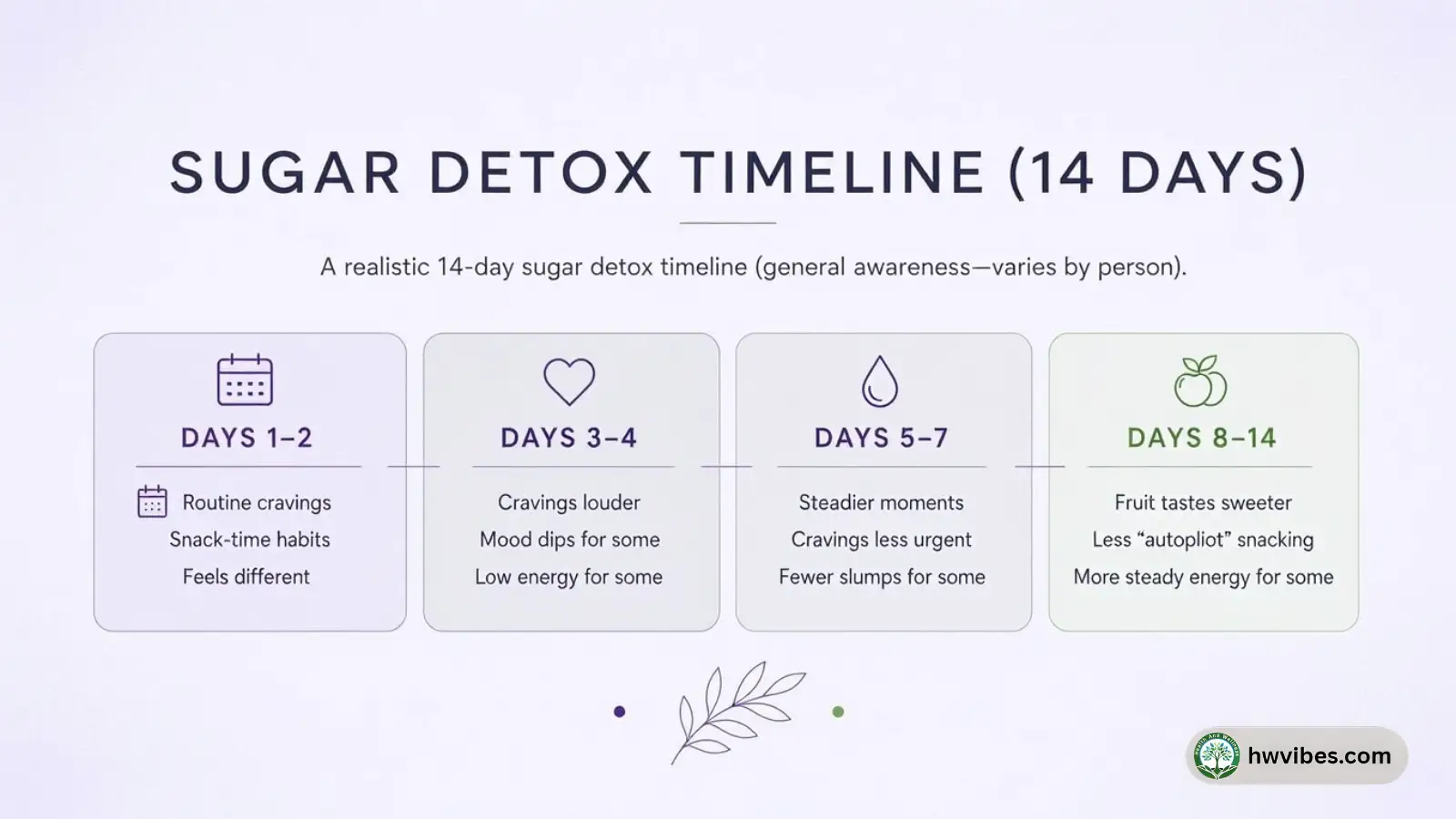
Days 1–2: notice your habit times
- Cravings often appear at “habit times” (after meals, afternoon slump)
- Meals may feel unfinished without something sweet
- Some people feel a bit flat or unsatisfied
Days 3–4: stick with your plan
- Some people report stronger cravings for sweets/refined carbs
- Some people report mood dips or irritability
- Headaches are reported by some people (often mixed with sleep/caffeine/routine changes)
Days 5–7: build on what is working
- Cravings may feel less “urgent”
- Some people notice fewer afternoon slumps
- It may feel easier to pause before snacking
Days 8–10: notice any changes in taste preferences
- Some people say fruit starts to taste sweeter
- Very sweet snacks may start to feel “too much”
- Cravings may still happen but feel more manageable
Days 11–14: decide which habits to keep
- Some people report fewer daily cravings
- Snacking can feel less automatic
- Some people say their energy feels steadier, especially when sleep and stress also improve
If your main struggle is the “dip,” you’ll like: Sugar Crash: Why It Happens.
Why the first days can feel hard

Habit loops
If dessert is part of your routine, your brain expects it—even when hunger isn’t the main reason.
Sleep debt
Poor sleep is often linked with stronger cravings and lower daytime energy. Related: Sleep and Sugar Cravings.
Hidden sources
Added sugar “sneaks in” through drinks, sauces, and snacks. Start here: Hidden Added Sugar Foods.
Signs cravings may be improving
- Cravings feel less urgent (you can pause before acting)
- Fewer afternoon slumps on some days
- Fruit tastes sweeter or more satisfying
- Less “snacking autopilot” during boredom or stress
Gentle support ideas (non-medical)

This is not personal medical advice. Choose what fits your preferences, allergies, and health needs.
1) Keep routines steady
Many people feel better focusing on consistent meals, breaks, and sleep rather than changing everything at once.
2) Swap sugary drinks more often
Drinks are a common high-impact place to start. See: CDC.
3) Use “delay, don’t deny”
Try waiting 10 minutes, then check: hunger, stress, tiredness, or habit?
4) Make it repeatable
Many people do better with “less often” or “smaller portions” than strict bans.
Common mistakes that make it harder
Changing sugar + caffeine + workouts all at once
That combo can make the first week feel rough. Many people do better with one steady change first.
Going too long without eating
Long gaps can make cravings louder. Routine consistency often helps more than stricter rules.
Using guilt as motivation
Guilt usually backfires. Calm “next choice” thinking tends to be more sustainable.
Who should be cautious (and talk to a professional)
- People with diabetes or using medication that affects blood sugar
- Pregnancy or breastfeeding
- History of disordered eating or restrictive dieting cycles
- Symptoms that feel severe, unusual, or persistent
Questions people ask
How long does it take to detox your body from sugar?
Your body doesn’t require a special detox to process sugar. When people say “detox,” they usually mean cravings and habit changes. Many people say the first few days are the hardest, and things often feel easier by 1–2 weeks.
What are common sugar withdrawal symptoms?
Some people report cravings, irritability, low energy, headaches, or feeling off in the first few days after cutting back. These experiences vary and can overlap with sleep, stress, caffeine changes, and meal timing.
Why do I crave sugar more at night?
Many people notice cravings later in the day when tired or stressed, or after long gaps between meals. Related: Sleep and Sugar Cravings.
What if I mess up during the 14 days?
That’s common. A helpful approach is returning to your next calm choice rather than restarting with guilt. Consistency over time matters more than a perfect streak.
How do I start a sugar detox?
Start with drinks: swap soda, juice and sweetened coffee for water, sparkling water or unsweetened tea for the first few days. Then move on to breakfast and snacks, hidden sugars in packaged foods, and finally desserts. Changing one layer at a time is easier to stick with than cutting everything at once.
Can I eat fruit on a sugar detox?
Yes. Whole fruit contains natural sugar along with fiber, water and nutrients, and it is not the target of a sugar detox. Fruit is one of the easiest ways to handle sweet cravings. It is juices, smoothies with added sugar and dried fruit in large amounts that are worth limiting.
How long should a sugar detox last?
Fourteen days is used here as a convenient behavior-change period, not because research has established a 14-day physiological “reset.” Individual experiences vary. After that, the aim is to keep added sugar near a comfortable daily limit, such as the AHA guide of about 25 g for most women and 36 g for most men.
References
Disclaimer
This page is for general education only. It does not provide medical advice, diagnosis, or treatment. Do not use it to make personal health decisions. If you have a medical condition, are pregnant, take medication, or your symptoms feel severe or persistent, contact a qualified healthcare professional.
Read the full site disclaimer: https://hwvibes.com/disclaimer/
Medical disclaimer: HWVibes provides general health information for educational purposes only. It is not a substitute for professional medical advice, diagnosis or treatment, and reading it does not create a doctor–patient relationship. Always ask your doctor or another qualified health provider about any medical question or before trying anything described here, and never ignore professional advice or delay seeking it because of something you read on this site. Read the full medical disclaimer.
Spotted something that looks wrong or out of date? Tell us and our editors will check it.