Added sugar shows up in everyday foods—often in places that don’t even taste like dessert. This guide lists hidden added sugar foods and shows fast ways to spot them on labels without turning grocery shopping into a full-time job.
Written by: HWVibes Editorial Team • Last updated: September 2026
Expert reviewed
Last reviewed: 24 September 2026
Dr. Hena A. Ansari (MBBS, MD) reviewed this page to ensure it stays education-only,
uses practical, non-alarming wording, and avoids misleading “instant fix” messaging.
View full profile →
Reminder: This page is general education and does not replace medical care.
Key takeaways (fast)
- Added sugar often hides in drinks, sauces, and “healthy” snacks—not just desserts.
- The two quickest checks are the ingredients list + added sugars line (when available).
- “No added sugar” is a clue, but it doesn’t always mean low sugar.
- Labels are easiest when you use them for comparison (two similar products side by side).
- Quick answer
- Top 5 sneaky categories
- Added sugar vs natural sugar
- Why sugar feels “hidden”
- Healthy-sounding foods that hide sugar
- Hidden added sugar foods (25 common items)
- Also check these foods
- Common names for added sugar
- Label tips (fast)
- How much is “a lot”?
- What “no added sugar” really means
- Questions people ask
- References
- Disclaimer
- Related guides
Quick answer
Hidden added sugar foods are everyday items that may contain added sweeteners even when they don’t taste like dessert—like sauces, flavored yogurt, cereals, and packaged snacks. The easiest way to spot them is the ingredients list plus the added sugars line (when available).
Want the step-by-step method? See: How to Read Sugar on Labels.
Top 5 sneaky categories (most common)
- Sweetened drinks (coffee drinks, teas, sports/energy drinks)
- Breakfast items (cereal, granola, flavored oatmeal)
- Flavored dairy (yogurt, drinkable yogurt, flavored milk)
- Sauces & dressings (ketchup, BBQ sauce, salad dressing)
- Bars & “healthy snacks” (protein bars, trail mix, packaged smoothies)
Drinks-focused? See: Sugary Drinks vs Solid Sweets.
Added sugar vs natural sugar (quick difference)
- Natural sugars occur in foods like fruit and plain milk (fruit also contains fiber).
- Added sugars are added during processing/preparation (soda, candy, sweetened yogurt, many packaged foods).
Background reading: Mayo Clinic: Added sugar.
Healthy-sounding foods that often hide sugar
Some of the biggest surprises come from foods marketed as healthy. The wording on the front of the pack describes one quality of the food, not how much sugar it contains (Johns Hopkins Medicine).
| Front-of-pack wording | What to check |
|---|---|
| “Natural”, “organic”, “made with real fruit” | Organic cane sugar, honey and fruit juice concentrate still count as added sugar. |
| “Low-fat” or “fat-free” | Sugar is sometimes added to replace flavor and texture; compare added sugars with the regular version. |
| “Multigrain”, “whole grain”, “high fiber” | Cereals, granola and bars can still carry 10 g or more of added sugar per serving. |
| “No high-fructose corn syrup” | It may simply use a different sugar, such as cane sugar or glucose syrup. |
| “Protein” bars and drinks | Check added sugars and sugar alcohols; some are closer to a candy bar. |
| “Gluten-free” | Says nothing about sugar; baked goods often have as much as the regular kind. |
The fastest check is the “Includes Xg Added Sugars” line: 10 g or more per serving is high. See how to read sugar on labels.
Hidden added sugar foods (25 common items)
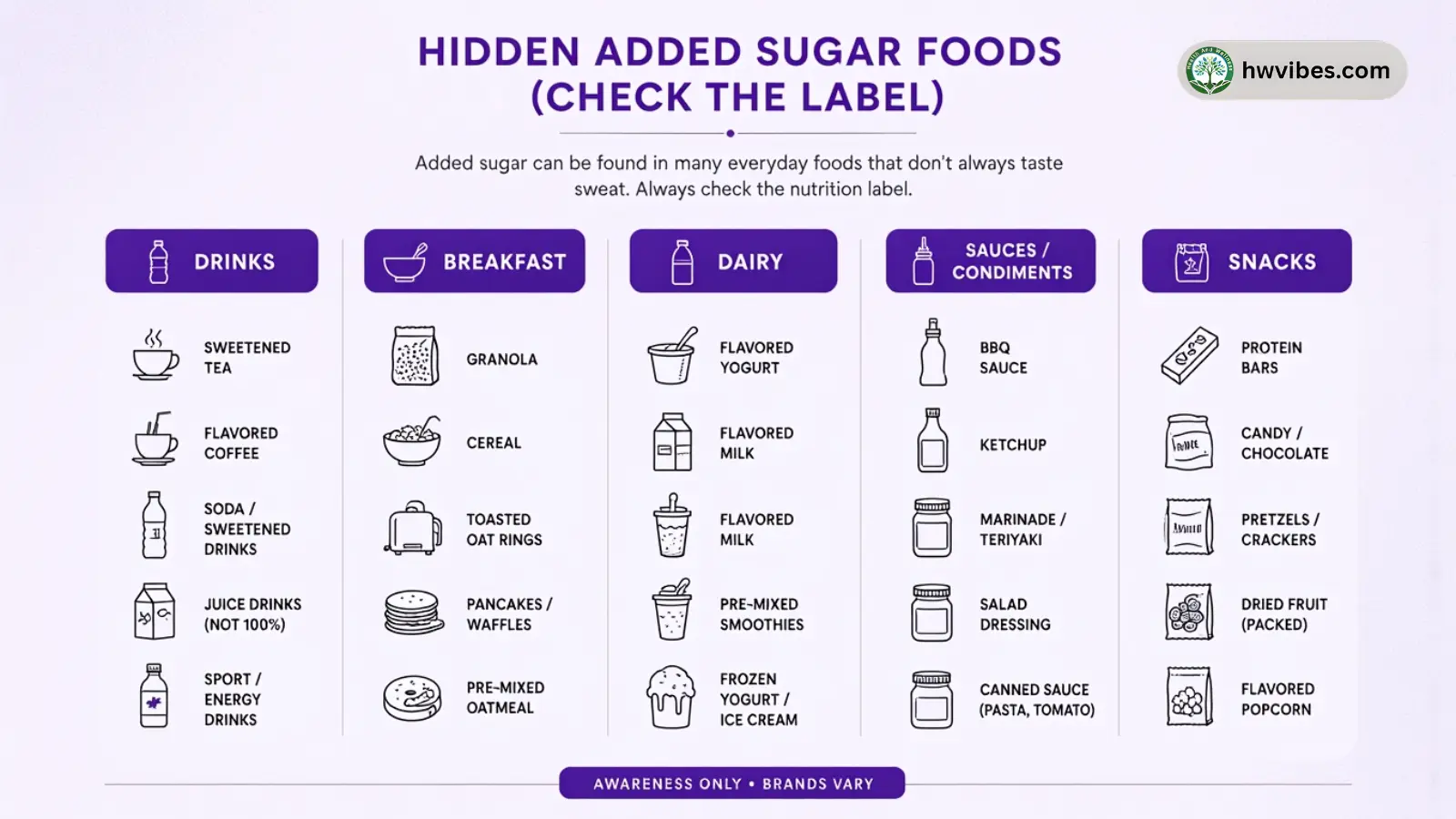
A) Drinks
- Flavored coffee drinks
- Sweetened tea
- Sports and energy drinks
- Fruit drinks / “juice cocktails”
- Flavored waters
B) Breakfast foods
- Cereal
- Granola and granola bars
- Flavored oatmeal packets
- Pancake/waffle mixes
- Breakfast pastries
C) Dairy and alternatives
- Flavored yogurt
- Drinkable yogurt
- Flavored milk
- Non-dairy milks (sweetened/flavored)
- “Light/protein” ice cream products (some)
D) Sauces, condiments, spreads
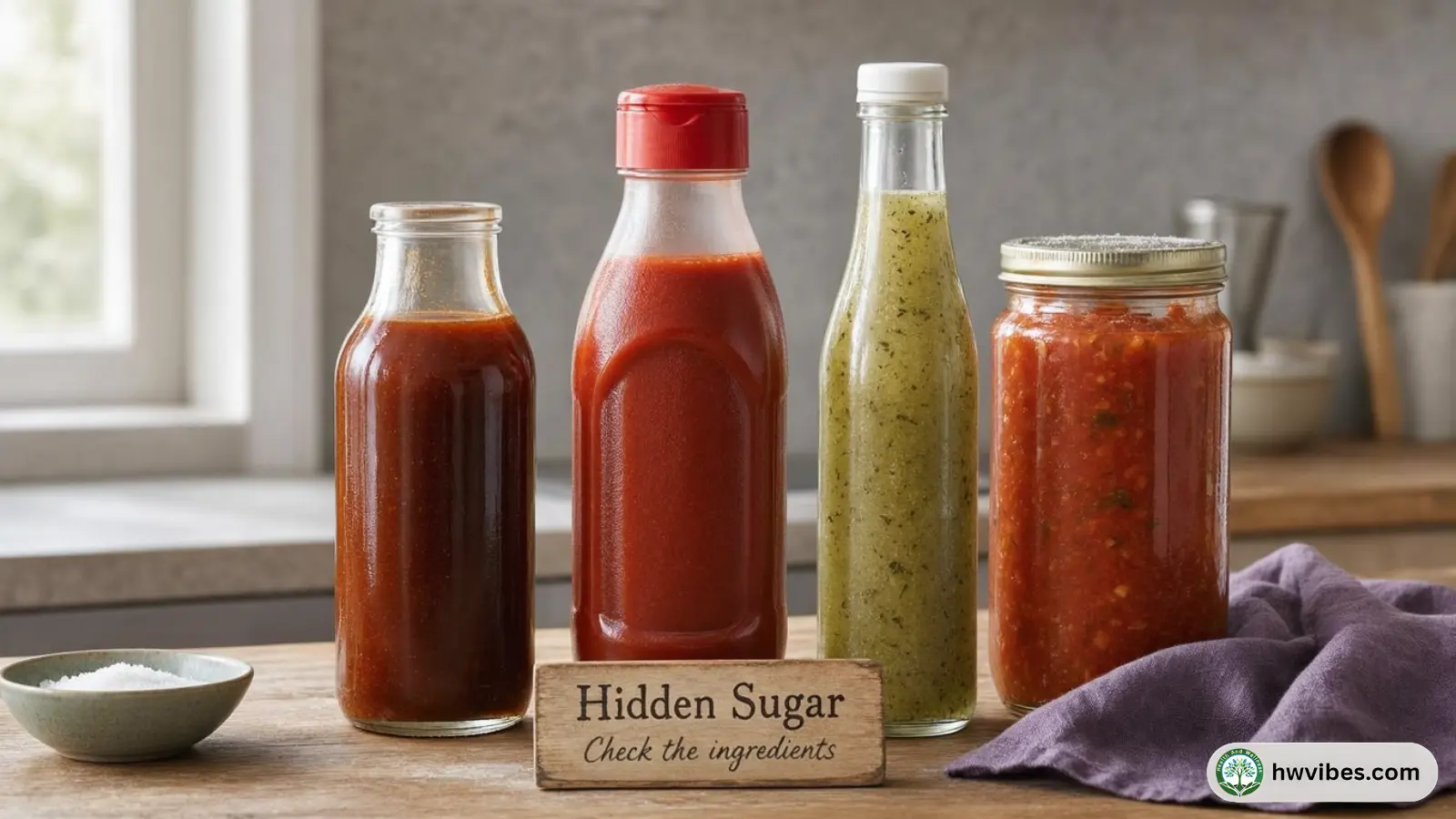
- Ketchup
- BBQ sauce
- Sweet chili sauce and glazes
- Salad dressings
- Pasta sauce
E) Snacks
- Crackers (some)
- Flavored chips (some seasonings)
- Protein bars / meal bars
- Trail mix (often sweetened)
- Packaged smoothies
Also check these foods (extra common)
- Bread (some packaged breads)
- Flavored nuts (“honey roasted,” sweet coatings)
- Peanut butter / nut butters (some brands)
- Instant soups and mixes
- Meal kits (sauces/seasoning packets)
Common names for added sugar
| Common label names | Where you often see them |
|---|---|
| Sugar, cane sugar, brown sugar | Snacks, cereals, baked goods |
| Syrups (corn syrup, HFCS, rice syrup) | Drinks, bars, sauces |
| Honey, agave, maple syrup | Granola, yogurts, “natural” snacks |
| Dextrose, maltose, sucrose, glucose, fructose | Many processed foods |
| Fruit juice concentrate | “Fruit-based” snacks, bars, drinks |
| Maltodextrin | Processed mixes/snacks (not always sweet) |
U.S. label background: FDA: How to understand and use the Nutrition Facts label.
Label tips (fast and simple)
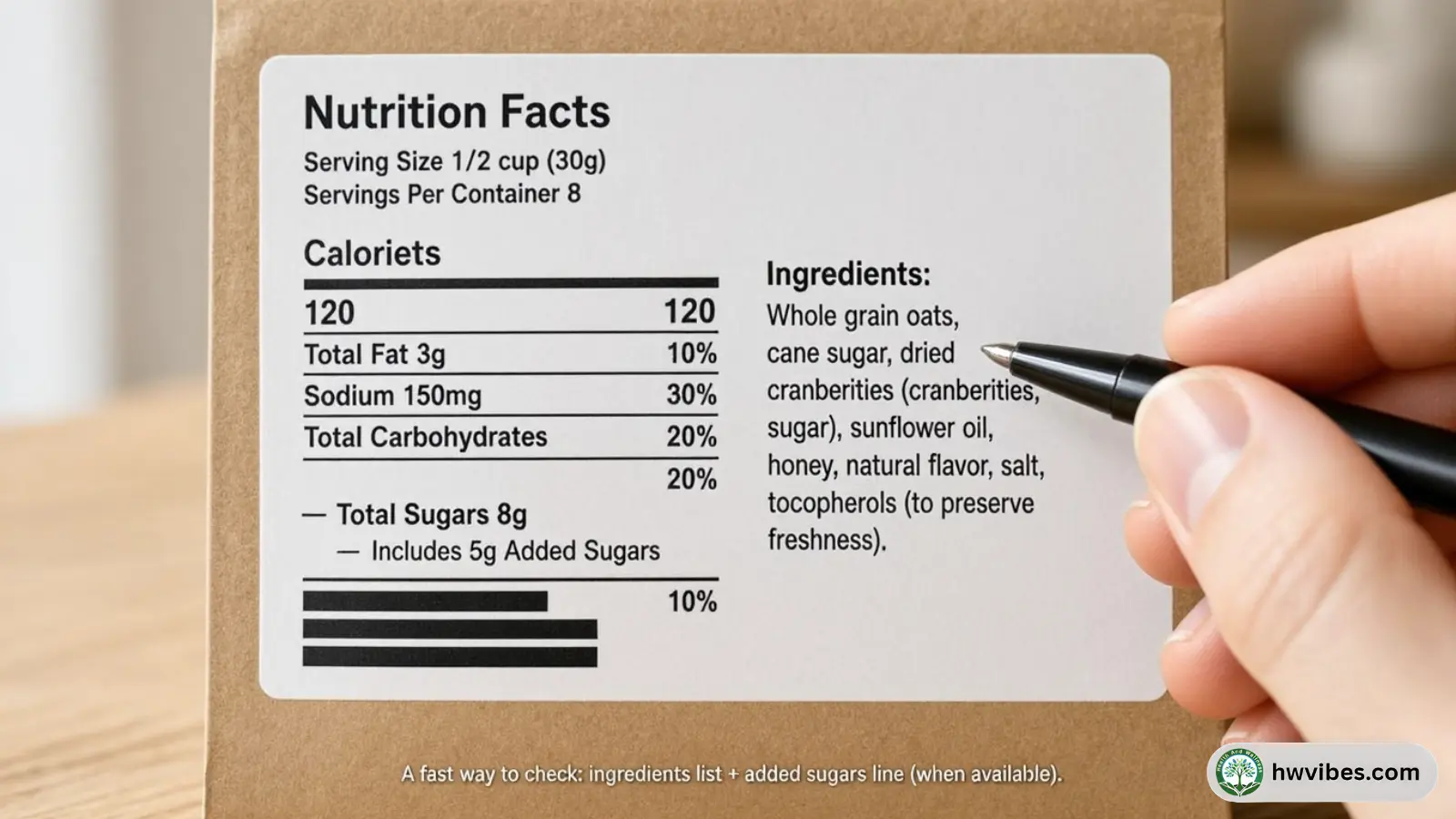
- Ingredients list first (multiple sweeteners is a clue).
- Added sugars line (when listed).
- Compare similar products and pick a better default.
Claims confusing? See: No Added Sugar vs Unsweetened vs Sugar-Free.
How much added sugar is “a lot”?
There isn’t one perfect number for everyone. Public-health guidance often recommends keeping free/added sugars relatively low overall. For example, the World Health Organization suggests limiting free sugars to less than 10% of total energy intake (and notes less than 5% may provide additional benefits for some people).
What “no added sugar” really means
“No added sugar” generally means no sweeteners were added during processing, but the product may still contain naturally occurring sugars. That’s why serving size and the full label still matter.
Questions people ask
What foods are highest in added sugar?
Sugary drinks, desserts, sweetened cereals, bars, and many packaged snacks are common sources—brands vary, so check labels.
How do I know if something has added sugar?
Check the ingredients list for sweeteners and the “added sugars” line when available.
Is honey an added sugar?
When honey is added to a product, it’s an added sweetener in everyday nutrition language.
What’s the easiest first step?
Many people start with drinks and sauces/dressings, then compare brands to pick a better default.
Which “healthy” foods have the most hidden sugar?
Flavored yogurt, granola and cereal bars, breakfast cereals, bottled smoothies, flavored oatmeal, protein bars, pasta sauces and salad dressings are common examples. Check the added sugars line rather than front-of-pack claims.
Is organic cane sugar healthier than regular sugar?
For added-sugar labeling and intake, organic cane sugar still counts as added sugar. The word “organic” does not mean the added sugar no longer counts toward recommended limits. The same applies to coconut sugar, honey and maple syrup.
References
Disclaimer
This page is for general education only. It does not provide medical advice, diagnosis, or treatment. If you have a medical condition, are pregnant, take medication, have allergies, or symptoms that worry you, consult a qualified healthcare professional.
Full disclaimer: https://hwvibes.com/disclaimer/
Medical disclaimer: HWVibes provides general health information for educational purposes only. It is not a substitute for professional medical advice, diagnosis or treatment, and reading it does not create a doctor–patient relationship. Always ask your doctor or another qualified health provider about any medical question or before trying anything described here, and never ignore professional advice or delay seeking it because of something you read on this site. Read the full medical disclaimer.
Spotted something that looks wrong or out of date? Tell us and our editors will check it.