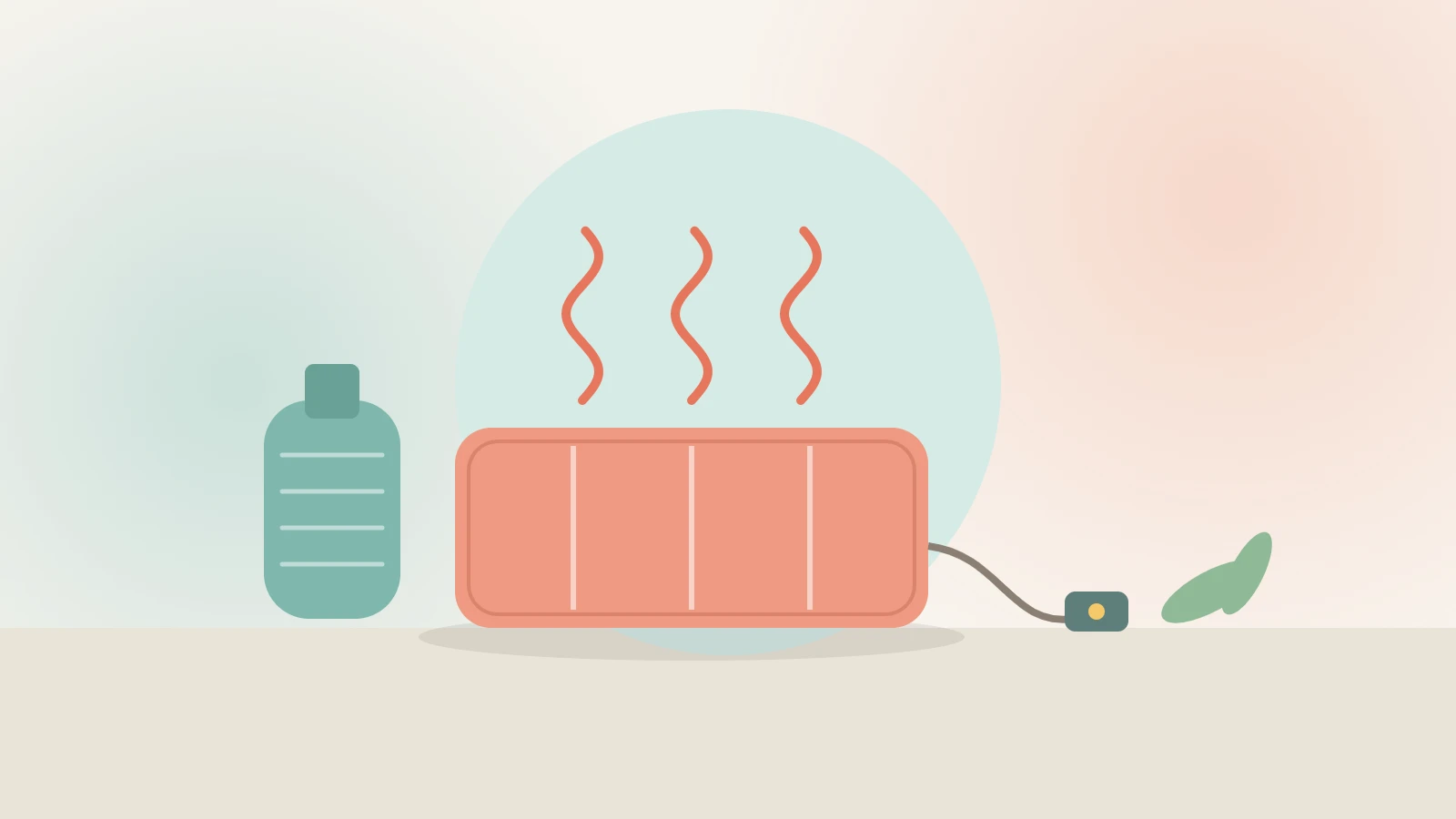
Can a heating pad for constipation actually help? This guide explains what the research found, what it did not show, where heat was applied in the study, general heat-safety points, and the warning signs that need a doctor.
Written by: HWVibes Editorial Team • Last updated: 24 September 2026
Expert reviewed
Last reviewed: 24 September 2026
Dr. Hena A. Ansari (MBBS, MD) reviewed this page to keep it education-only,
check how the research is described, and confirm the warning signs that need medical care.
View full profile →
Reminder: This page is general education and does not replace medical care.
Key takeaways (quick)
- A small 2024 hospital trial in 92 older adults linked abdominal warmth from a 50°C hot-water bottle to better stool outcomes over two days, compared with a 25°C control bottle.
- That study does not prove that ordinary home heating pads treat constipation in the general population.
- Warmth may feel soothing when constipation comes with belly discomfort or cramping, but it is a comfort measure, not a treatment.
- Severe belly pain, a swollen hard belly, vomiting, blood in the stool or not passing gas are reasons for prompt medical assessment.
- Quick answer
- Does a heating pad help constipation?
- Where is heat placed for constipation?
- How long and how hot: general heat safety
- Heat and abdominal massage: what the studies show
- General constipation measures in public-health guidance
- Do hot baths or warm drinks help?
- Who should be cautious with heat on the belly
- When to get help
- Questions people ask
- References
Quick answer
Does a heating pad help constipation?
Warmth may feel soothing when constipation is accompanied by abdominal discomfort or cramping. The exact mechanism behind the bowel findings in the small heat-therapy study is not established.
The main study is a randomized, triple-blind trial of 92 elderly inpatients. One group had a hot-water bottle at 50°C placed on the abdomen; the control group had a bottle at 25°C, which is close to room temperature. The heated group had better stool consistency and defecation on days one and two (Eshaghi et al., Gastrointestinal Nursing, 2024). It was a single, short study in older hospital patients, so it is an early signal rather than proof that heat works for everyone.
Where is heat placed for constipation?
The constipation heat study applied warmth to the abdomen; it did not compare different abdominal locations. If local heat is used only for comfort, it should be applied according to the device instructions and not used to diagnose where stool or gas is located.
How long and how hot: general heat safety
Home heating devices differ. Follow the manufacturer’s time and temperature instructions, avoid direct high heat on the skin, and do not fall asleep with an electric heating pad switched on. The 2024 constipation trial should not be used to set a universal home-heating dose.
Hot-water bottles, microwavable heat packs and electric pads all provide local warmth, but they differ in temperature control and burn risk. They should not be described as equally effective for constipation because comparative evidence is lacking.
Heat and abdominal massage: what the studies show
Abdominal massage has been studied in several constipation trials, while the evidence for abdominal heat is much more limited. The two approaches have not been directly compared well enough to say that one is superior.
In one randomized trial, 60 people with constipation received abdominal massage in addition to their previously prescribed laxatives for 8 weeks. Compared with laxatives alone, the massage group had lower constipation-related symptom severity and abdominal pain and more bowel movements, although laxative use did not fall significantly (Lämås et al., 2009). That supports massage as an addition to established care, not a replacement for it.
Clinical studies of abdominal massage have used different techniques, session lengths and schedules. The Lämås trial used a structured 15-minute massage program about five days a week, so short home routines found online should not be presented as the evidence-based study protocol. A doctor, nurse or physiotherapist can advise whether massage is suitable for you and how it should be done.
General constipation measures described in public-health guidance
The National Institute of Diabetes and Digestive and Kidney Diseases (NIDDK) discusses dietary fiber, adequate liquids where appropriate, regular physical activity, and bowel routines as general measures used in constipation management. These are general measures described by public-health bodies, not a treatment plan for an individual.
Fiber and fluid needs vary, and some people (for example those with heart or kidney conditions, or bowel disease) may have been given different advice by their own doctor.
If constipation continues, speak to a pharmacist or your doctor. They can look at what may be causing it and advise whether any over-the-counter product is suitable for you; please do not start a laxative or fiber supplement without asking first.
Do hot baths or warm drinks help constipation?
A warm bath or drink may feel comfortable, but neither should be presented as a proven treatment for constipation. Coffee can stimulate colonic activity in some people, but responses vary.
Who should be cautious with heat on the belly
- Severe, sudden or worsening belly pain, or a belly that is swollen and hard. Heat can mask an emergency such as appendicitis or a bowel blockage, so medical assessment comes first.
- Pregnancy: pregnancy requires extra caution with heat exposure and placement. Some clinical guidance recommends avoiding heating pads on the abdomen or pelvis during pregnancy; an obstetric clinician can advise on individual circumstances.
- Reduced feeling in the skin, for example from diabetic nerve damage, or on broken, burned or numb skin, because burns can happen without being noticed.
- Children and older adults are more prone to burns, so heat should only be used with an adult checking the skin and following the device instructions.
When to get help
NIDDK and other public-health sources list these as reasons for prompt medical assessment when they occur with constipation:
- Blood in the stool, or black, tarry stools
- Severe or worsening belly pain, a swollen hard belly, vomiting, or not passing gas at all
- Fever with belly pain
- Unexplained weight loss
- Persistent or newly changed bowel habits, especially when accompanied by bleeding, anemia, unexplained weight loss, severe pain, vomiting, a family history of colorectal cancer, or when age-appropriate colorectal screening is overdue
If constipation started after a new medicine (for example opioid painkillers, iron tablets or some antacids), a doctor or pharmacist can review it; a prescribed medicine should not be stopped without medical advice.
Questions people ask
Does a heating pad help constipation?
The evidence is limited. A small 2024 trial in 92 older hospital patients linked abdominal warmth from a 50°C hot-water bottle with better stool outcomes over two days compared with a 25°C bottle. That does not prove that home heating pads treat constipation, but warmth may feel soothing when there is belly discomfort.
Where should I put a heating pad for constipation?
The constipation study applied warmth to the abdomen and did not compare different locations. If heat is used for comfort, follow the device instructions and keep a layer of cloth between the pad and the skin. Heat should not be used to guess where stool or gas is.
How long should I leave a heating pad on for constipation?
There is no proven heating “dose” for constipation. Follow the manufacturer’s time and temperature instructions, avoid high heat directly on the skin, and do not fall asleep with an electric pad switched on.
Does heat help gas and bloating?
Warmth may feel soothing when the belly feels tight or crampy, but it has not been shown to move gas. Severe bloating, a hard swollen belly or not passing gas at all needs medical assessment.
Is heat or cold better for constipation?
There is no constipation-specific trial comparing heat with cold, so neither can be called better. Heat is the option that has been studied, in one small trial, as a possible comfort measure.
What general measures are commonly discussed for constipation?
Public-health guidance such as NIDDK discusses dietary fiber, adequate liquids where appropriate, regular physical activity and bowel routines. None of these promises a quick bowel movement, and needs differ from person to person, so a pharmacist or doctor is the right person to advise on your own situation.
References
- Eshaghi A, Norouzadeh R, Jadid-Milani M. The effect of abdominal heat therapy on constipation. Gastrointestinal Nursing. 2024;22(3):160-165.
- Lämås K, et al. Effects of abdominal massage in management of constipation: a randomized controlled trial. Int J Nurs Stud. 2009;46:759-767.
- NIDDK: Constipation
Disclaimer
This page is for general education only. It does not provide medical advice, diagnosis, or treatment. Do not use it to make personal health decisions. If you have a medical condition, are pregnant, take medication, or your symptoms feel severe, unusual, or persistent, contact a qualified healthcare professional.
Read the full site disclaimer: https://hwvibes.com/disclaimer/
Medical disclaimer: HWVibes provides general health information for educational purposes only. It is not a substitute for professional medical advice, diagnosis or treatment, and reading it does not create a doctor–patient relationship. Always ask your doctor or another qualified health provider about any medical question or before trying anything described here, and never ignore professional advice or delay seeking it because of something you read on this site. Read the full medical disclaimer.
Spotted something that looks wrong or out of date? Tell us and our editors will check it.