Labels like no added sugar, unsweetened, and sugar-free can sound similar—but they don’t always mean the same thing. This guide explains what these claims generally mean, what they don’t promise, and how to make calmer choices without overthinking.
Written by: HWVibes Editorial Team • Last updated: September 2026
Expert reviewed
Last reviewed: 24 September 2026
Dr. Hena A. Ansari (MBBS, MD) reviewed this page to keep label-claim explanations consumer-focused,
avoid diet prescriptions, and ensure we don’t imply any claim is “safe for everyone” (because needs vary).
View full profile →
Reminder: This is general education only.
Key takeaways (fast)
- Use label claims as clues—then confirm using serving size, added sugars (if listed), and the ingredients list.
- No added sugar does not automatically mean “low sugar.”
- Unsweetened often means no sweetener added, but you should still confirm ingredients.
- Sugar-free can still taste very sweet if other sweeteners are used (rules vary by country).
- Quick answer
- Official meanings (FDA rules)
- What “no added sugar” generally means
- What “unsweetened” generally means
- What “sugar-free” generally means
- What about artificial sweeteners and sugar alcohols?
- What to check anyway (the label still matters)
- Common misunderstandings
- How to compare two products fast
- Questions people ask
- References
- Disclaimer
- Related guides
Quick answer
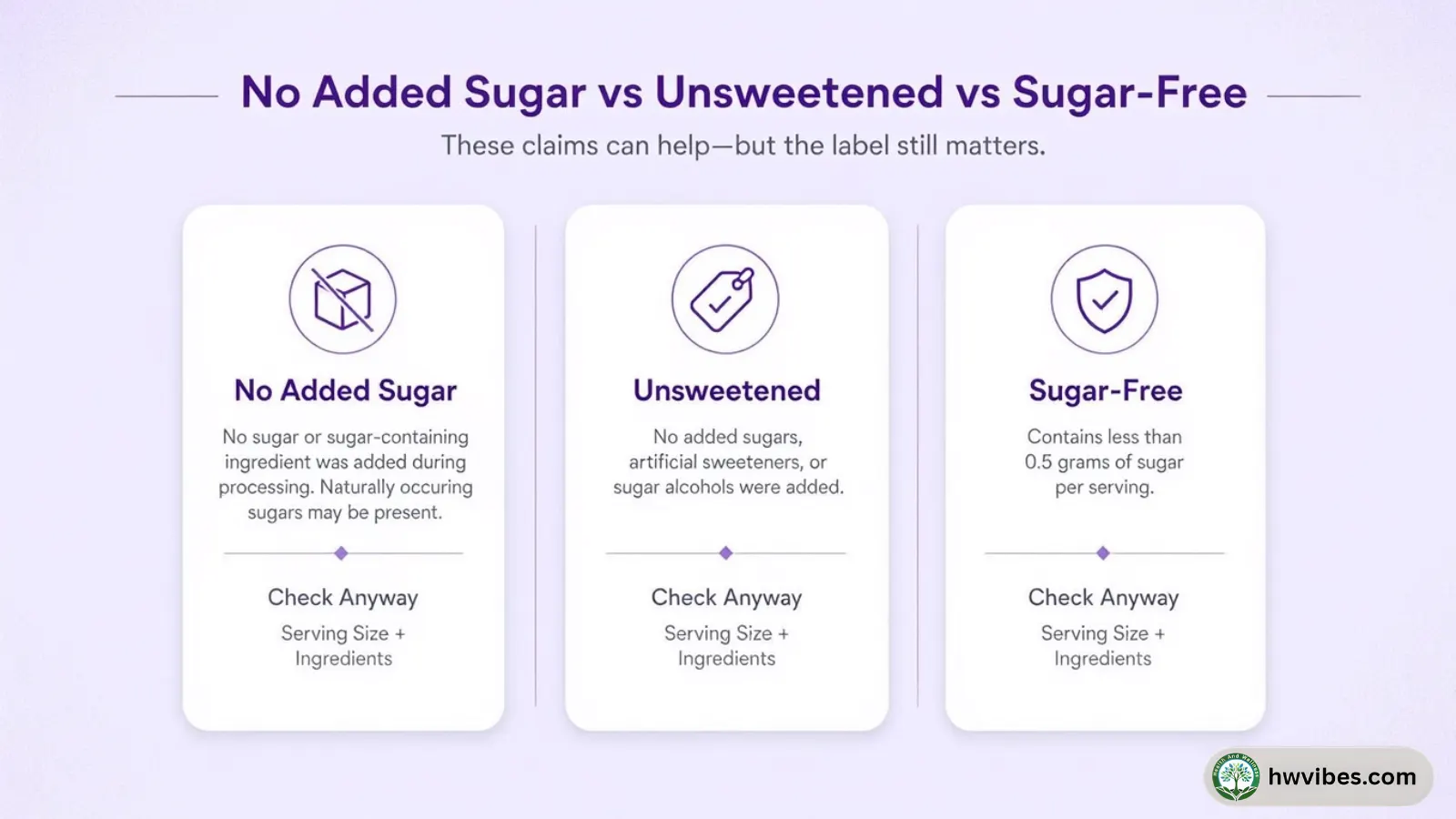
These claims can be useful, but they’re not magic labels. A calm, repeatable approach is: check serving size, added sugars (if listed), and the ingredients list.
Want the 60-second step-by-step method? Start here: How to Read Sugar on Nutrition Labels.
What the terms mean officially (US FDA rules)
In the US, some of these claims have legal definitions (21 CFR 101.60), and some do not. The table below is a simplified consumer summary of US labeling rules. The legal regulation includes additional conditions, so the full product label and 21 CFR 101.60 control.
| Claim | What it must mean |
|---|---|
| Sugar-free / zero sugar / no sugar | Less than 0.5 g of sugars per serving. It may still contain sweeteners or sugar alcohols, and it is not automatically low in calories or carbs. |
| No sugar added / without added sugar | No sugars or sugar-containing ingredients (such as juice concentrate, honey or jam) were added during processing. The food can still contain natural sugars, for example from fruit or milk. |
| Reduced sugar / less sugar | At least 25% less sugar per serving than the regular version. It can still be high in sugar. |
| Unsweetened | “Unsweetened” is not defined as a synonym for “sugar free.” In relevant labeling contexts it generally communicates that no sweetener was added, while naturally occurring sugars may still be present. |
Rules differ in other countries (for example, the UK and EU use a similar 0.5 g per 100 g/ml limit for “sugar-free”), so the label panel is always the final check. See also the American Heart Association guide.
What “no added sugar” generally means
“No added sugar” generally means no sugar (or sweetener) was added during processing. However, the product can still contain naturally occurring sugars (for example, from fruit or milk).
U.S. label background (including added sugars) is explained here: FDA: The New Nutrition Facts Label.
What “unsweetened” generally means
“Unsweetened” often means no sweetener was added. But it’s still smart to confirm by checking the ingredients list—because wording and rules can vary by product and region.
If you’re trying to reduce “hidden sweetness” across your week, this list helps: Hidden Added Sugar Foods.
What “sugar-free” generally means
“Sugar-free” typically means the product contains very little sugar based on local labeling rules. For example, in the U.S., “sugar-free” generally means the food contains less than 0.5 g of sugars per serving (check FDA guidance in References).
Some sugar-free products use non-sugar sweeteners, which can still taste very sweet even without sugar.
If you’re doing a “less sweet” reset (taste preference change), see: Sugar Detox Timeline (14 Days).
What about artificial sweeteners and sugar alcohols?
Many “sugar-free” products use other sweeteners. Whether that’s a good fit depends on the person. Some people like the taste; others find it keeps cravings going or causes digestive discomfort.
- Artificial/non-sugar sweeteners: examples include sucralose, aspartame, acesulfame potassium, stevia (varies by product).
- Sugar alcohols: examples include erythritol, xylitol, sorbitol, maltitol (may cause GI discomfort for some people).
If you want fewer energy dips after sweet drinks/foods, pair this with: Sugar Crash: Why It Happens.
What to check anyway (the label still matters)
1) Serving size
Claims on the front don’t tell you how much you’ll realistically eat or drink.
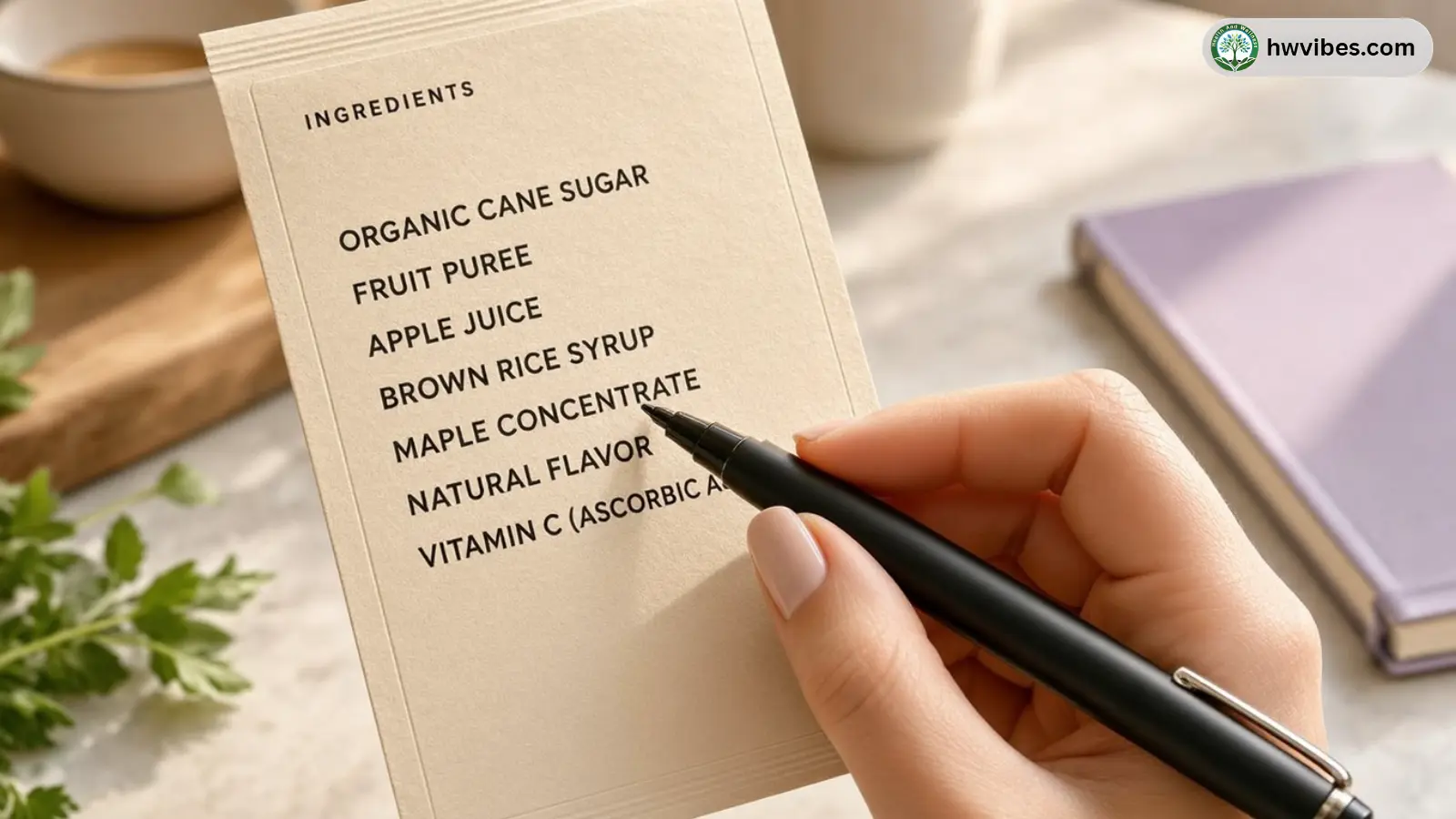
2) Ingredients list
Look for multiple sweeteners (sugar + syrup + concentrate) or “sugar-free” sweeteners (varies by product).
3) Added sugars (when listed)
If your label includes “added sugars,” it can help you compare brands quickly.
Want a simple label method that works in-store? See: How to Read Sugar on Labels (60-second check).
Common misunderstandings (quick examples)
“No added sugar” means “low sugar”
Not always. Some foods are naturally sweet (fruit-based products). Serving size + total sugars still matter.
“Reduced sugar” means “low sugar”
Often it means “less than the original version,” not necessarily low.
“Sugar-free” means “no sweet taste”
Many sugar-free products still taste very sweet due to non-sugar sweeteners.
How to compare two products fast
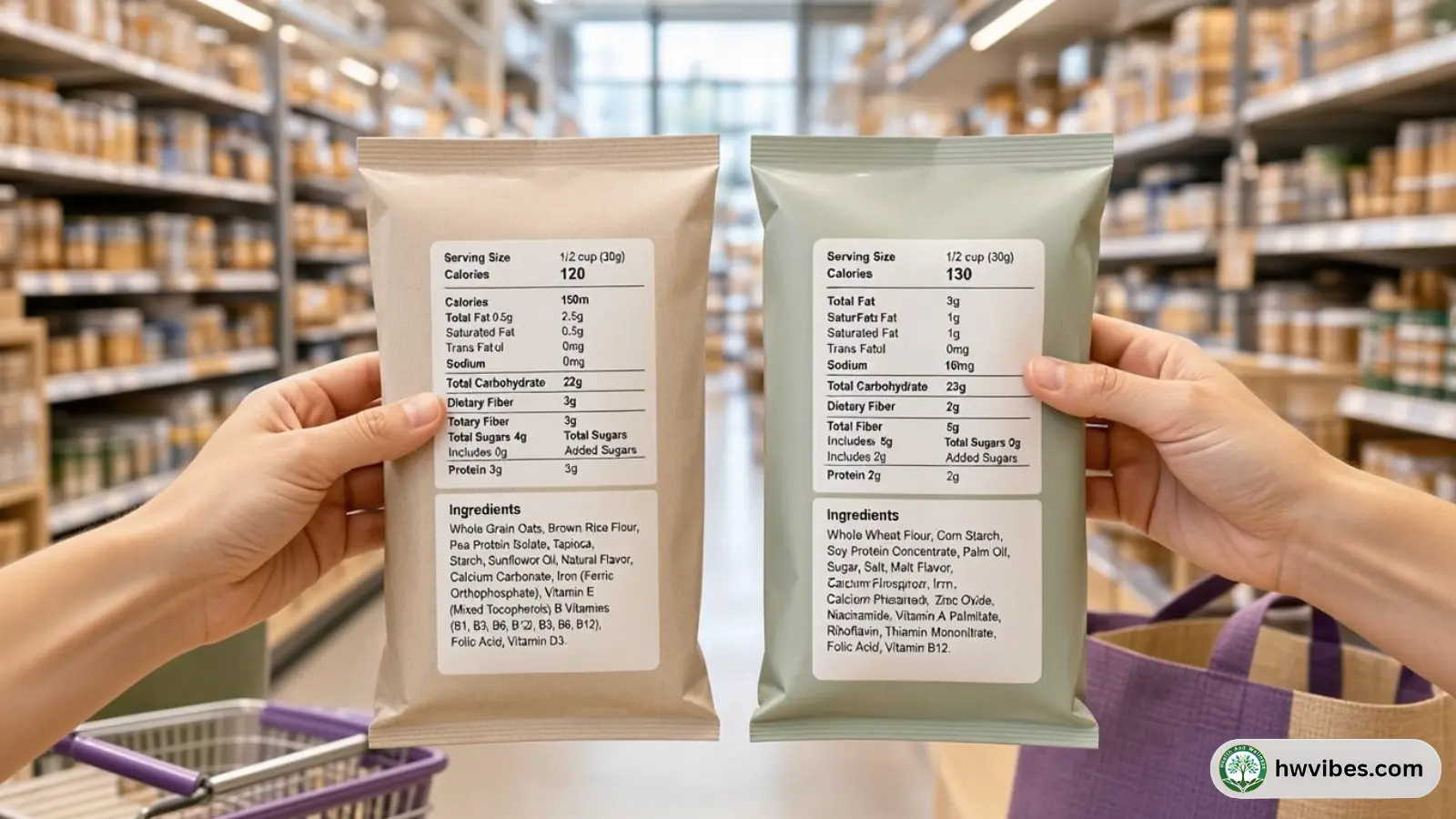
- Compare the same category (two yogurts, two sauces, two cereals).
- Check serving size so you’re comparing fairly.
- Check added sugars (if listed), then total sugars.
- Scan ingredients for added sweeteners or sweetener blends.
- Pick the better default—not the perfect product.
Questions people ask
Is “no added sugar” healthier?
This page doesn’t make health claims for specific products. “No added sugar” can be a useful clue, but it’s still important to read the label and consider your needs.
Is “unsweetened” always better?
Not always. Some unsweetened products still have naturally occurring sugars, and taste preferences differ.
Is “sugar-free” okay for everyone?
Needs vary. Some people avoid certain sweeteners; others don’t. If you have concerns or a medical condition, get personalized guidance.
What’s the simplest way to reduce sugar without obsessing?
Many people start with drinks and packaged snacks. Comparison shopping plus a quick label check is often enough. Related: Sugary Drinks vs Solid Sweets.
What is the difference between zero sugar and sugar-free?
In the US they mean the same thing: less than 0.5 g of sugar per serving. “Zero sugar” is a marketing phrase often used on drinks sweetened with non-sugar sweeteners.
Can “no added sugar” foods still be high in sugar?
Yes. “No added sugar” only means no sugar was added during processing. Foods like 100% fruit juice, dried fruit or some smoothies can still be high in natural sugar.
References
Disclaimer
This page is for general education only. It does not provide medical advice, diagnosis, or treatment. Do not use it to make personal health decisions. If you have a medical condition, are pregnant, take medication, have allergies, or symptoms that worry you, consult a qualified healthcare professional.
Read the full site disclaimer: https://hwvibes.com/disclaimer/
Medical disclaimer: HWVibes provides general health information for educational purposes only. It is not a substitute for professional medical advice, diagnosis or treatment, and reading it does not create a doctor–patient relationship. Always ask your doctor or another qualified health provider about any medical question or before trying anything described here, and never ignore professional advice or delay seeking it because of something you read on this site. Read the full medical disclaimer.
Spotted something that looks wrong or out of date? Tell us and our editors will check it.