
If you’ve ever wondered why a soda or sweet coffee can feel like it “hits” faster than a dessert, you’re thinking in the right direction. This guide explains sugary drinks vs solid sweets in plain language: why liquid sugar often feels more intense, why cravings can show up later, and how to spot hidden sugar on drink labels—without getting overwhelmed.
Written by: HWVibes Editorial Team • Last updated: September 2026
Expert reviewed
Last reviewed: 24 September 2026
Dr. Hena A. Ansari (MBBS, MD) reviewed this page to ensure the drink-vs-food comparisons stay education-only,
avoid fear-based messaging, and use careful, non-medical wording around energy dips and cravings.
View full profile →
Reminder: This page is general education and does not replace medical care.
Key takeaways (quick)
- For many people, sugary drinks feel stronger because they’re easy to drink fast and often don’t feel as filling.
- Drinks can hide multiple servings—serving size is the #1 label trap.
- “Healthy” drinks (smoothies, flavored waters, juice cocktails) can still be sweetened—ingredients confirm.
- If you notice energy dips, pair this with: Sugar Crash.
- Quick answer
- What counts as a sugary drink?
- Why drinks hit harder than solid sweets
- Sneaky drinks people overlook
- What about 100% juice and smoothies?
- 60-second drink label check (fast)
- Smarter options people often choose
- Myths: water, sweating, and “detox”
- Questions people ask
- References
- Disclaimer
- Related guides (topic cluster)
Quick answer
For many people, liquid sugar feels more intense than solid sweets because drinks tend to be consumed quickly, can contain multiple servings, and often don’t create the same “full” feeling as food. That can make energy swings and cravings more noticeable.
For the “today timeline” overview, start with the pillar guide: How Long Does Sugar Stay in Your Body?
What counts as a sugary drink?
A sugary drink is any beverage with added sweeteners (and sometimes naturally sweet, high-sugar drinks depending on portion). Common examples include:
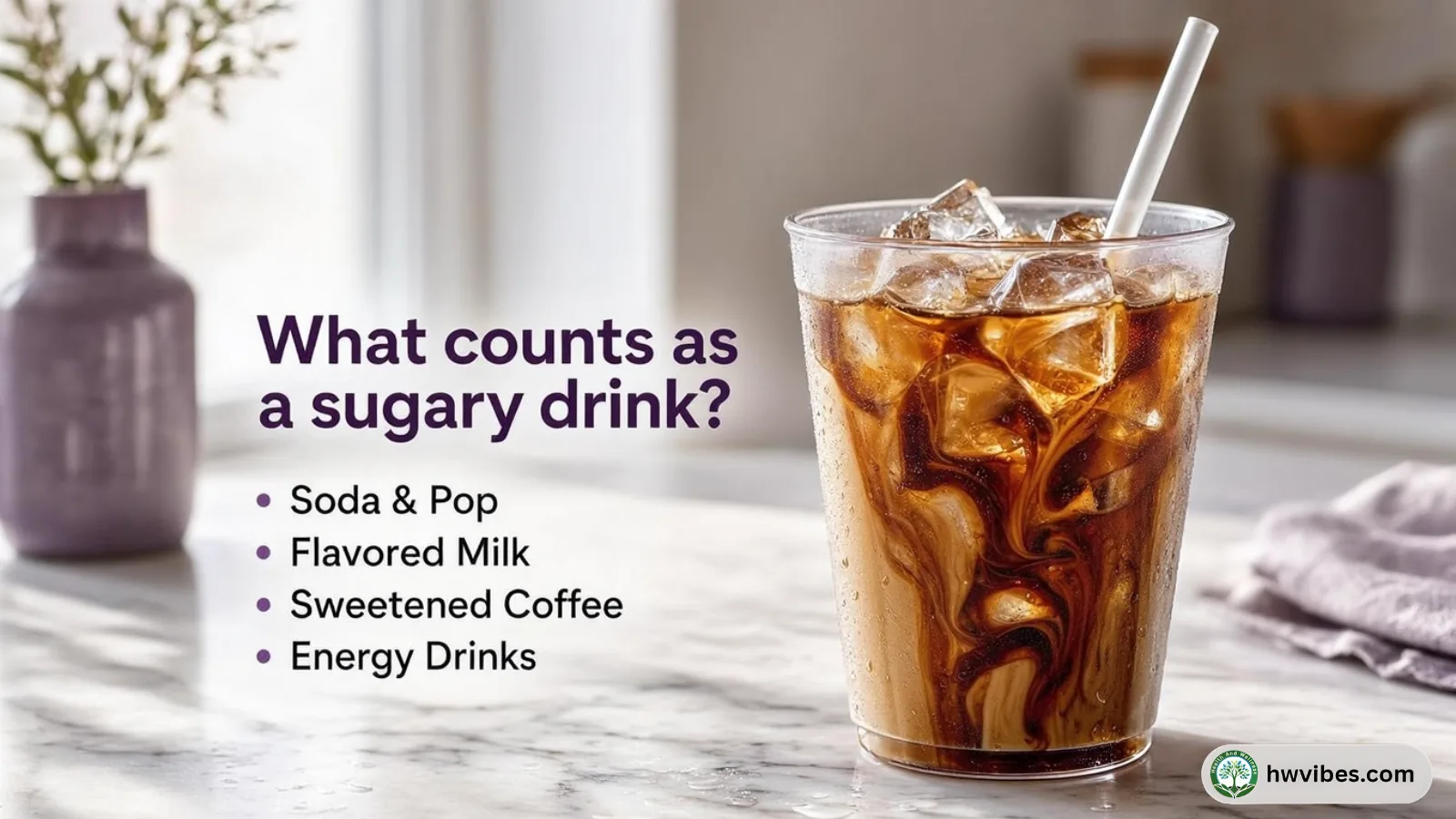
- Soda and soft drinks
- Sweetened iced tea
- Flavored coffee drinks (bottled or café-style)
- Energy drinks and sports drinks
- “Juice drinks,” fruit punches, and cocktails (not 100% juice)
- Some bottled smoothies and sweetened “health” drinks
Public-health guidance often highlights sugary drinks as a high-impact place to cut back because they’re easy to overconsume: CDC: Rethink Your Drink.
Why drinks hit harder than solid sweets
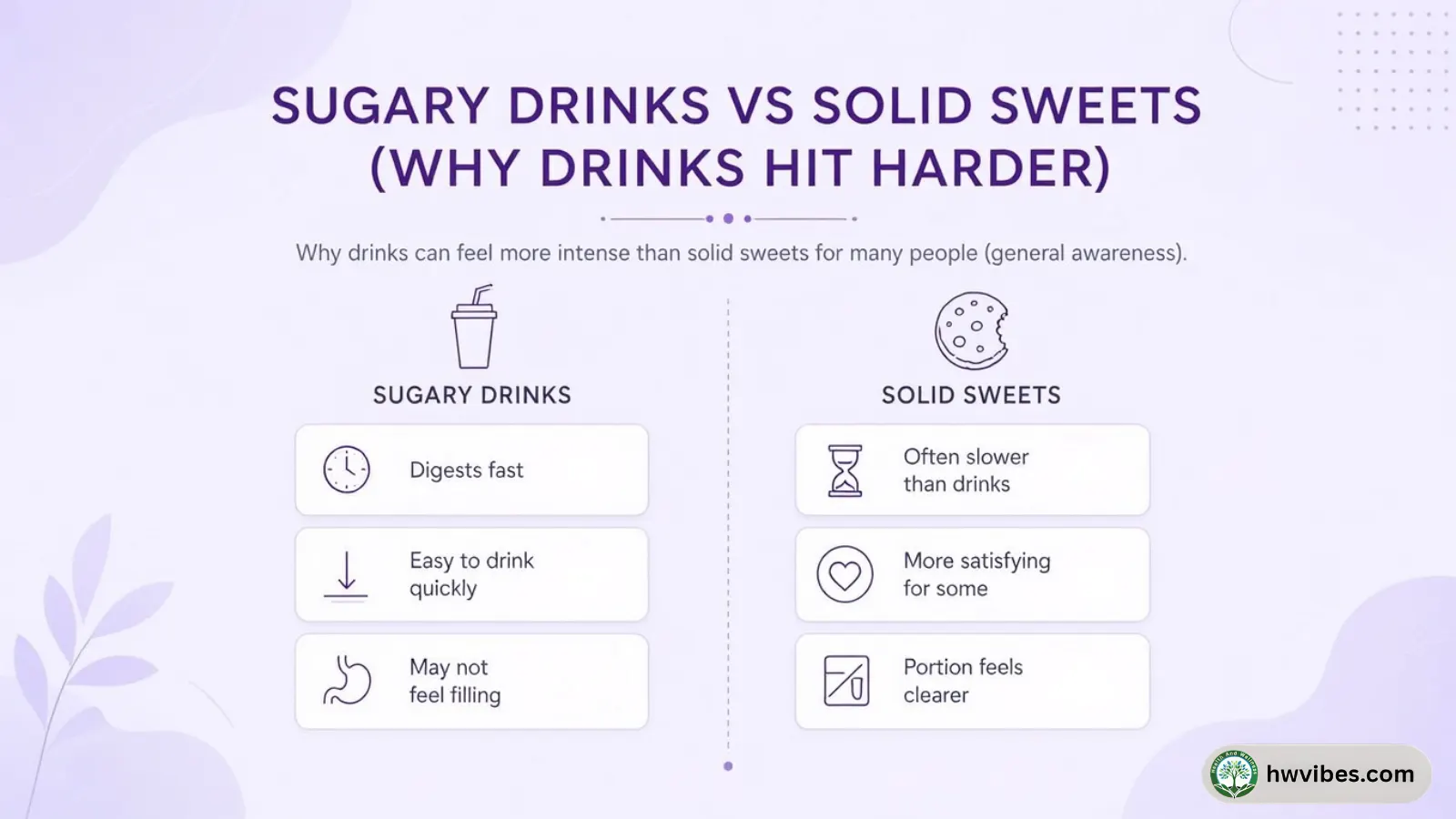
1) Drinks are fast
Drinks are often consumed quickly and can be absorbed differently than solid foods—especially compared to foods with fiber, protein, or fat. For general carb education: Harvard T.H. Chan (Carbohydrates).
2) Drinks don’t always feel filling
Many people don’t feel the same fullness from calories in drinks compared to food—so it’s easier to take in more than intended.
3) Portion sizes stack easily
A “medium” café drink or a bottle can contain multiple servings. You can end up drinking 2–3 servings without noticing.
4) Drinks often come with meals
A sweet drink alongside a meal is common. That can create a larger “sweet load” in one sitting even if you didn’t eat dessert.
If you often feel a dip after sweets, see: Sugar Crash: Why It Happens.
Sneaky drinks people overlook
Some drinks don’t taste like candy, but can still be sweetened or concentrated. Common “surprise” categories:
| Drink type | Why it can be sneaky | Quick check |
|---|---|---|
| Bottled smoothies | Can be large portions and very sweet | Serving size + ingredients |
| “Vitamin” / wellness drinks | Marketing sounds healthy; sugar can still be present | Added sugars line (if available) |
| Flavored waters | Some are sweetened even if they look light | Ingredients for sweeteners |
| Plant milks (vanilla/flavored) | Flavored versions often add sweetener | Compare “unsweetened” vs flavored |
| Sweetened coffee drinks | Syrups + large sizes add up fast | Servings per bottle/cup |
For more “where sugar hides” examples beyond drinks: Hidden Added Sugar Foods.
What about 100% juice and smoothies?
100% juice
100% juice is different from “juice drinks” with added sweeteners—but it can still be a high-sugar beverage depending on portion size. Many people find smaller portions work better for them than large bottles.
Smoothies
Smoothies vary a lot. Homemade smoothies can be built differently than store-bought bottles. The practical approach is the same: check serving size, added sugars (if listed), and ingredients.
60-second drink label check (fast)
You don’t need to memorize nutrition science. For drinks, these 4 steps are usually enough:
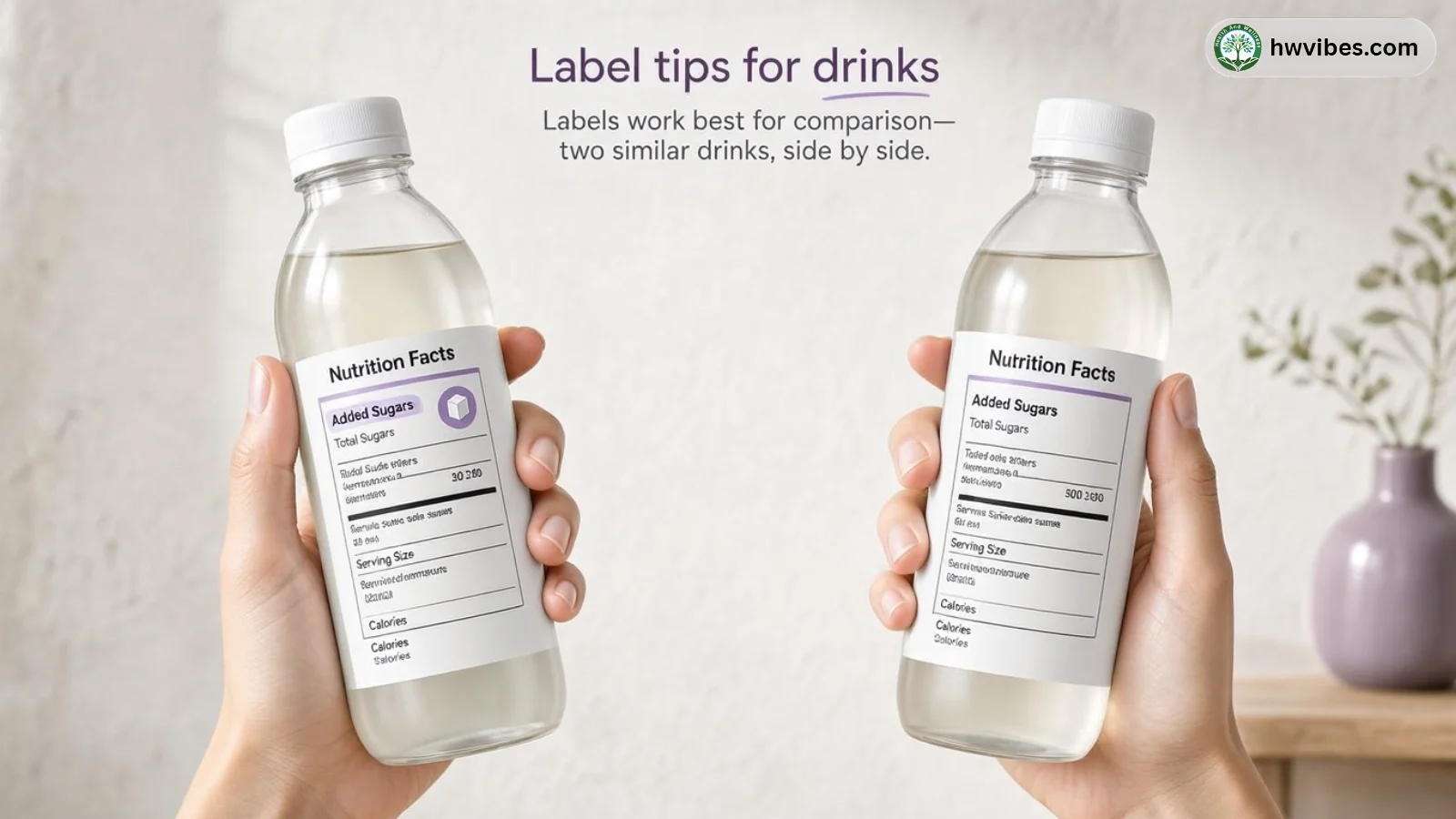
- Serving size first: is it 1 bottle = 1 serving, or more?
- Added sugars (if listed): use it for quick comparisons.
- Total sugars: useful context, especially when added sugar isn’t listed.
- Ingredients scan: look for sugar/syrups/honey/juice concentrates.
Want the full label-reading walkthrough? How to Read Sugar on Nutrition Labels. For official U.S. label context: FDA.
Smarter options people often choose (optional ideas)
This is not personal diet advice. These are common options people choose when they want fewer sugary drinks, based on preference and tolerance (including caffeine sensitivity and allergies).
- Water (plain or sparkling)
- Unsweetened tea (hot or iced)
- Coffee with less sweetener (if caffeine works for you)
- Infused water (fruit slices for flavor)
If you want a calm “reset after sweets” approach, see: Sugar Hangover: A Simple Reset.
Myths: water, sweating, and “detox”
Myth: “Water cancels sugar.”
Water doesn’t cancel sugar. But swapping sugary drinks for water can support healthier daily patterns over time (see CDC: Rethink Your Drink).
Myth: “Sweating removes sugar.”
Sweat is mostly water and salts. Sweating isn’t considered a meaningful way to remove sugar from the body. Exercise still supports overall health (general info: Mayo Clinic).
Myth: “You need a harsh sugar detox.”
Your body already processes what you eat. When people say “detox,” they usually mean cravings and habit changes. For the 14-day view, see: Sugar Detox Timeline (14 Days).
Questions people ask
Are sugary drinks worse than candy?
This isn’t a moral issue—both can add a lot of sugar. Many people find drinks feel more intense because they’re easy to consume quickly and don’t always feel filling.
Does juice count as a sugary drink?
Some juices and juice drinks can be very sweet. Labels and portions vary widely, so checking ingredients and serving size helps.
Why do I feel tired after a sweet drink?
Some people notice a “boost then dip” effect after quick sugar. Sleep, stress, and what you ate that day can make it feel stronger. See: Sugar Crash.
What’s the easiest way to reduce sugar from drinks?
Many people start by swapping one drink per day, or comparing two similar drinks and choosing a better default.
Do artificial sweeteners solve the problem?
Needs vary. Some people prefer less sweetness overall; others use sweeteners. If you have concerns or a medical condition, get personalized guidance.
Is drinking sugar worse than eating it?
Sugar-sweetened drinks can be easier to consume quickly and, in many studies, provide less satiety per calorie than solid foods. This can make it easier to consume additional energy. However, whether a sugary drink is “worse” than a particular solid sweet depends on serving size, the food’s overall composition and the rest of the diet, and not every study finds a difference.
How much sugar is in a can of soda?
A typical 12-ounce (355 ml) regular cola may contain roughly the mid-30s to around 40 g of sugar, depending on the brand—about 9–10 teaspoons. That is more than the American Heart Association suggested daily limit for most women (25 g) and men (36 g). The label on the specific product gives the exact amount.
References
Disclaimer
This page is for general education only. It does not provide medical advice, diagnosis, or treatment. Do not use it to make personal health decisions. If you have a medical condition, are pregnant, take medication, have allergies, or symptoms that worry you, consult a qualified healthcare professional.
Read the full site disclaimer: https://hwvibes.com/disclaimer/
Medical disclaimer: HWVibes provides general health information for educational purposes only. It is not a substitute for professional medical advice, diagnosis or treatment, and reading it does not create a doctor–patient relationship. Always ask your doctor or another qualified health provider about any medical question or before trying anything described here, and never ignore professional advice or delay seeking it because of something you read on this site. Read the full medical disclaimer.
Spotted something that looks wrong or out of date? Tell us and our editors will check it.