
If you crave sweets when you’re tired, you’re not imagining it—and you’re definitely not “broken.” The sleep and sugar cravings link is common: poor sleep can make cravings feel louder, especially later in the day. This guide explains the connection in simple terms and shares gentle, non-medical ways to support better sleep routines.
Written by: HWVibes Editorial Team • Last updated: September 2026
Expert reviewed
Last reviewed: 24 September 2026
Dr. Hena A. Ansari (MBBS, MD) reviewed this page to keep the sleep/cravings discussion education-only,
avoid overpromising results, and ensure the suggestions remain general, low-risk, and non-prescriptive.
View full profile →
Reminder: This page is general education and does not replace medical care.
Key takeaways (quick)
- Poor sleep can make the brain look for quick energy + quick comfort—often sweets.
- Cravings often feel strongest in the afternoon and evening after a short night.
- The most repeatable fix for many people is sleep consistency, not perfection.
- If you snack at night when exhausted, you’re not “failing”—you’re seeing a common pattern.
- Quick answer
- Why do I crave sugar when I’m tired?
- Sleep loss and hunger hormones (research)
- What poor sleep can do (general)
- Why cravings feel worse at night
- Gentle sleep habits that may help
- Common sleep sabotagers (easy wins)
- A simple 3-step plan (tonight / tomorrow / this week)
- Food routine tips (non-diet, non-prescriptive)
- When to get help
- Questions people ask
- References
- Disclaimer
- Related guides (topic cluster)
Quick answer
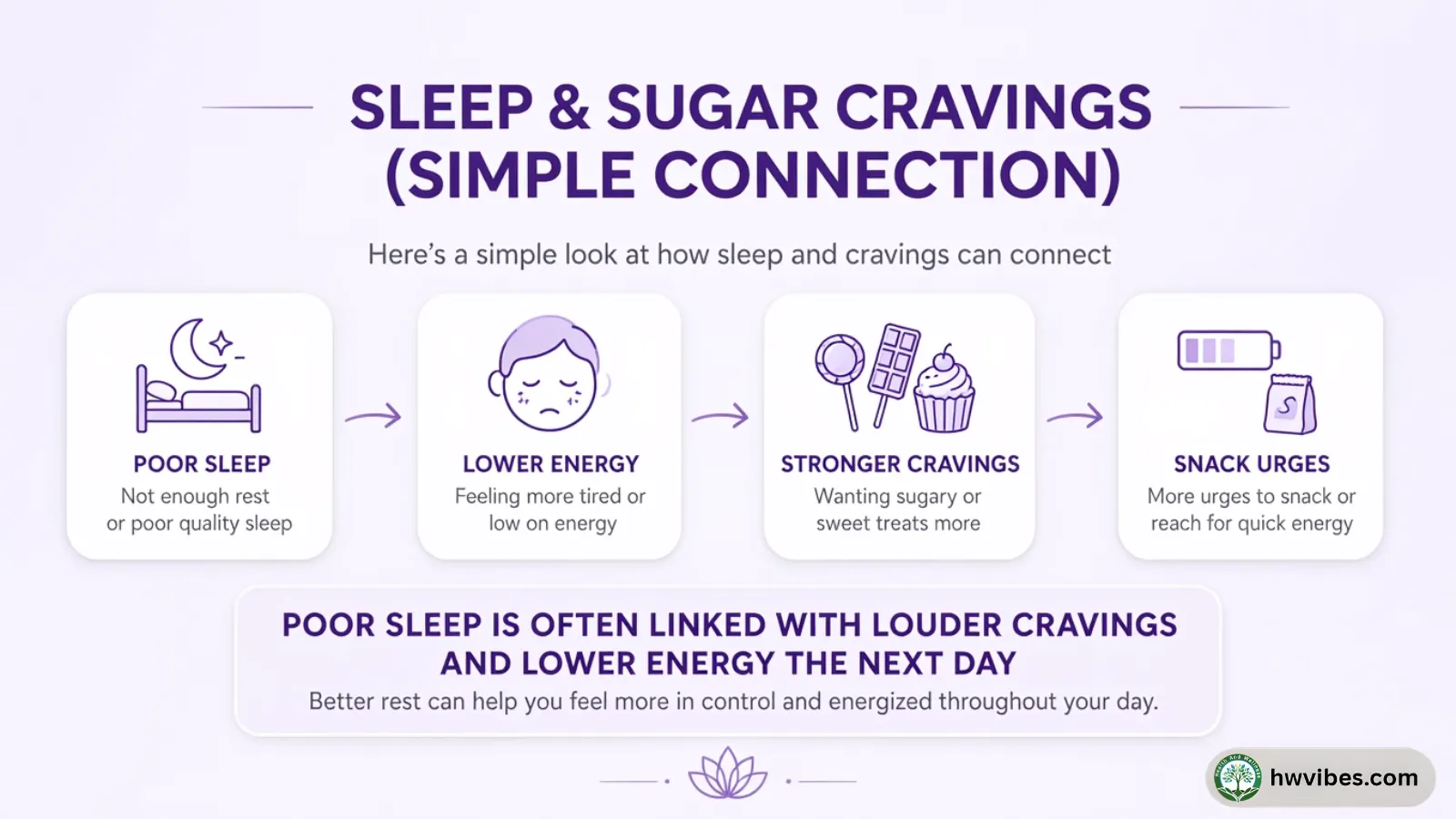
When you’re sleep-deprived, your body often looks for quick energy and comfort. For many people, that shows up as stronger cravings for sweet or refined foods—especially in the afternoon and evening.
If you also get energy dips after sweets, pair this with: Sugar Crash: Why It Happens.
Why do I crave sugar when I’m tired?
After a short night, sweet foods often feel more tempting. Common reasons:
1) Your brain wants quick reward
When you’re tired, fast fuel and comfort feel more appealing. Sweet foods and refined carbs are an easy “quick reward.”
2) Tiredness reduces patience and planning
Poor sleep can make it harder to meal plan, cook, or resist impulses—so the easiest option wins.
3) Appetite signals can feel stronger
Sleep and appetite are closely connected. For a reader-friendly overview, see: Sleep and metabolism.
What the research says: sleep loss and hunger hormones
One of the best-known studies on this tested healthy young men after two nights of only 4 hours in bed versus two nights of 10 hours. After short sleep, leptin (a hormone that signals fullness) fell by about 18%, ghrelin (a hormone that drives hunger) rose by about 28%, and appetite for high-carbohydrate, calorie-dense foods such as sweets, bread and starchy snacks rose by roughly a third or more (Spiegel et al., 2004).
It was a small, short study of 12 healthy young men. A later meta-analysis of 41 randomized sleep-restriction trials found higher subjective hunger and about 253 kcal a day higher energy intake after short sleep, but no strong evidence of consistent changes in average leptin or ghrelin, so the hormone pattern should not be seen as universal. Tiredness can also make it harder to plan meals and easier to reach for whatever is closest.
What poor sleep can do (general)
- Lower energy and more afternoon slumps
- More snack urges (sweet or salty)
- More irritability and lower stress tolerance
- Less motivation to move or cook
This is why “fixing sugar” often works better when sleep is part of the plan too.
Why cravings feel worse at night
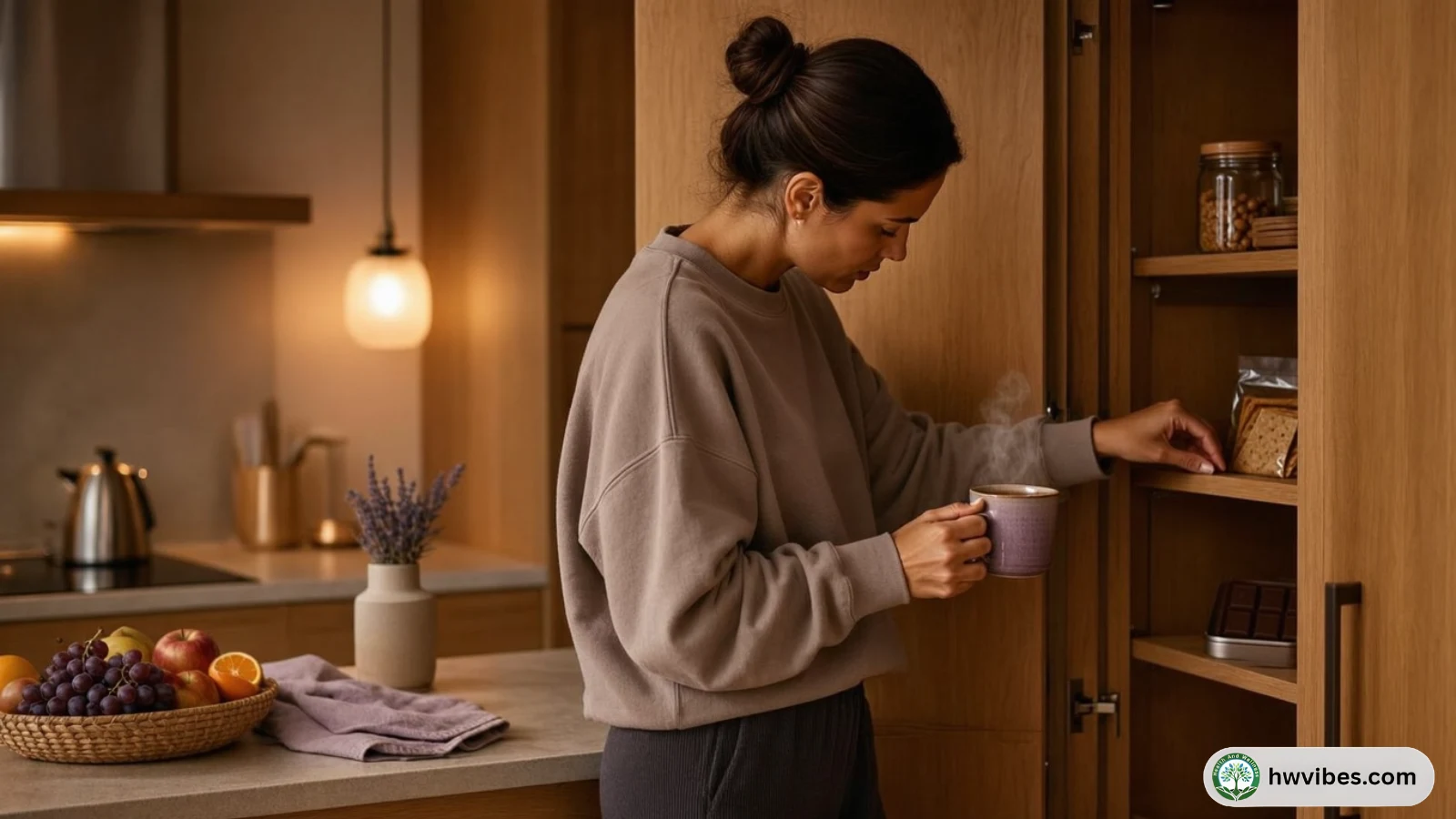
1) You’re simply exhausted
The more tired you are, the louder “quick comfort” foods can feel.
2) Stress catches up
When the day finally slows down, cravings can show up as a comfort signal.
3) Long gaps or irregular meals
If meals were uneven, your body may push harder for quick calories.
Gentle sleep habits that may help
This is not medical advice. These are simple, low-risk habits many people try when sleep affects cravings. Pick one or two that feel realistic.
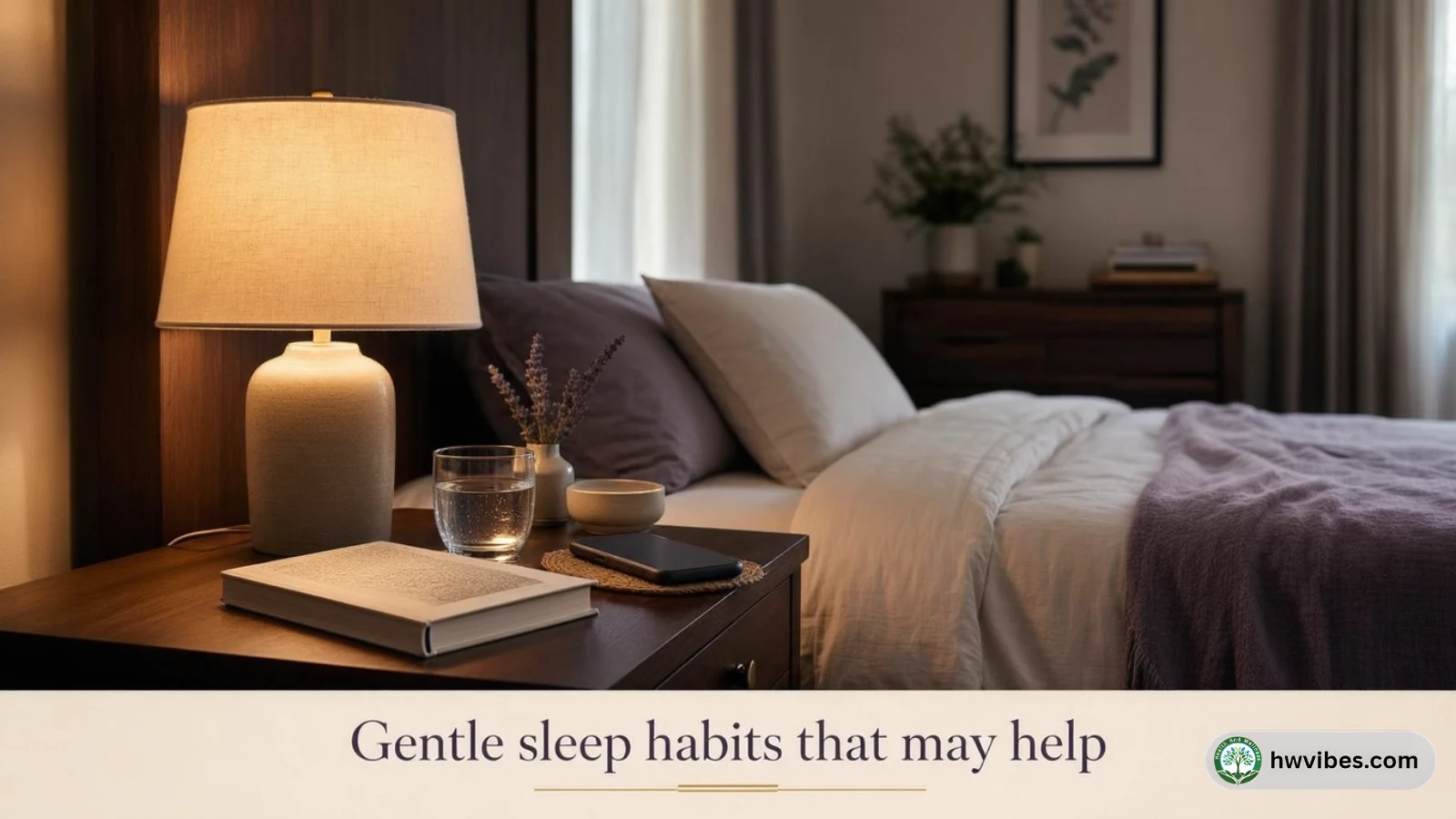
1) Keep a consistent wake-up time
Consistency often helps the body find a rhythm—even if bedtime isn’t perfect at first.
2) Create a 10-minute wind-down routine
Examples: reading, shower, light stretching, journaling, calming music.
3) Make the bedroom sleep-friendly
Many people sleep better in a cool, dark, quiet room. Overview: Sleep Foundation: Sleep hygiene.
4) Don’t turn one bad night into a bad week
A common loop is poor sleep → cravings → guilt → stress → worse sleep. A calmer mindset helps break the loop.
Common sleep sabotagers (easy wins)
- Late caffeine (some people are sensitive even to afternoon coffee)
- Bright screens late at night (try dimming or a cutoff time)
- Irregular schedule (wildly different wake-up times)
- Late, heavy meals (not a rule—just a common pattern for some people)
- Stress scrolling (keeps the brain “on”)
A simple 3-step plan (tonight / tomorrow / this week)
If your cravings are mainly stress-driven, pair with: Stress and Sugar Cravings.
Food routine tips (non-diet, non-prescriptive)
- Avoid long, unplanned gaps between meals when possible.
- Choose snacks that feel steadier than “sugar-only.”
- Notice if sugary drinks trigger cravings later.
Helpful next reads: Balanced Snacks for Sugar Cravings, Hidden Added Sugar Foods, How to Read Sugar on Labels.
When to get help
If sleep problems are frequent, severe, or affecting your daily life, speak with a qualified healthcare professional. This is especially important if you snore loudly, stop breathing during sleep (noticed by others), feel excessively sleepy during the day, or have ongoing insomnia.
Questions people ask
Why do I crave sugar when I’m tired?
Many people crave quick-reward foods when tired. Poor sleep can make cravings feel louder and decision-making feel harder.
How can I stop sugar cravings at night?
Night cravings are common. Many people find it helps to focus on sleep consistency, stress reduction, and steadier routines rather than strict bans.
Does poor sleep cause weight gain because of sugar cravings?
This page doesn’t provide medical conclusions. However, poor sleep is often linked with stronger appetite signals and cravings, which can affect choices over time.
Is it normal to want sweets every day?
Many people do—especially when stressed or sleep-deprived. If cravings feel out of control or distressing, it’s okay to seek professional support.
What’s the best first step if sleep is driving my cravings?
A common first step is keeping a consistent wake-up time and building a short wind-down routine. Small changes are often easier to repeat.
Does lack of sleep make you crave sugar?
It can for some people. In a small controlled study of 12 young men, two nights of short sleep lowered leptin, raised ghrelin and increased appetite for calorie-dense, high-carbohydrate foods. A later meta-analysis of 41 sleep-restriction trials found higher hunger and energy intake, but no consistent changes in leptin or ghrelin, so the effect is not the same for everyone.
Why do I crave sugar in the morning after a bad night?
After short sleep, many people feel hungrier and eat more, and some studies find more interest in calorie-dense foods, so sweet breakfasts can feel more tempting. The hormone changes seen in early studies were not consistent across later trials. Regular meals and adequate sleep may help, but responses vary.
References
Disclaimer
This page is for general education only. It does not provide medical advice, diagnosis, or treatment. Do not use it to make personal health decisions. If you have a medical condition, are pregnant, take medication, have allergies, or your symptoms feel severe or persistent, contact a qualified healthcare professional.
Read the full site disclaimer: https://hwvibes.com/disclaimer/
Medical disclaimer: HWVibes provides general health information for educational purposes only. It is not a substitute for professional medical advice, diagnosis or treatment, and reading it does not create a doctor–patient relationship. Always ask your doctor or another qualified health provider about any medical question or before trying anything described here, and never ignore professional advice or delay seeking it because of something you read on this site. Read the full medical disclaimer.
Spotted something that looks wrong or out of date? Tell us and our editors will check it.