

- There is no good evidence that kombucha causes kidney stones in people who are not already stone-formers.
- The concern is real but indirect: kombucha is brewed from tea, and tea appears on commonly used lists of higher-oxalate foods.
- If you have had calcium oxalate stones, kombucha may add to your oxalate intake — it is not in a special category of its own.
- Total fluid, sodium, and getting enough dietary calcium matter more for most people than any single drink.
Expert reviewed
Last reviewed: 24 September 2026
Dr. Hena A. Ansari (MBBS, MD) reviewed the medical wording and evidence summaries on this page to keep it education-only. How our medical review works
Reminder: This page is general education and does not replace medical care.
Quick answer
For most people, no. Kombucha is not known to cause kidney stones, and there is no study showing that drinking it creates stones in healthy kidneys. The reason the question keeps coming up is that kombucha is fermented from tea, and tea appears on the oxalate lists that both the Mayo Clinic and the National Kidney Foundation give to people who form calcium oxalate stones.
So the honest answer depends on who is asking. If you have never had a stone, a glass of kombucha is not the thing to worry about. If you are a recurrent calcium oxalate stone former, kombucha belongs in the same mental column as strong tea — something to count, not necessarily something to ban.
Where the worry actually comes from
About 8 in 10 kidney stones are calcium stones, and most of those are calcium oxalate. Oxalate is a natural compound in many plant foods. When there is a lot of oxalate in the urine and not much fluid to dilute it, oxalate can bind with calcium and crystallise.
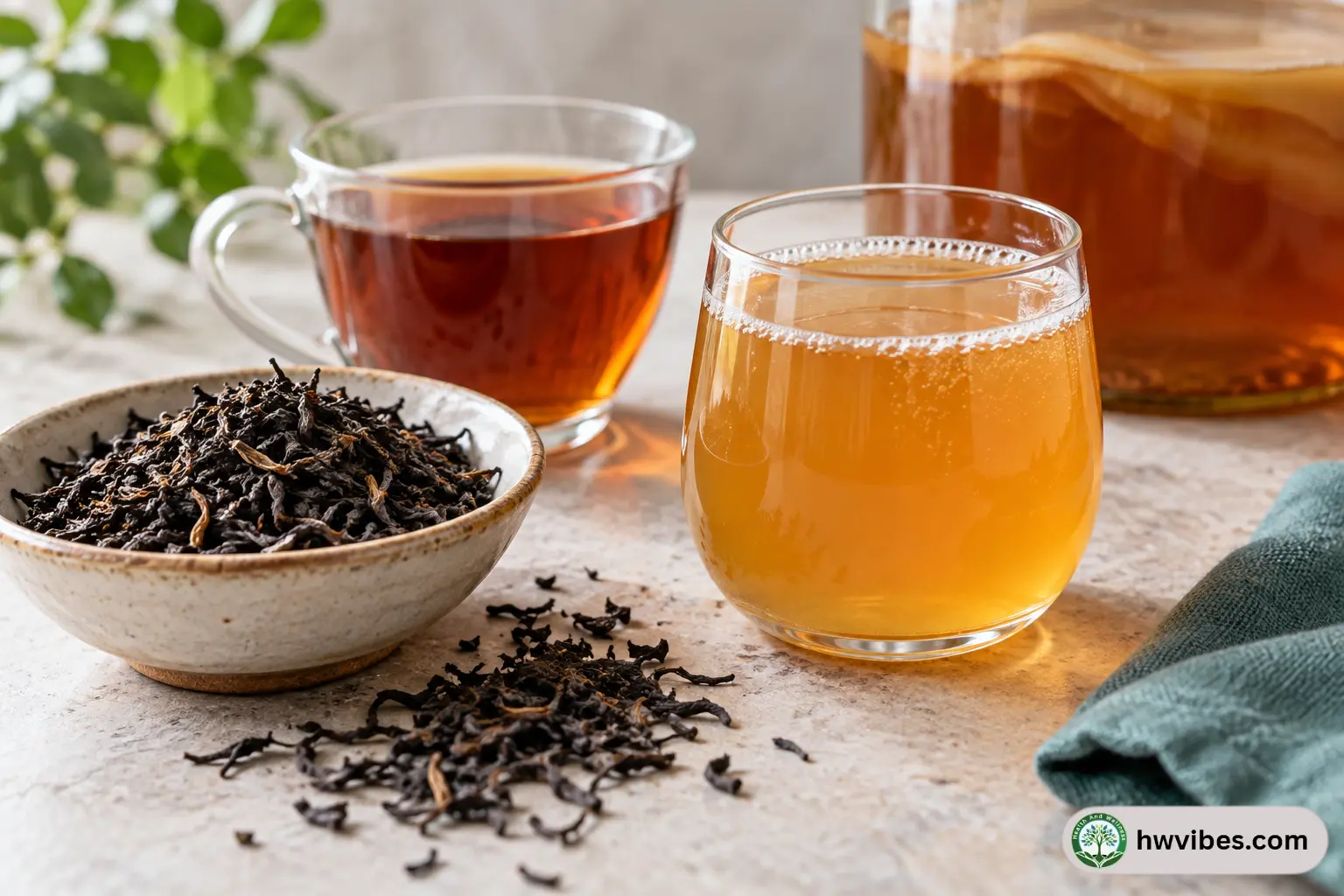
Kombucha starts as brewed tea, so it carries oxalate from the tea leaves. Fermentation does not remove it. That is the entire mechanism behind the question — there is nothing unique about the kombucha culture itself that targets kidneys.
What actually drives stone risk
If you are trying to reduce your chances of another stone, these matter considerably more than whether kombucha is on the menu.
- Fluid volume. The single biggest lever. The National Kidney Foundation suggests aiming for enough fluid to produce at least 2.5 litres of urine a day. Dilute urine is the point — kombucha counts towards fluid, incidentally.
- Sodium. Extra sodium makes you lose more calcium into your urine, which raises risk. NIDDK points to staying under 2,300 mg a day for adults.
- Calcium — and this one is counterintuitive. Cutting calcium increases stone risk. NIDDK is explicit that calcium in the right amounts blocks substances in the digestive tract that would otherwise form stones.
- Oxalate load overall, not one drink in isolation.
The pairing trick most pages miss
Applied to kombucha, that means drinking it alongside food containing calcium is a more sensible move than drinking it alone on an empty stomach — and considerably more sensible than cutting out dairy in an attempt to avoid stones, which tends to backfire.

Who should actually be careful
- Recurrent calcium oxalate stone formers. Count kombucha within whatever oxalate guidance you have been given, and mention it to your urologist or dietitian rather than guessing.
- Anyone told to limit fluid, such as some people on dialysis or with heart failure.
- People with reduced kidney function, where potassium and acid load are being monitored.
- Anyone drinking large daily volumes. Case reports of problems with kombucha almost always involve unusually high intake or improperly brewed home batches, not a modest glass.
Stone type matters here. Uric acid, struvite and cystine stones are not oxalate stones, and oxalate advice does not apply to them in the same way. If you have passed a stone, it is worth asking what type it was — a lot of unnecessary dietary restriction comes from not knowing.
Other things about kombucha worth knowing
Stones aside, a few points are more relevant to most drinkers than oxalate is:
- Sugar. Commercial kombucha varies from nearly none to as much as a soft drink. This is worth checking on the label — see our guide to reading sugar on nutrition labels, and why liquid sugar can be absorbed faster.
- Acidity. Kombucha is acidic, which is hard on tooth enamel. Drinking it with a meal and rinsing with water afterwards helps.
- Home brewing. Poorly brewed or over-fermented batches carry contamination risk. Commercial, pasteurised products avoid most of this.
- Caffeine. Kombucha retains some caffeine from the tea. If that is your question, we cover it in caffeine and kidney stones.
- Who should skip it. Pregnancy, immunosuppression and liver disease are all reasons to check with a clinician first, largely because of the unpasteurised and trace-alcohol issues rather than anything kidney-related.
What to do instead of quitting
If you have had a stone and you enjoy kombucha, the useful moves are ordinary and unglamorous:
- Spread fluids across the day rather than all at once, unless your doctor has limited your fluids.
- Kidney-stone diet guidance often suggests having oxalate-containing foods and drinks with a meal that includes calcium; if you drink kombucha, having it with food fits that approach.
- Do not cut dietary calcium.
- For most people with stones, sodium and total fluid intake matter more than kombucha itself.
- Find out what type of stone you formed, and get oxalate advice specific to it.
Questions people ask
Does kombucha cause kidney stones?
Kombucha has not been established as a cause of kidney stones, but kidney-specific human research is limited. It contributes oxalate because it is made from tea, which matters mainly if you already form calcium oxalate stones.
How much kombucha is too much?
There is no established limit tied to stone risk. Reported problems involve large daily volumes or home brews. A typical serving with food is not what the case reports describe.
Is kombucha worse than tea for kidney stones?
It is essentially tea with added sugar and acidity. From an oxalate point of view, treat it like the tea it came from.
Can I drink kombucha if I have one kidney or reduced function?
Ask your kidney team. That is a situation where fluid, potassium and acid load are individually managed, and general advice is not a good substitute.
Will kombucha help me pass a stone?
No. Fluid helps; no particular drink dissolves or flushes a stone. Pain that is severe, or comes with fever, vomiting or blood in the urine, needs urgent medical attention.
Is kombucha bad for your kidneys?
Kidney-specific human research on kombucha is limited. Ordinary commercial servings have not been established as a cause of kidney stones, but the available evidence is too limited to claim kidney benefits. People with chronic kidney disease or prescribed potassium/fluid restrictions should rely on their kidney team and the product’s nutrition information, because kombucha products vary in potassium, sugar, alcohol and other constituents.
Does kombucha help prevent kidney stones?
There is no evidence that kombucha prevents stones. Drinking enough total fluid is what helps most, and plain water or citrus-flavoured water are better everyday choices than any sweetened drink.
References
- NIDDK — Eating, Diet, & Nutrition for Kidney Stones
- National Kidney Foundation — Kidney Stone Diet Plan and Prevention
- Mayo Clinic — Kidney stones: symptoms and causes
Medical disclaimer: HWVibes provides general health information for educational purposes only. It is not a substitute for professional medical advice, diagnosis or treatment, and reading it does not create a doctor–patient relationship. Always ask your doctor or another qualified health provider about any medical question or before trying anything described here, and never ignore professional advice or delay seeking it because of something you read on this site. Read the full medical disclaimer.
Spotted something that looks wrong or out of date? Tell us and our editors will check it.