
Ever had a sweet-heavy day and woke up feeling tired, foggy, bloated, or just “not right”? People often call that a sugar hangover. This guide explains what it usually means, how long it may last, and a calm reset you can use—without guilt or extreme rules.
Written by: HWVibes Editorial Team • Last updated: September 2026
Expert reviewed
Last reviewed: 24 September 2026
Dr. Hena A. Ansari (MBBS, MD) reviewed this page to keep it education-only,
ensure the “hangover” concept is explained without fear, and confirm the reset steps stay general, low-risk, and non-prescriptive.
View full profile →
Reminder: This page is general education and does not replace medical care.
Key takeaways (quick)
- A “sugar hangover” is a non-medical term for feeling off after a sweet-heavy day.
- Many people feel better within the same day or the next day after returning to normal routines (varies).
- It’s often a whole-day effect: sweets + drinks + sleep + stress + meal timing.
- The best reset is usually gentle: water, normal meals, light movement (if safe), and sleep.
- Quick answer
- What is a sugar hangover?
- Sugar hangover symptoms (common)
- Why it happens (simple explanation)
- Sugar hangover vs sugar crash
- How long does a sugar hangover last?
- Why a sugar hangover hits the next day
- How to get rid of a sugar hangover
- What usually makes it worse
- Does sugar help an alcohol hangover?
- Mini check-in (30 seconds)
- When to get help
- Questions people ask
- References
- Disclaimer
- Related guides (topic cluster)
Quick answer
“Sugar hangover” is an informal term some people use for tiredness, thirst, headache, bloating or brain fog after an unusually sweet or rich day. It is not a recognized medical diagnosis, and research has not established a single cause or standard duration. Similar symptoms can also be related to sleep loss, alcohol, caffeine changes, dehydration, overeating, gastrointestinal effects or an unrelated condition. Returning to usual meals, fluids and sleep is what most people do; there is no need to skip meals or “detox”.
For the bigger “how sugar can feel in a day” overview, see: How Long Does Sugar Stay in Your Body? (Pillar).
What is a sugar hangover?
“Sugar hangover” is a popular phrase, not a diagnosis. People use it to describe how they feel after a high-sugar day or a very sweet meal. For a general explanation of how does too much sugar affect your body, see: WebMD.
If you frequently feel very sick after sugar or symptoms feel severe, it’s safest to speak with a qualified healthcare professional.
Sugar hangover symptoms (common)
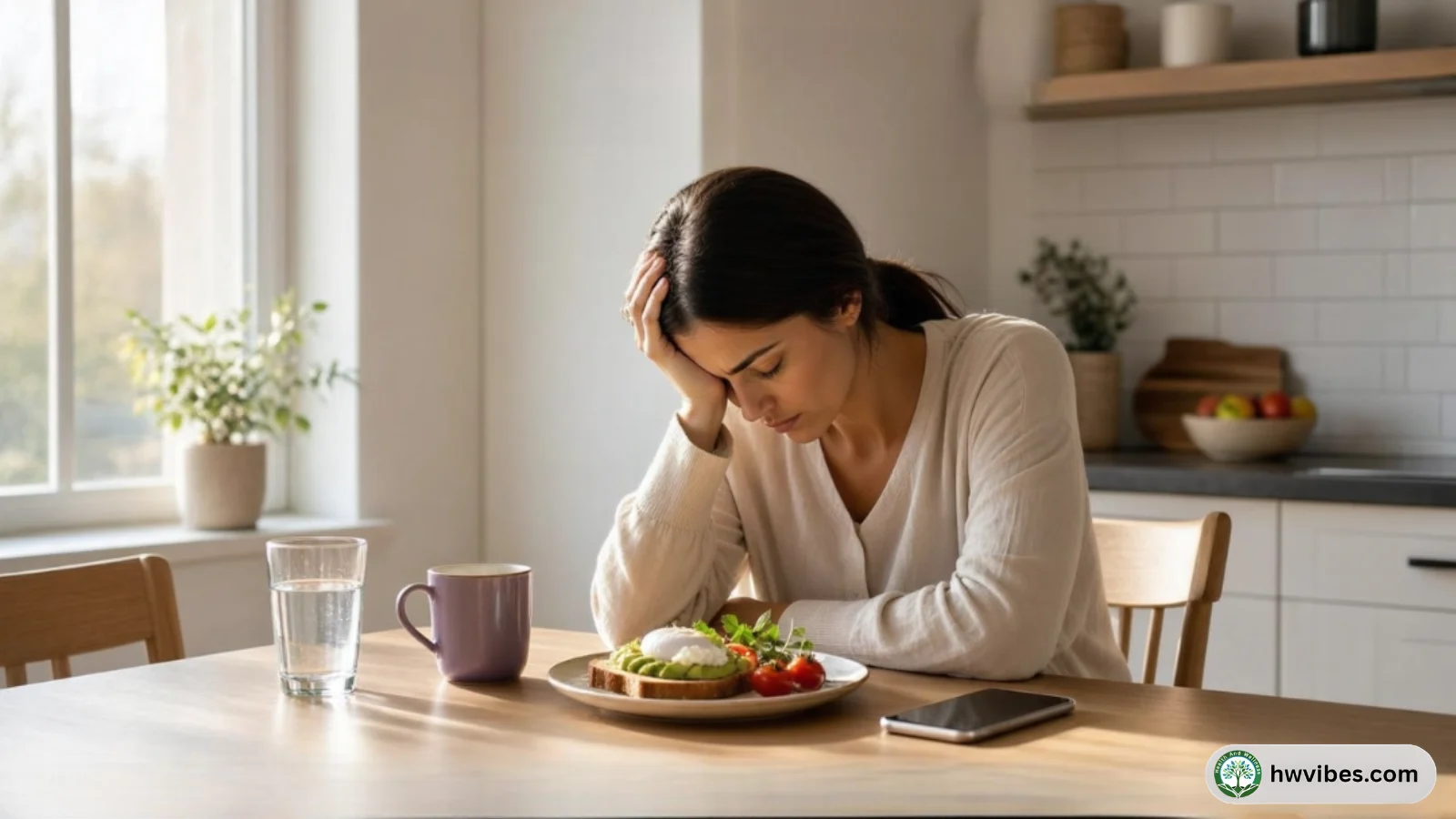
People describe sugar hangovers differently, but common symptoms include:
- Tiredness or low motivation
- Brain fog or trouble focusing
- Headache (for some people)
- Thirst or dry mouth
- Bloating or “puffy” feeling
- Irritability or mood dips
- Cravings for more sweets or refined carbs
- Upset stomach (especially after very sweet or very rich foods)
These symptoms can overlap with poor sleep, stress, dehydration, alcohol, or simply eating differently than usual. If you feel severely unwell or concerned, seek professional guidance.
Why it happens (simple explanation)

A sugar hangover can happen for a few straightforward reasons. You don’t need to memorize biology—just notice patterns:
1) Bigger “highs and lows” in energy
Very sweet foods/drinks can lead to quick energy changes. Some people feel a boost, then a dip later. Related guide: Sugar Crash: Why It Happens.
2) Liquid sugar can feel stronger
Sugary drinks are easy to consume quickly and may feel more intense for many people. Related guide: Sugary Drinks vs Solid Sweets.
3) Sleep and stress can amplify cravings
Poor sleep is often linked with stronger cravings the next day (see: Sleep Foundation: sleep hygiene). Stress can also make comfort-food cravings feel more urgent. Related: Stress and Sugar Cravings.
4) It’s rarely “just sugar”
Sweet-heavy days often include ultra-processed snacks, salty foods, or large portions—which can contribute to bloating or sluggishness.
Sugar hangover vs sugar crash (what’s the difference?)
- Sugar crash: often describes a shorter dip after a sweet snack or drink (hours later).
- Sugar hangover: often describes feeling off the next morning after a sweet-heavy day.
If you mainly notice the “dip,” start here: Sugar Crash: Why It Happens.
How long does a sugar hangover last?
There’s no perfect timeline. Many people feel noticeably better within the same day (or by the next day) after returning to normal routines. How long it lasts can depend on:
- how much sugar you had
- whether it was mostly drinks or foods
- sleep quality
- stress level
- hydration and meal timing
Why a sugar hangover hits the next day
Why someone may feel unwell the next day is not specific to sugar. A late, large or unusually rich meal can coincide with poorer sleep, alcohol or caffeine use, thirst, gastrointestinal discomfort and changes in normal meal patterns. These factors can produce similar nonspecific symptoms:
- Sleep. A big late-night snack, especially with caffeine or alcohol, may be followed by lighter, more broken sleep.
- Thirst. Salty and sugary snacks can make people thirsty.
- Meal patterns. Filling up on sweets can mean less protein, fiber and vegetables that day.
- Digestive discomfort. Large amounts of sugar, fat or sugar alcohols (in “sugar-free” sweets) can cause bloating or loose stools.
Sugar hangover headache
Headache is nonspecific and should not automatically be attributed to sugar. Sleep disruption, alcohol, caffeine changes, dehydration and many other factors can cause headache. A sudden, severe headache, or one with fever, a stiff neck, weakness or confusion, needs urgent medical care.
How to get rid of a sugar hangover (a simple reset)
This is not medical advice. These are general, low-risk ideas many people use to feel steadier after a sweet-heavy day. You don’t need to do all of them—choose what feels realistic.
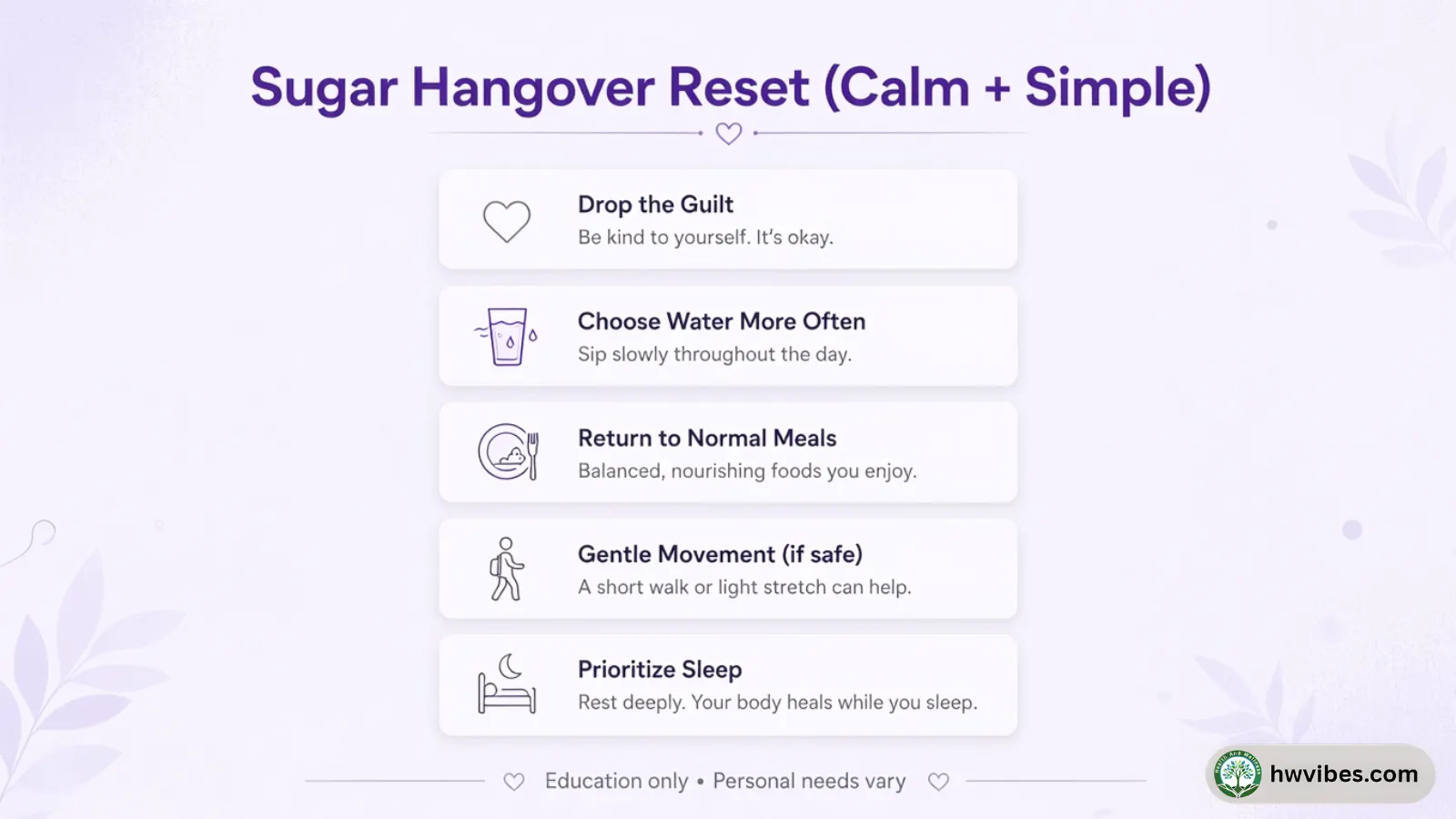
Step 1: Drop the guilt
One day doesn’t define your health. Guilt often leads to restriction, and restriction often leads to louder cravings.
Step 2: Choose water more often
Water doesn’t “cancel” sugar, but it’s a helpful default after a sweet-heavy day—especially if drinks were part of it. See: CDC guidance.
Step 3: Keep the next meal calm and normal
Many people feel better returning to regular meals rather than skipping food to “make up for it.” Choose what fits your needs, preferences, and any medical guidance you follow.
Step 4: Gentle movement (only if safe for you)
Some people feel more balanced after a short walk. General benefits: American Heart Association.
Step 5: Prioritize sleep
A solid night of sleep often makes the next day’s cravings feel easier. Related: Sleep and Sugar Cravings.
What usually makes it worse
Skipping meals to “make up for it”
Many people find this backfires. It can increase cravings and create a restrict-then-overeat loop.
Trying to “sweat it out”
Sweat is mostly water and salts. Sweating isn’t considered a meaningful way to remove sugar from the body. Exercise supports overall health, but sweating itself isn’t a sugar “flush.” (General info: Mayo Clinic.)
Turning it into an all-or-nothing detox
Extreme rules can make the next craving stronger. Small, repeatable habits often work better. Related: Sugar Detox Timeline (14 Days).
Does sugar help an alcohol hangover, or make it worse?
This is a different question, but people search for it a lot. Alcohol hangover is a separate condition. Mayo Clinic notes that bland foods such as toast or crackers may be easier to tolerate and may raise blood glucose, but time remains the only sure cure for a hangover. Sugar itself is not a proven hangover treatment.
Sugary mixers and cocktails can make it easier to drink more without noticing, which is one more reason sugar should not be seen as a hangover remedy.
Mini check-in (30 seconds)
Not a diagnosis. Just a quick pattern check.
- Did I have mostly sugary drinks (or sweets “all day”)?
- Did I sleep poorly?
- Was I stressed or rushed?
- Did I go long gaps without eating?
- Is this feeling unusual for me?
When to get help
If you frequently feel sick after sugar, have intense symptoms, or feel worried—especially if you are pregnant, managing diabetes, or taking medication that affects blood sugar—talk to a qualified healthcare professional.
Seek urgent help if you have severe symptoms (such as confusion, fainting, severe dehydration, or persistent vomiting). This page cannot assess emergencies.
Questions people ask
What is a sugar hangover?
It’s a non-medical term people use when they feel off after a sweet-heavy day—fatigue, brain fog, headaches, thirst, bloating, or cravings.
How long does a sugar hangover last?
Many people feel better within the same day or by the next day after returning to normal routines, but it varies.
Why do I feel sick after eating too much sugar?
Some people feel unwell after very sweet or rich foods. If this happens often or feels severe, it’s safest to discuss it with a healthcare professional.
Is a sugar hangover the same as a sugar crash?
They’re related but not identical. A sugar crash often describes a shorter dip after a sweet snack; a sugar hangover usually refers to feeling off after a sweet-heavy day.
How do I reset after a sugar binge?
This page doesn’t give personal treatment advice. Many people start with calm routines, water, sleep, and gentle movement if safe. If binge eating feels frequent or distressing, professional support can help.
Why do I feel hungover after eating sugar?
“Sugar hangover” is not a recognized diagnosis, and research has not established a single cause. Feeling unwell after a big sweet day is not specific to sugar: poorer sleep, alcohol or caffeine changes, thirst, overeating and digestive discomfort can all produce similar symptoms.
Can sugar give you a headache the next day?
Headache is nonspecific and should not automatically be attributed to sugar. Sleep disruption, alcohol, caffeine changes, dehydration and many other factors can cause headache. A sudden or severe headache needs medical attention.
Does sugar make an alcohol hangover worse?
Sugary mixers can make it easier to drink more alcohol. Alcohol hangover is a separate condition; bland foods such as toast or crackers may be easier to tolerate, but time remains the only sure cure, and sugar itself is not a proven hangover treatment (Mayo Clinic).
References
Disclaimer
This page is for general education only. It does not provide medical advice, diagnosis, or treatment. Do not use it to make personal health decisions. If you have a medical condition, are pregnant, take medication, have allergies, or your symptoms feel severe, unusual, or persistent, contact a qualified healthcare professional.
Read the full site disclaimer: https://hwvibes.com/disclaimer/
Medical disclaimer: HWVibes provides general health information for educational purposes only. It is not a substitute for professional medical advice, diagnosis or treatment, and reading it does not create a doctor–patient relationship. Always ask your doctor or another qualified health provider about any medical question or before trying anything described here, and never ignore professional advice or delay seeking it because of something you read on this site. Read the full medical disclaimer.
Spotted something that looks wrong or out of date? Tell us and our editors will check it.