
Lower back pain can come from many everyday causes—like posture, lifting, or tight muscles. But some people notice a different kind of discomfort and wonder if kidney stone back pain could be related. This guide explains how kidney stones and lower back pain may be connected, where the pain is often felt, what other signs may show up, and when it makes sense to get checked.
In many cases, kidney stone back pain is felt deeper than a typical sore muscle and may come in waves.
This is general wellness information, not a diagnosis. If you feel unsure about your symptoms, it’s always okay to seek professional guidance.
Table of Contents
What Are Kidney Stones, and Why Do They Happen?
Kidney stones are small, hard “pebble-like” deposits that can form when urine becomes very concentrated. When there’s less fluid available, certain natural substances in urine can clump together more easily.
A simple way to picture it: if a drink has too much powder and not enough water, it stops mixing smoothly and starts collecting. Something similar can happen in urine over time.
Factors often linked with kidney stones include:
- Not drinking enough fluids (dehydration can make urine more concentrated)
- Diet patterns that are higher in salt, added sugars, or animal proteins
- Family history (some people are more prone than others)
- Individual body chemistry (how your body handles minerals can differ)
For a plain-language overview, see: NIDDK—Kidney Stones (Facts).
Now let’s connect stones to the symptom most people notice first—pain.
Can Kidney Stones Cause Lower Back Pain?
Yes, kidney stone back pain can show up as lower back discomfort for some people. This can happen when a stone shifts and may irritate the urinary tract.
Many people associate kidney discomfort with the lower back, but the sensation can start higher and spread. Pain can feel sharp and sudden, or it can feel like a deep ache that won’t settle.
It’s also important to know that not all back pain is kidney-related, and not all kidney stones cause noticeable symptoms. Patterns and “extra clues” (like urinary changes or nausea) can help you decide whether to look into it further.
Where Exactly Is Kidney Stone Pain Felt?
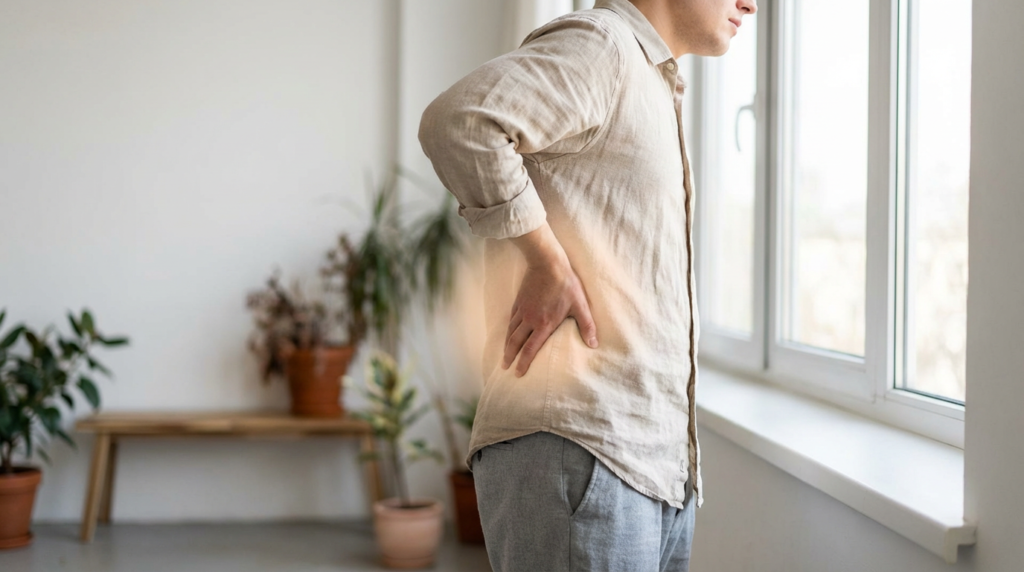
Kidney stone back pain is often felt on one side, near the flank (between the ribs and hip), but it can shift as symptoms change.
It may help to notice where the discomfort starts and whether it moves, because it can feel different from typical muscle soreness.
Common areas include:
- Flank area: Your side between the lower ribs and the hip
- Back (often one side): Sometimes it feels deep, not surface-level
- Lower belly or groin: Pain may shift as a stone moves
- Inner thigh: Some people feel spreading discomfort here
Kidney stone pain lower back left side
Pain on the lower back left side can happen if irritation is coming from the left kidney area or the left side of the urinary tract. The feeling may wrap from the back around to the side.
Kidney stone pain lower back right side
Pain on the lower back right side can feel similar. Because the right side of the abdomen has other organs too, right-sided pain can be confusing. Location alone usually isn’t enough to tell the cause.
Can kidney stones cause back pain on both sides?
Sometimes, yes—back pain on both sides can happen, but many people feel it more strongly on one side. Everyone’s body and pain signals are different.
Location is one clue. The “style” of pain is another.
What Does Kidney Stone Pain Feel Like?
People describe kidney stone back pain in different ways, but it often feels sharper and more intense than everyday stiffness.
Common descriptions include:
- Sharp, cramping waves that rise and fall
- A deep ache in the side or back
- Pain that moves (for example, from the side toward the lower belly)
- Restlessness—some people feel unable to get comfortable
Kidney stone back pain comes and goes
Kidney stone back pain often comes and goes, sometimes in waves. This can feel confusing because muscle pain is often more steady or clearly tied to movement.
Kidney stone pain in back only
Some people notice kidney stone pain in the back only, especially early on. That’s one reason it can be mistaken for a pulled muscle—especially if there wasn’t an obvious injury.
Kidney stone pain when sitting or lying down
Some people say the discomfort feels just as strong (or more noticeable) when sitting or lying down—especially at night when everything is quiet and you’re trying to rest.
Pain is a major sign, but it’s not the only one people notice.
What Are the 5 Most Common Symptoms of Kidney Stones?
Common symptoms people often associate with kidney stones include pain plus a few related changes. In many cases, these signs happen together—but not always.
Often-mentioned symptoms include:
- Strong pain in the side, back, or below the ribs
- Pain that spreads toward the lower belly or groin
- Discomfort when peeing (burning or stinging)
- Urine color changes (pink, red, or brown can happen)
- Nausea or vomiting (pain and stress can upset the stomach)
Source overview: Mayo Clinic—Kidney stones (Symptoms & causes).
Can kidney stones cause pain without blood in urine?
Yes. It’s possible to have stone-like pain without visible blood in the urine. Urine can look normal even when irritation is happening.
Kidney stone back pain without other symptoms
Some people report back pain without many other symptoms, especially early on. That’s one reason it helps to look at the whole picture over time—not just one symptom.
How to Tell If Back Pain Is Kidney Related (General Clues)
Back pain is common, and many things can cause it. Still, some patterns are more often associated with kidney-area discomfort than muscle strain.
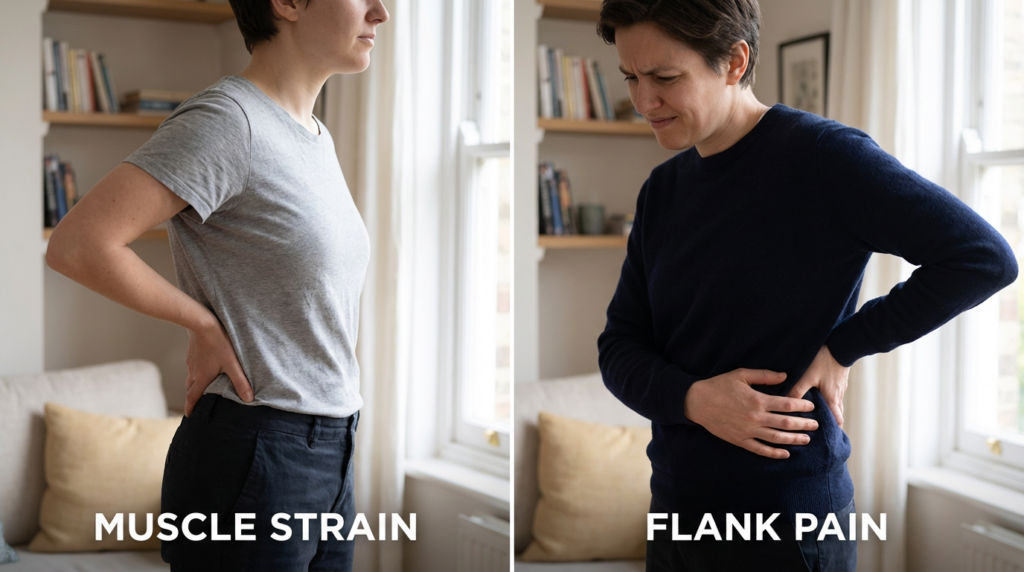
Because kidney stone back pain can overlap with muscle or nerve pain, these general patterns can help you describe what you feel.
Here’s a simple comparison:
| Feature | More like muscle-related back pain | More like kidney-area pain |
|---|---|---|
| Typical spot | Across the lower back or near the spine | Often more to one side, under the ribs/flank |
| Trigger | Lifting, twisting, posture, long sitting | May feel sudden or unrelated to movement |
| Movement | Often changes when you bend or stretch | May not change much with position |
| Feel | Sore, tight, stiff | Deeper ache or wave-like cramps |
| Other signs | Local tenderness, tight muscles | Sometimes nausea or urinary changes |
For general back comfort (especially when pain seems muscle-related), our heating pad for back pain guide covers safe ways to use heat.
Kidney stone vs. muscle pain in back
A helpful question is: Does it clearly change with movement? Muscle pain often does. Kidney-area discomfort may feel “internal” and less tied to bending or stretching. That said, these are only general clues—not a sure test.
Kidney stone pain vs. sciatica
Sciatica often involves a nerve-type pain that travels down the leg, sometimes with tingling or numbness. Kidney stone pain more often stays in the side/back area and may spread toward the lower belly or groin instead of down the leg.
How Long Does Kidney Stone Pain Last?
The timeline for kidney stone back pain can differ from person to person. Some people feel short bursts, while others feel discomfort that returns over days.
In general:
- Pain may come in episodes (waves) rather than staying constant
- Timing depends on whether anything is moving or irritating the urinary tract
- Some people feel better quickly; others may feel on-and-off discomfort longer
Can a small kidney stone cause back pain?
Yes. Small stones can still cause noticeable pain if they irritate a sensitive area.
Can kidney stones cause chronic lower back pain?
Sometimes, recurring or lingering discomfort is reported, but chronic back pain has many possible causes. If pain keeps coming back or affects daily life, it’s reasonable to check in with a healthcare professional to understand what’s going on.
What Can Mimic Kidney Stone Pain?
Many issues can feel similar in the back or side. Some examples people commonly confuse with kidney stone pain include:
- Muscle spasms or strains
- Urinary tract irritation or infection (often with frequent urination or burning)
- Digestive discomfort (gas, constipation, bowel irritation)
- Other abdominal causes that can refer pain to the back
If your discomfort is more general (not focused in the flank or lower back), you might find our article on body aches without fever helpful for context.
Comfort Strategies and Supportive Habits (Non-Medical)
This section is about general comfort and wellness habits—not treatments.
Some options people commonly try for back comfort include:
- Staying hydrated (water supports overall urinary health)
- Using gentle warmth on the sore area
- Trying light movement if it feels okay (some people prefer resting; others prefer short walks)
- Finding a comfortable position with pillows for support
Does a heating pad help with kidney stone pain?
Some people find a heating pad feels soothing by relaxing tight muscles and adding gentle warmth. If you choose to use heat, basic safety tips many people follow include keeping the heat mild, using a cloth barrier, and avoiding prolonged high heat on the skin.
If you want a simple, step-by-step guide, see our post on does a heating pad help with kidney stones with easy safety reminders.
For general symptom education, see: Cleveland Clinic—Kidney Stones.
Best sleeping position for kidney stone pain
There’s no single best position for everyone. Some people feel better with:
- A pillow between the knees (side sleeping)
- A pillow under the knees (back sleeping)
- Switching sides to see what feels most comfortable
If your discomfort feels more like a typical back strain, you may also like our guide on heating pad for back pain, including safe-use tips and common types.
Hydration and Kidney Stone Prevention (Lifestyle Focus)

Can dehydration cause kidney stones?
Dehydration is commonly linked with kidney stone risk because it can make urine more concentrated, which may allow crystals to form more easily.
How much water should you drink?
Needs vary. A practical, non-technical tip many people use is aiming for urine that is pale yellow most of the time and drinking more when it’s hot or you’re active.
Drinks and remedies: a word of caution
You may see bold claims online about certain drinks “dissolving” stones. In reality, results vary, and some drinks may not be a good fit for everyone. For most people, plain water is a simple, supportive choice.
For general nutrition info related to kidney stones, see the National Kidney Foundation: Kidney Stone Diet Plan and Prevention.
Foods and Dietary Habits to Be Aware Of
Food choices can play a role, but triggers vary by person.
Patterns often discussed include:
- High-sodium diets (salt-heavy packaged foods)
- Very high animal-protein intake
- High-oxalate foods (some leafy greens, nuts, and chocolate)
The “calcium myth” (keep it balanced)
Many people assume they should cut calcium. For some people, balanced calcium intake from foods may actually be supportive. Because individual needs differ, big diet changes are best discussed with a qualified professional.
When to Worry: Signs You Should Get Urgent Help
It may be safer to seek urgent medical care if you have:
- Severe pain that feels unmanageable or keeps getting worse
- Fever or chills along with back pain
- Ongoing vomiting or you can’t keep fluids down
- Trouble peeing or you can’t pee at all
- Heavy bleeding in urine, or urine that looks very red
These symptoms can have different causes, and urgent care can help rule out serious problems.
Frequently Asked Questions
Can a kidney stone cause pain in your lower back only?
Yes. Some people feel pain mainly in the back or flank at first. Pain can also shift over time. Because many things can cause lower back pain, consider medical advice if pain is severe, sudden, or unusual for you.
How long does kidney stone back pain last?
It varies. Some people have short, intense episodes that come in waves, while others have discomfort that returns over days. If pain isn’t improving or is getting worse, it’s a good reason to seek medical guidance.
Does a heating pad help with kidney stone pain?
It may help with comfort. Heat can relax tense muscles and feel soothing, even though it doesn’t remove a stone.
Can dehydration cause kidney stones?
Dehydration is commonly associated with kidney stones because concentrated urine may make crystal formation more likely. Regular hydration can support overall urinary health.
What can mimic kidney stone pain?
Muscle strains, digestive issues, and urinary infections can sometimes feel similar. If symptoms are severe or confusing, a clinician can help sort out the cause.
Final Thoughts: Awareness, Habits, and Balance
If kidney stone back pain is on your mind, focusing on patterns—like location, waves of pain, and any urinary changes—can help you decide what to do next.
Hydration, balanced eating, and everyday wellness habits can support urinary health—while knowing when to get help can support peace of mind.
This article is for general information and product guidance only. It isn’t medical advice. If discomfort is severe, unusual, or not improving, consider getting personalized guidance from a qualified professional.
Author Note
This article was prepared using publicly available information from reputable health and nutrition organizations (linked above). It is written for general wellness awareness and is not meant to replace individualized guidance from a qualified professional.
Stay Connected
Stay informed with practical, source-linked wellness content.
If you found this article helpful, consider bookmarking hwvibes.com or subscribing to our updates for easy-to-understand wellness guides, habits, and public-health awareness posts.
Sharing reliable information helps reduce confusion—feel free to share this article with a friend who might benefit.
About the Author – Mohammad Faisal Khan
Mohammad Faisal Khan is the founder and chief editor of Health & Wellness (hwvibes.com), a platform focused on creating well-researched, easy-to-understand health and wellness content for everyday readers.
While not a medical professional, he summarizes publicly available guidance from reputable organizations (such as public health and university health education resources, and other health education sources) and links to official references where possible. His goal is to help readers understand wellness topics clearly and responsibly—without offering medical advice.
For inquiries, collaborations, or feedback, reach out at: contact@hwvibes.com