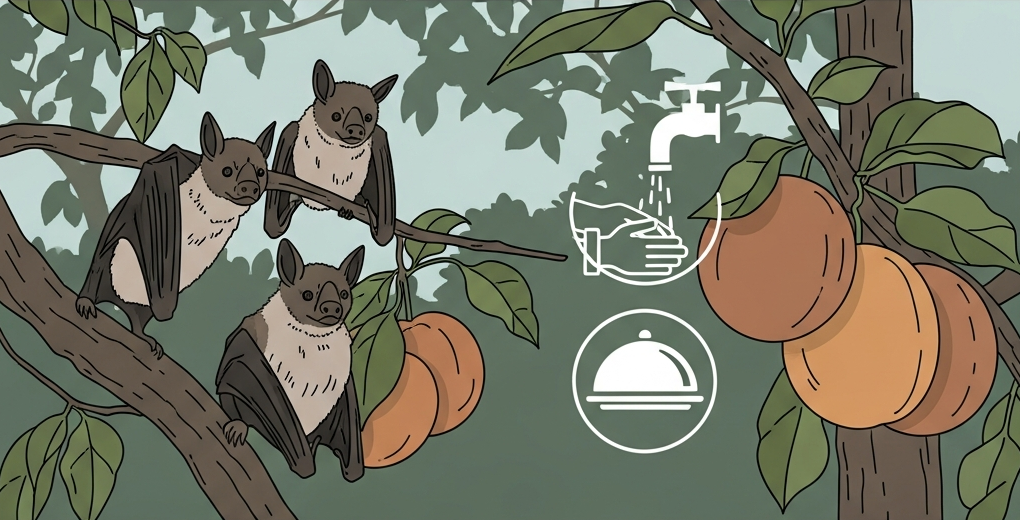
The Nipah Virus sometimes appears in news updates, especially in parts of South and Southeast Asia. For everyday readers, these headlines can feel confusing or worrying.
This guide explains what the Nipah virus is, how it can spread, and what general “awareness” looks like in daily life—without panic and without medical instructions. It also points you to reliable places for official updates.
Table of Contents
What Is the Nipah Virus?
The Nipah virus was first identified in 1999 during an outbreak in Malaysia and Singapore. Its name comes from Sungai Nipah, the location in Malaysia where it was first identified. The World Health Organization (WHO) provides detailed information on this virus.
You may see Nipah described using scientific terms. Here’s what they mean in simple words:
Two terms you may see in the news.
- Virus family: Nipah belongs to a larger “family group” of viruses. This is a scientific way of organizing and studying viruses.
- Zoonotic: The CDC describes Nipah as zoonotic, meaning it can sometimes spread between animals and humans.
Key points to understand
- Where it’s found in nature: Nipah is often linked with fruit bats (sometimes called flying foxes), based on summaries from the WHO.
- Why it’s monitored: In some outbreaks, it has been associated with serious illness in people.
- How it shows up: Reports are usually localized (limited to a specific area), rather than widespread.
For general background information, see the WHO Nipah fact sheet.
Nipah Virus Transmission: How It Can Spread
Learning about Nipah Virus transmission can help you understand why public health advisories may focus on hygiene, food safety, and close-contact precautions.
Information shared by the WHO and the CDC describes several ways transmission has been linked in past outbreaks.
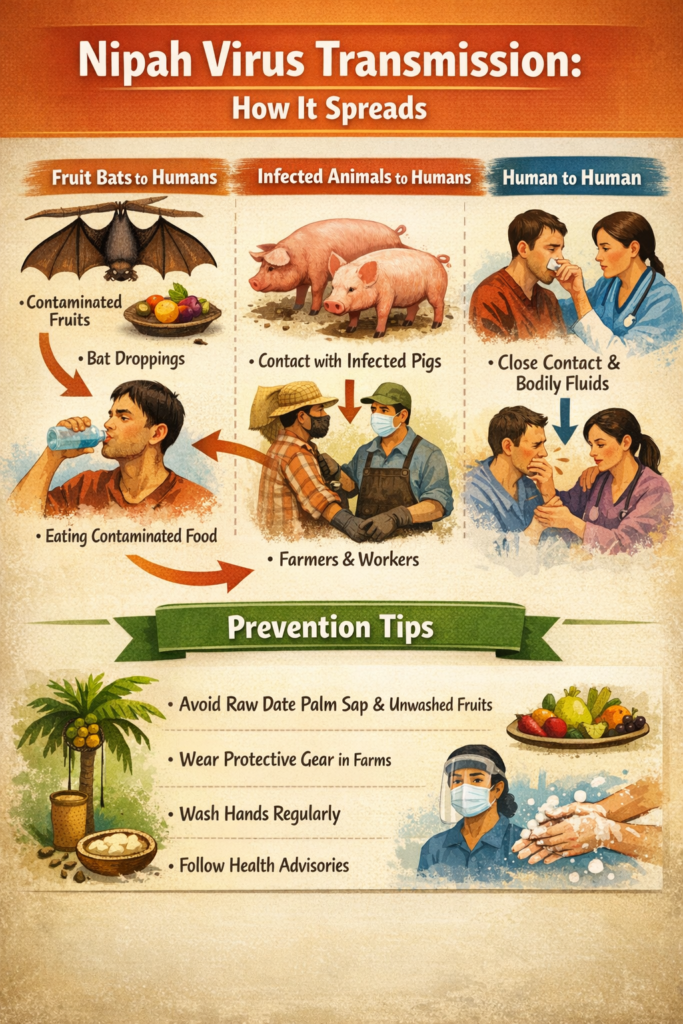
Animal-to-human transmission (examples often discussed)
- Fruit bats → food or drink: In some settings, food or drink may become contaminated by bat saliva or droppings.
- Animals → humans: In certain outbreaks, animals such as pigs have been involved as an “intermediate host,” meaning the virus moved through animals before reaching people.
Human-to-human transmission (what has been reported)
The WHO notes that person-to-person spread has been reported, usually involving close contact, such as caregiving situations.
Important note: This section is not meant to help you “judge” anyone’s health. It’s general awareness only.
Nipah Virus in India: A Brief Overview
Nipah Virus in India has been reported in a small number of localized outbreaks over the years, including in West Bengal and Kerala. Public updates and response efforts may involve national and state agencies, such as:
- Ministry of Health and Family Welfare (MoHFW), India
- National Centre for Disease Control (NCDC)
- Indian Council of Medical Research (ICMR)
- Directorate of Health Services, Kerala
Why do reports often mention certain regions?
Different regions have different ecosystems and levels of contact between people, farms, fruit trees, and wildlife habitats. In some places, there may be more opportunities for human–wildlife overlap. This doesn’t mean an outbreak is “expected”—it helps explain why monitoring and public updates can be stronger in certain areas.
Where Is the Nipah Virus in India Right Now?
If you’re searching “Where is the Nipah virus in India?”, the safest approach is to check official sources. Social media posts can be outdated, incomplete, or incorrect.
Reliable places to check for updates
- MoHFW: https://mohfw.gov.in/
- NCDC: https://ncdc.mohfw.gov.in/
- Kerala DHS: https://dhs.kerala.gov.in/
- WHO India: https://www.who.int/india
Which Viruses Are Commonly Monitored in India Each Year?
People often search “which virus is spreading right now,” but the answer changes by season and region. India’s public health systems track multiple concerns throughout the year using surveillance programs such as the Integrated Disease Surveillance Programme (IDSP).
If something is trending online, it’s a good habit to confirm it through official updates (MoHFW/NCDC/ICMR or your state health department) before sharing.

Nipah Virus Symptoms (General Awareness)
This section is for awareness only. Many common illnesses share similar symptoms, and only a qualified professional can evaluate symptoms properly.
What are the symptoms of the Nipah virus?
According to the WHO and the CDC, symptoms reported in outbreaks have included:
- Fever
- Headache
- Body aches
- Sore throat
- Tiredness (fatigue)
- Cough or breathing discomfort in some cases
- Confusion or unusual sleepiness in some cases
A calm way to think about symptoms
While many seasonal viruses start with mild body aches without fever, Nipah virus symptoms typically escalate more aggressively.
Symptoms like fever and fatigue can happen for many reasons. During an outbreak, public health updates often mention factors like location and known exposure routes to help communities understand the situation. For personal concerns, it’s best to rely on local official advisories and professional guidance rather than self-checking symptoms online.
If you feel unwell and you’re worried, it’s best to seek guidance from a local healthcare provider or follow your local health authority’s instructions.
How Outbreak Responses Work (High-Level Overview)
It can be reassuring to know that outbreaks are handled with organized public health steps. These may include:
- identifying possible cases based on official definitions
- tracing close contacts (to help limit spread)
- sharing local advisories and practical guidance
- supporting healthcare facilities with safety protocols
For global outbreak communications, see WHO Disease Outbreak News.
Everyday Wellness Habits That Support Public Health
These are general wellness and hygiene habits (not medical prevention rules). They are helpful in many everyday situations and are commonly promoted by public health agencies.
Food and drink safety (common-sense habits)
- Wash fruits and vegetables before eating.
- Choose foods and drinks from trusted sources, especially during local advisories.
- Follow any food safety alerts shared by your local health department.
Helpful reference: WHO Food Safety

Clean hands and shared spaces
- Wash your hands regularly with soap and water, especially before eating.
- Cover coughs and sneezes.
- Keep indoor spaces reasonably ventilated when possible.
Helpful reference: CDC Clean Hands
Staying informed without stress
- Save official websites in your browser (MoHFW/NCDC/State Health Dept).
- Be cautious with “urgent” forwarded messages that don’t cite trusted sources.
- If an advisory affects your area, follow the official instructions.
Frequently Asked Questions (Quick Answers)
What does the Nipah virus do to humans?
Nipah virus has been linked to illness in humans in some outbreaks. Reported symptoms range from mild to serious, and severity can vary by individual.
Is the Nipah virus airborne like COVID-19?
Public summaries generally describe Nipah as spreading mainly through close contact and certain exposure routes, not like highly airborne viruses. See the WHO overview.
Where is the Nipah virus in India?
What are the symptoms of the Nipah virus?
Reported symptoms have included fever, headache, fatigue, sore throat, cough, and in some cases, confusion or unusual sleepiness. See CDC symptoms.
How can I stay informed during a reported outbreak?
Follow official public health advisories, practice general hygiene, and rely on verified sources rather than social media rumors.
Test Your Knowledge: Nipah Virus Awareness Quiz
Conclusion: Stay Aware, Stay Balanced
The Nipah virus is an important topic, but awareness doesn’t have to feel scary. The most helpful approach is simple:
- Learn the basics from trusted sources
- Follow official updates if your region is affected
- Keep steady hygiene and food-safety habits
- Avoid rumors and sensational posts
For tips on everyday wellness and nutrition, check out our guide: How Long Does Sugar Stay in Your Body?
Medical Disclaimer (Please Read)
This article is for general education and awareness only. It does not provide medical advice and is not meant for self-diagnosis or self-treatment. If you feel unwell or are concerned about possible exposure, contact a qualified healthcare professional or follow guidance from your local health authority.
Sources used (public information):
WHO Nipah fact sheet, CDC Nipah pages, MoHFW India, NCDC India, ICMR, Kerala DHS.
Author note: This article was prepared using publicly available information from the WHO, CDC, and Indian public health authorities for general awareness purposes.
Stay updated
Stay informed with verified health updates.
If you found this article helpful, consider bookmarking HWVibes or subscribing to our updates for evidence-based health news, wellness insights, and public health awareness articles.
Sharing reliable information helps reduce confusion and misinformation—feel free to share this article with friends or family who may benefit from it.
About the Author – Mohammad Faisal Khan
Mohammad Faisal Khan is the founder and chief editor of HWVibes, a platform dedicated to publishing well-researched and easy-to-understand content on health and wellness topics.
With a strong interest in holistic health, fitness, and public health awareness, he summarizes publicly available information from organizations such as the WHO, CDC, and Indian public health authorities, and links to official sources where possible.
While not a medical professional, he aims to simplify complex health topics so readers can better understand official guidance and make informed decisions. His work emphasizes accuracy, clarity, and responsible reporting rather than medical advice.
For inquiries, collaborations, or feedback, reach out at:
contact@hwvibes.com
Medical disclaimer: HWVibes provides general health information for educational purposes only. It is not a substitute for professional medical advice, diagnosis or treatment, and reading it does not create a doctor–patient relationship. Always ask your doctor or another qualified health provider about any medical question or before trying anything described here, and never ignore professional advice or delay seeking it because of something you read on this site. Read the full medical disclaimer.
Spotted something that looks wrong or out of date? Tell us and our editors will check it.