
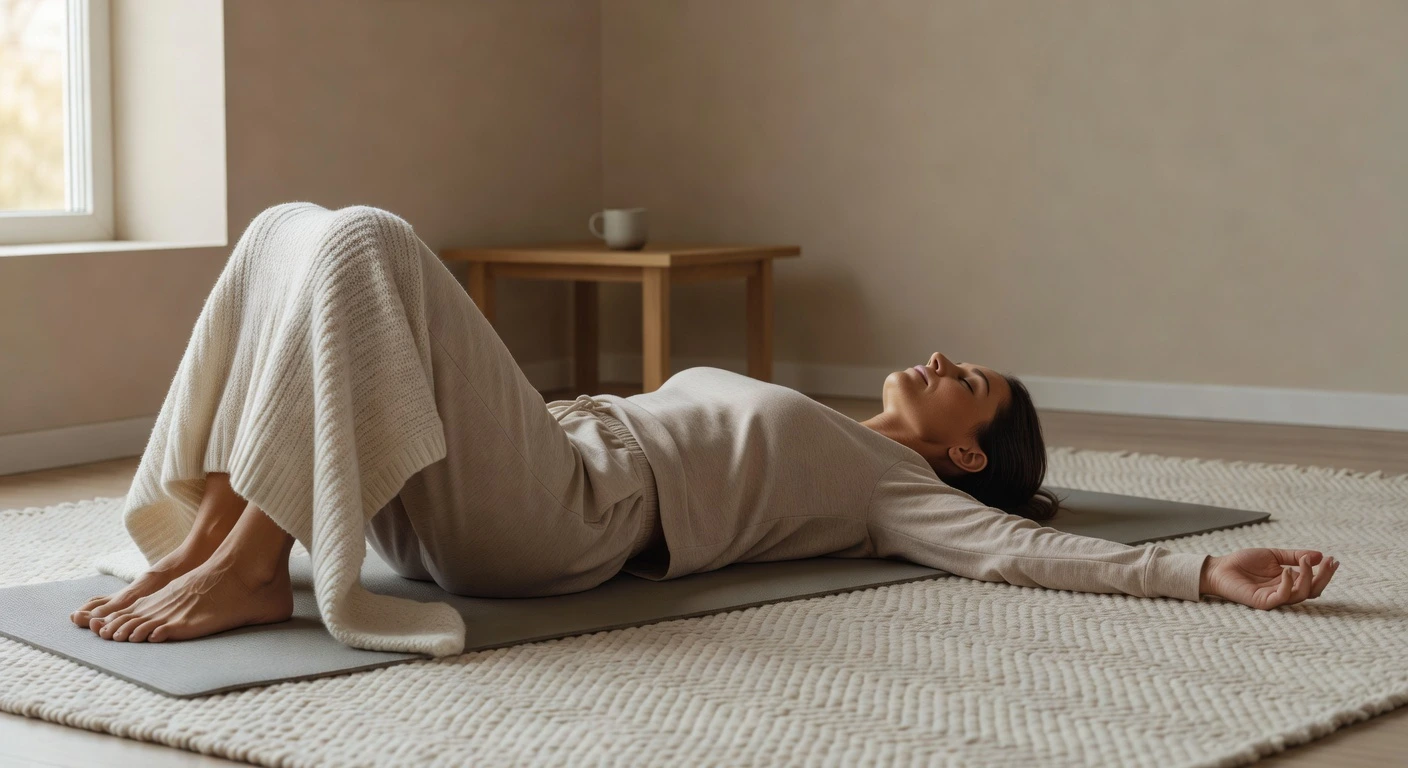
If you’ve ever felt tired but wired, tense without knowing why, or unable to fully relax even when you try, you’re not alone. Somatic exercises are slow, gentle, body-focused movements that may help you notice tension and feel more settled after stress. Unlike traditional workouts, they focus less on performance and more on body awareness—and many people find they’re doable at home in about 10 minutes.
Stress can show up in everyday physical ways: tight shoulders, a clenched jaw, shallow breathing, or feeling keyed up at bedtime. Somatic exercises for nervous system regulation may support a calmer, more balanced feeling—without intense movement or special equipment.
This beginner guide explains what somatic exercise is, what to expect, and a simple routine you can explore at your own pace.
Table of Contents
At a Glance
- What: Slow movements that build body awareness and may ease everyday tension
- Who it’s for: Beginners and anyone wanting gentle, at-home support
- Time: About 10 minutes total (each step is 1–3 minutes)
- Equipment: None (a mat, rug, or blanket can help)
- Why people like it: Often feels grounding, simple, and low-pressure
This article is for general information only. It is not medical or mental health advice. If you have ongoing symptoms or a trauma history, please consult a qualified professional.
What Are Somatic Exercises? (Simple Definition)
Somatic exercises are movements that help you pay attention to what you feel inside your body—like tightness, warmth, heaviness, tingling, or ease. The goal usually isn’t to stretch deeper or push harder. It’s to move slowly enough that you can notice the connection between your body sensations and your breathing or movement.
You may also see the phrase somatic therapy exercises. Some somatic practices are used in therapy settings, while others are simple self-care movements people do at home for general well-being. Either way, the theme is similar: slow down, notice sensations, and move gently.
Some modern somatic education traces back to Thomas Hanna, who described how stress patterns can become so familiar that we stop noticing them. Somatic movement is one way to rebuild that awareness so your body can soften more easily.
Helpful mindset: In somatic work, “smaller” often feels better than “deeper.”
What Does a Somatic Workout Look Like?
A somatic workout is usually quiet, slow, and gentle. A typical session may include:
- Slow floor movements (often feel more comfortable and supported)
- A brief body scan (noticing sensations head to toe)
- Gentle rocking, swaying, or somatic shaking
- Comfortable breathing patterns
- A short rest at the end so your body can settle
The focus is on how your body feels while you move—not on how the movement looks.
This slower pace can make it easier to notice small body signals—like tightness in the chest, a fluttery stomach, or a clenched jaw. Researchers call this ability interoception: your body’s way of sensing what’s happening on the inside. These signals can shape how you experience stress day to day.
When you’ve been under pressure for a while, these signals can sometimes feel confusing or harder to read. Some people describe this as feeling dysregulated (meaning their stress reaction doesn’t settle as easily as they’d like). Practices that build gentle body awareness—like slow breathing and somatic movement—may help you notice these signals earlier and feel more grounded after a stressful moment.
Here, dysregulated is used in a general, everyday sense—not as a medical diagnosis.
Your Somatic Nervous System, Nerves, and Body Awareness
Somatic exercises can feel calming partly because they combine sensation and movement—two things your nervous system pays attention to all day.
The Role of Your Somatic Nervous System (and Somatic Nerves)
Your somatic nervous system supports voluntary movement and sensory input (touch, pressure, body position). In everyday terms: it helps you move on purpose, and it helps you feel what’s happening in your body.
When you notice the contact of your feet on the floor—or the tension in your neck—your nerves carry that information to your brain. Over time, somatic practice may make those signals easier to notice earlier.
Reference (plain overview): NCBI Bookshelf: Somatic nervous system
What Is the Somatosensory Cortex?
The somatosensory cortex is a part of the brain that helps process body sensations—like touch, pressure, temperature, and where your body is in space.
In somatic exercises, you’re gently training that “body map” to become clearer. This can matter because stress may make body signals feel either:
- Too loud (tense, restless, wired), or
- Too quiet (numb, disconnected)
Fight, Flight, and Freeze (A Simple Explanation)
You’ve probably heard of fight-or-flight. Freeze is another way the body can react when stress feels overwhelming. It can feel like:
- Feeling stuck or shut down
- Feeling foggy or disconnected
- Finding it hard to start tasks—even small ones
This doesn’t mean anything is “wrong” with you. It can be your body’s protective way of coping when stress feels like too much.
Helpful background: Harvard Health: Understanding the stress response
The Vagus Nerve (Why People Mention It So Much)
The vagus nerve is a major nerve that connects the brain and body. It plays a role in the part of the nervous system associated with slowing the heart rate, softening muscle tension, and helping the body transition out of stress mode.
Some wellness practices (like slower breathing, humming, and gentle movement) may support this calming pathway. More here: Cleveland Clinic: Vagus nerve
Some research suggests that slower breathing may be linked with vagus nerve activity—one possible reason slow breathing and gentle movement feel calming for many people.
You may also hear about “Polyvagal Theory.” It’s one way some people describe shifts between feeling safe, alert, or shut down. You don’t need to know the theory to try gentle grounding practices—and people’s experiences can vary.
Signs of a Dysregulated Nervous System (Everyday Clues)
The phrase “dysregulated nervous system” is common online. In everyday use, it often means your body feels stuck in a stressed state (keyed up) or a low-energy state (flat or foggy).
Feeling tired or foggy can have many causes—not just stress—so you may also find this general guide helpful: Vitamin Deficiency: 10 Easy-to-Miss Signs (Simple Guide).
Some commonly reported signs of a dysregulated nervous system include:
- Feeling “on edge” or easily startled
- Tight jaw, shoulders, or hips
- Restless sleep or trouble winding down
- Feeling emotionally flat or disconnected
- Stomach discomfort during stress (even when you ate normally)
- Difficulty focusing
- Mood shifts that occasionally feel out of proportion to the moment (this can happen to anyone under stress
- Feeling tired but wired
- Feeling “stuck,” like you can’t shift gears
These signs can have many causes. This list is for self-awareness—not self-diagnosis. If these feelings are intense, last a long time, or worry you, consider speaking with a qualified healthcare professional.
If stress shows up as general soreness or tension, you may also like this simple guide on possible everyday reasons for aches: Body Aches Without Fever: 5 Surprising Causes.
How Somatic Exercises May Support Nervous System Regulation
Think of somatic exercises as a “body check-in,” not a medical solution. The goal is awareness and gentleness — not fixing or forcing change.
When you’re stressed, your body often shows it physically: tight muscles, shallow breathing, or a racing mind. Somatic exercises may help by giving your body a gentle cue to slow down.
Some people find somatic movement helpful because it may:
- Encourage slower breathing and softer muscle tension
- Improve body awareness (so you notice stress cues earlier)
- Support a sense of grounding and safety
- Help you transition out of “go-go-go” mode into a calmer rhythm
A related concept is the relaxation response, often linked with slower breathing and calming habits:
Harvard Health: Relaxation techniques and breath control
Some people notice a shift after one session; for others, it takes a week or more of regular practice. Somatic exercises aren’t a quick fix, but many people find them supportive over time.
Before You Begin (Safety + Comfort Tips)
Somatic exercises are usually gentle, but comfort matters.
Keep It Comfortable
- Move slowly
- Stay in a comfortable range
- Pause if you feel dizzy, overwhelmed, or uncomfortable
Expect Subtle Results
Some people feel calmer right away. Others feel “not much” at first. Both are normal. Somatic practice often builds through repetition.
Emotional Responses Can Happen
Because you’re paying attention inward, you might notice emotions (tears, irritation, relief, sleepiness). That doesn’t automatically mean something is wrong. It may simply be part of unwinding tension.
If anything feels too big, pause and ground yourself: open your eyes, look around, and feel your feet on the floor.
When Extra Support May Help
If you have a trauma history or strong panic reactions, learning somatic techniques with a trained professional may feel safer and more paced.
Background: Psychology Today: Somatic therapy overview
A 10-Minute Somatic Exercise Routine (Beginner-Friendly)
Many routines online can feel random. This one follows a simple, calming order:
Grounding → gentle movement → optional shaking → rest → stillness
You can set a timer if you like. Use a mat, carpet, or blanket.
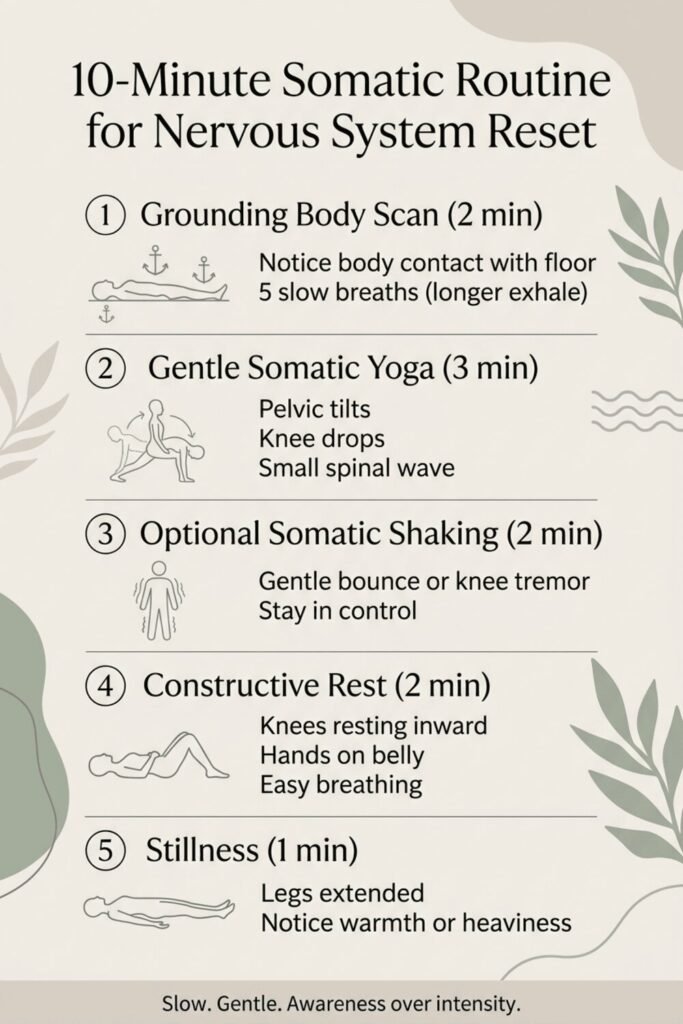
Step 1 — Grounding Body Scan (2 minutes)

- Lie on your back, knees bent, feet flat.
- Notice where your body touches the floor: head, shoulders, hips, feet.
- Take a few slow breaths. If it feels comfortable, let your exhale be a little longer than your inhale.
Why some people like it: A body scan can shift attention from racing thoughts to present-moment sensation.
Step 2 — Gentle Somatic Yoga (3 minutes)
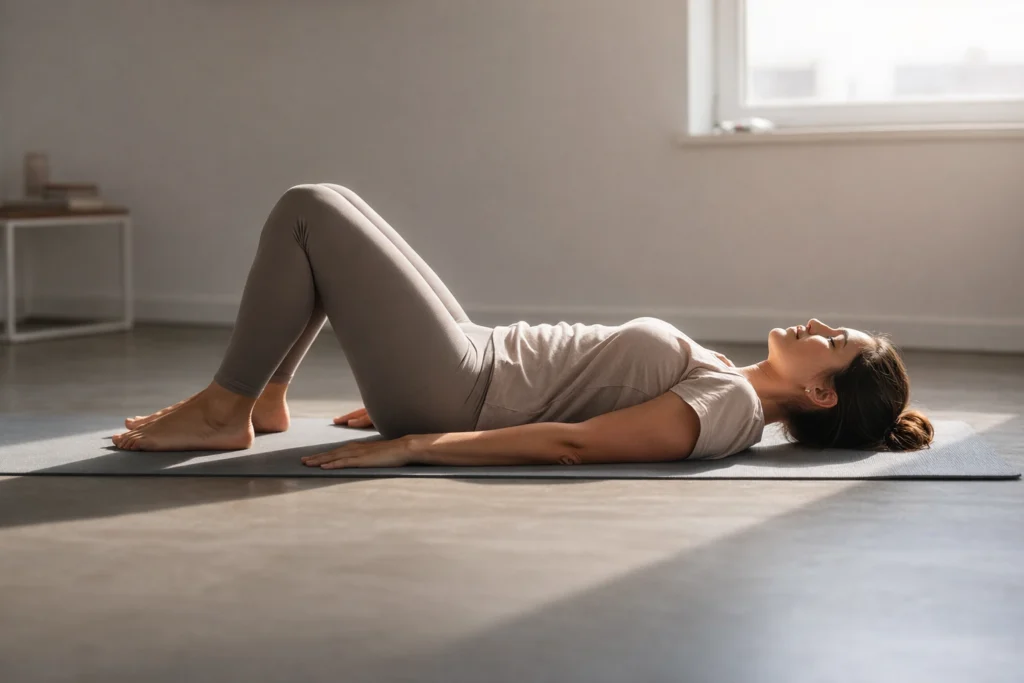
This somatic yoga flow is not about stretching “deep.” It’s about small, smooth movement.
Pelvic tilts
- Exhale: gently flatten your lower back toward the floor
- Inhale: return to neutral
- Try 5–10 slow repeats, or fewer if that feels better
Side-to-side knee drops
- Let knees fall gently right, then left
- Keep it small and comfortable
- Try a few slow repeats on each side, staying comfortable
Spinal wave (on your back)
- Inhale: gentle arch
- Exhale: gentle flatten + slight chin tuck
- Repeat a few times at an easy pace
Step 3 — Somatic Shaking (2 minutes, optional)
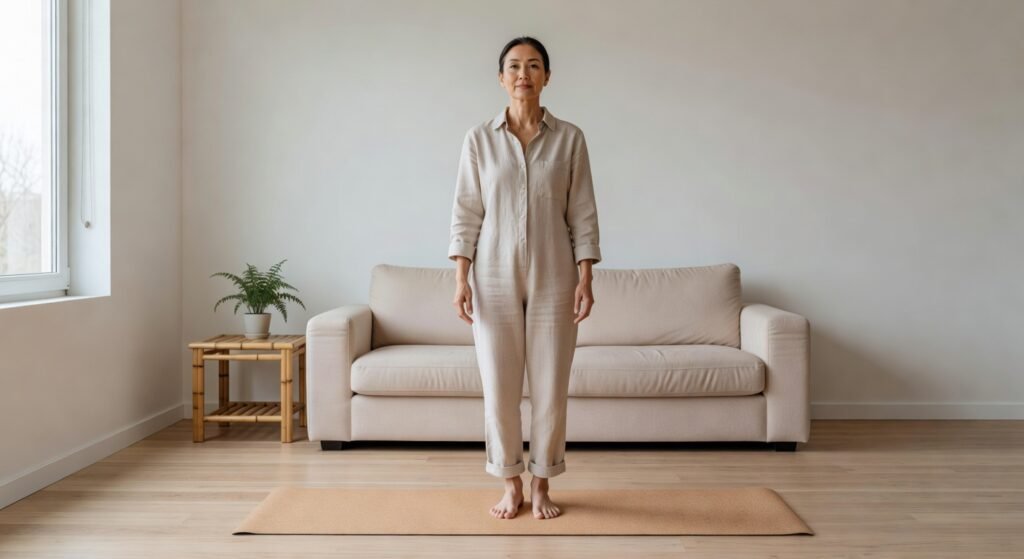
Somatic shaking is popular online. Some people find it helps them feel looser or more grounded. Others prefer to skip it. Either is fine.
Standing version
- Stand with feet hip-width, knees soft
- Gently bounce or wiggle
- Let arms hang loose
- Continue for a short time (for example, 30–90 seconds), then pause
Lying version
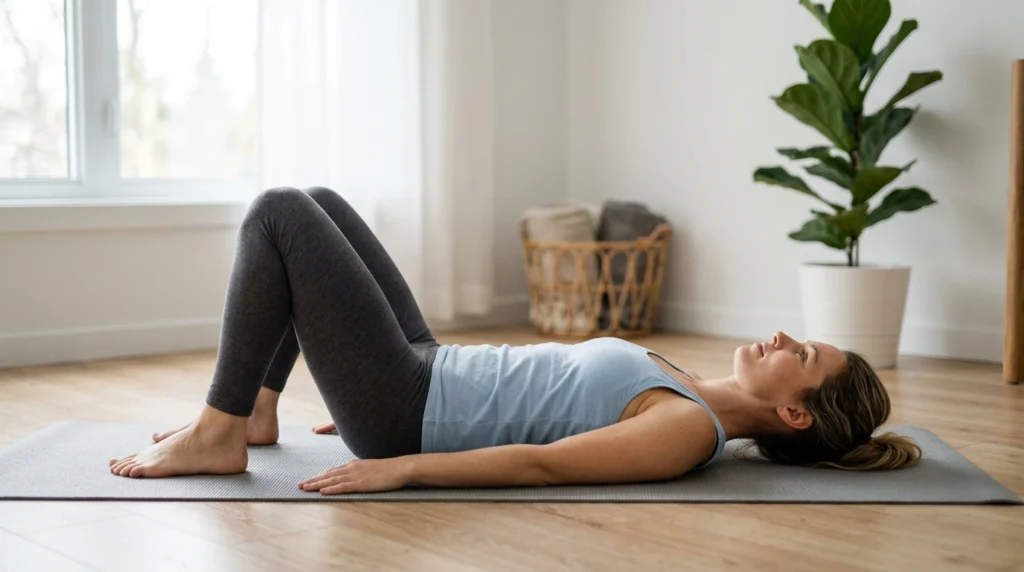
- Lie on your back with knees bent
- Gently press knees together, then slightly apart
- If your legs naturally tremble a little, that can be okay—keep it gentle and pause if it feels uncomfortable
Tip: Keep it gentle. You should feel in control—if you don’t, pause or skip this step.
Step 4 — Hip & Constructive Rest (2 minutes)
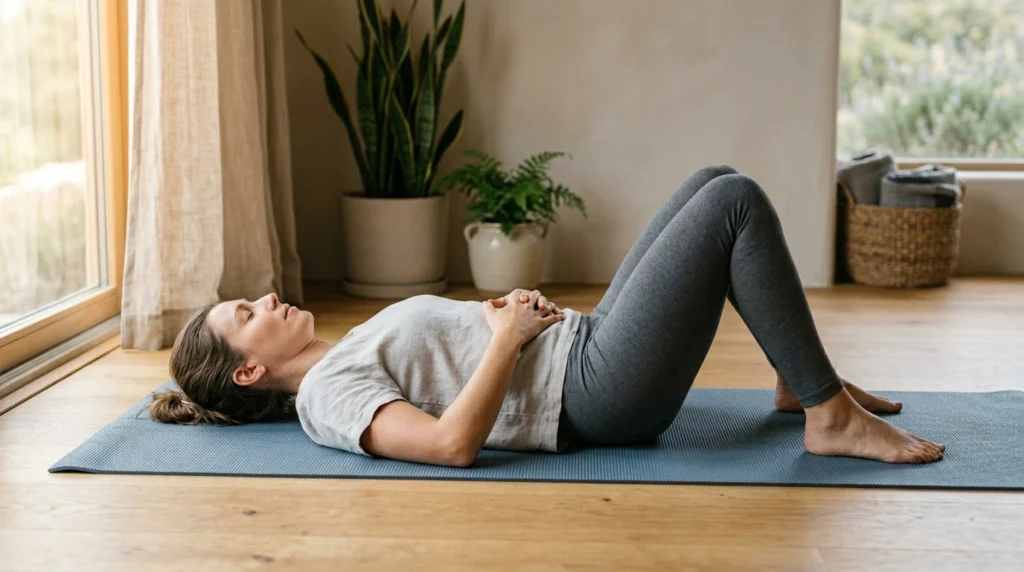
This position is simple, and many people find it comfortable after a long day of sitting.
- Lie on your back, knees bent, feet a little wider than hips
- Let your knees lean inward so they rest together
- Place hands on your belly and breathe normally
This is a gentle way to let hips and low back relax—no forcing, no deep stretching.
Step 5 — Stillness and Integration (1 minute)
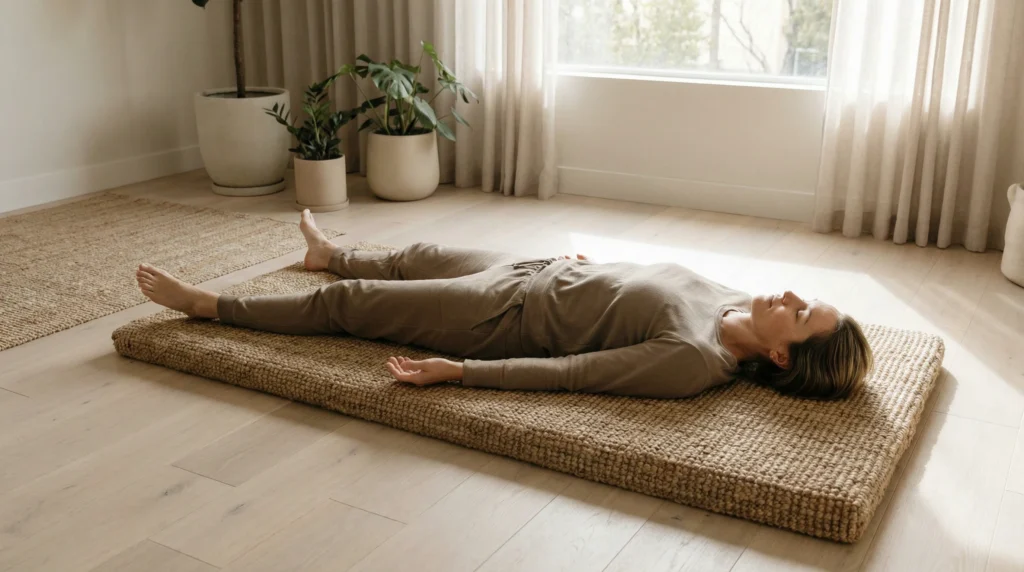
- Stretch legs out long
- Rest arms by your sides, palms up
- Take a few easy breaths
- Notice: heavier, warmer, more relaxed—or no change at all
There’s no “right” outcome. Noticing is the practice.
10-Minute Guided Relaxation Practice
If you prefer following along with guided instruction, this gentle 10-minute restorative yoga session may feel like a calm and supportive way to unwind after the somatic movements above.
Note: This video is third-party content shared for general relaxation and educational purposes
In this short session, Adriene guides slow, mindful movements and relaxed breathing that many people find soothing. The pace is unhurried and beginner-friendly, making it a natural extension of the constructive rest and stillness steps described above.
What to Expect After Somatic Practice

Common “After Effects”
Some people report:
- Yawning or sighing
- Sleepiness
- Warmth or tingling
- Feeling calmer or more grounded
- Emotional release (tears, laughter)
If anything feels too intense, pause and ground yourself: look around, name 5 things you see, and feel your feet on the floor.
Somatic Exercises for Anxiety (Gentle, Everyday Options)
Somatic exercises for anxiety aren’t a replacement for professional support. But some people find them helpful in the moment—especially when anxiety shows up as tension, restlessness, or shallow breathing.
Here are a few gentle options people often try:
- Extended exhale breathing: slow inhale, slightly longer exhale
- Feet grounding: press feet into the floor and notice pressure
- Jaw/shoulder release: lift shoulders up, drop them, unclench jaw
- Rocking: gentle sway side to side while standing or sitting
Quick 60-second reset (anywhere):
Sit with both feet on the floor. Place one hand on your chest and one on your belly. Breathe slowly and notice where your breath moves most. No need to change it—just notice.
Somatic Exercises for Trauma (Extra Care + Slower Pace)
Somatic exercises for trauma are often discussed online. Some people say body-focused practices can support a sense of safety and reconnection with body sensations. Others find it brings up too much, too fast.
A safer approach for general readers is: go slowly, keep choices open, and prioritize feeling in control.
How do you release trauma from the body? (A safer way to think about it)
You’ll see this phrase a lot. In wellness spaces, it usually means: stress responses from difficult experiences may linger in the body as tension, numbness, or reactivity.
Some people explore gentle options like:
- Guided body scans
- Slow movement (like pelvic tilts)
- Breathwork
- Grounding practices
- Working with a trained therapist who uses body-based approaches
No single method could be termed as “best”, and results vary. For many people, exploring this topic with professional support may feel safer and more comfortable.
What Are the 7 Trauma Release Exercises (TRE)?
TRE (Tension & Trauma Releasing Exercises) is a method created by David Berceli. It’s commonly described as a sequence of movements that may lead to gentle tremoring in the body.
The seven exercises are often listed as:
- Standing calf raises
- Wall calf/ankle stretch
- Partial squat hold
- Wall sit
- Standing forward fold
- Floor hip opener
- Resting tremor position
Because TRE can feel intense for some people, it may not be for everyone, and many prefer learning it with a certified provider at first.
External reference: TRE official site
How to Regulate Your Nervous System at Home (Small Daily Habits)
If you’re searching how to regulate nervous system at home, somatic practice is one option—but small habits can add up too.
You might try one or two of these:
- Morning: 60-second body scan before getting up
- Midday: 3 slow breaths + shoulder roll + unclench jaw
- After stress: name 5 things you can see (simple grounding)
- Evening: 2 minutes in constructive rest position
- Anytime: brief hand/arm shake for 20–30 seconds, then pause
Doing a little bit each day often helps more than doing one long session once a week.
Some people also notice that sugar and energy swings can affect how “keyed up” they feel, especially later in the day. Here’s a simple read on how sugar can linger in your system: How Long Does Sugar Stay in Your Body? 7 Quick Fixes.
Other Gentle Practices That Pair Well With Somatic Work
Somatic exercises don’t have to stand alone. Many people mix them with other calming habits like these:
- Breathwork (simple, slow breathing patterns)
- Body scan meditation (guided or self-led)
- Gentle yoga or restorative yoga
- Walking in nature (slow walk + noticing sights/sounds)
If you enjoy simple routines, you might also like this optional hydration-style recipe idea some readers use on stressful days: 7 Easy Adrenal Cocktail Recipe Tips + Benefits.
At-Home Somatic Practice vs. Working With a Professional
| Topic | At-Home Somatic Practice | Professional Somatic Support |
|---|---|---|
| Goal | Everyday stress support and body awareness | Guided support with pacing and structure |
| Best for | General wellness, beginners | When you want extra support or feel overwhelmed |
| Pace | Self-paced | Supported pacing |
| Cost | Often free | Varies |
Either approach can work well. If you’re unsure, start at home with the gentle steps in this guide—and seek professional support if anything feels too intense.
Frequently Asked Questions (FAQs)
Q1: What are examples of somatic exercises?
Somatic exercise examples include body scans, pelvic tilts, gentle rocking, slow knee drops, diaphragmatic breathing, and optional somatic shaking. The key feature is moving slowly enough to notice sensations like tension, warmth, or ease—without forcing range of motion or intensity.
Q2: What is a somatic workout?
A somatic workout is a gentle movement session focused on body awareness rather than fitness performance. It often uses slow floor-based movements, comfortable breathing, and a short rest at the end. Many people use it as a calming routine after stress or at bedtime.
Q3: What are the 7 trauma release exercises?
The 7 trauma release exercises (TRE) are commonly listed as calf raises, wall calf/ankle stretch, partial squat hold, wall sit, standing forward fold, floor hip opener, and a resting tremor position. Because sensations can be strong for some people, many learn TRE with a certified provider.
Q4: What is the best somatic exercise for beginners?
A beginner-friendly option is constructive rest position. Lie on your back with knees bent and feet on the floor, then let your knees rest inward. Breathe normally for a few minutes and notice how your hips, belly, and shoulders feel. Keep it comfortable and gentle.
Q5: Is somatic exercise safe to do alone?
Many gentle somatic exercises are low-risk for most people, especially slow movements and body scans. It can help to go slowly and stop if you feel dizzy, overwhelmed, or emotionally flooded. If you have a trauma history, learning with a trained professional may feel safer.
Q6: How do you release trauma from the body?
In wellness conversations, this usually means that stress responses from difficult experiences may linger as tension, numbness, or reactivity. Some people explore gentle body-based practices like grounding, slow movement, or breathwork. There’s no single method, and professional support can be helpful.
Conclusion
Somatic exercises won’t remove stress from life—but they may help you meet stress differently. With slow movement, simple breathing, and a few minutes of rest, many people find they can support a calmer baseline and stronger body awareness over time.
If you’re new, start small: try the 2-minute body scan tonight, or explore the full routine this weekend. You don’t have to do it perfectly. Just slowing down and noticing how your body feels is enough to start.
Disclaimer
This article is for educational purposes only and is not a substitute for professional medical advice. If you have health concerns, consider speaking with a qualified healthcare professional.